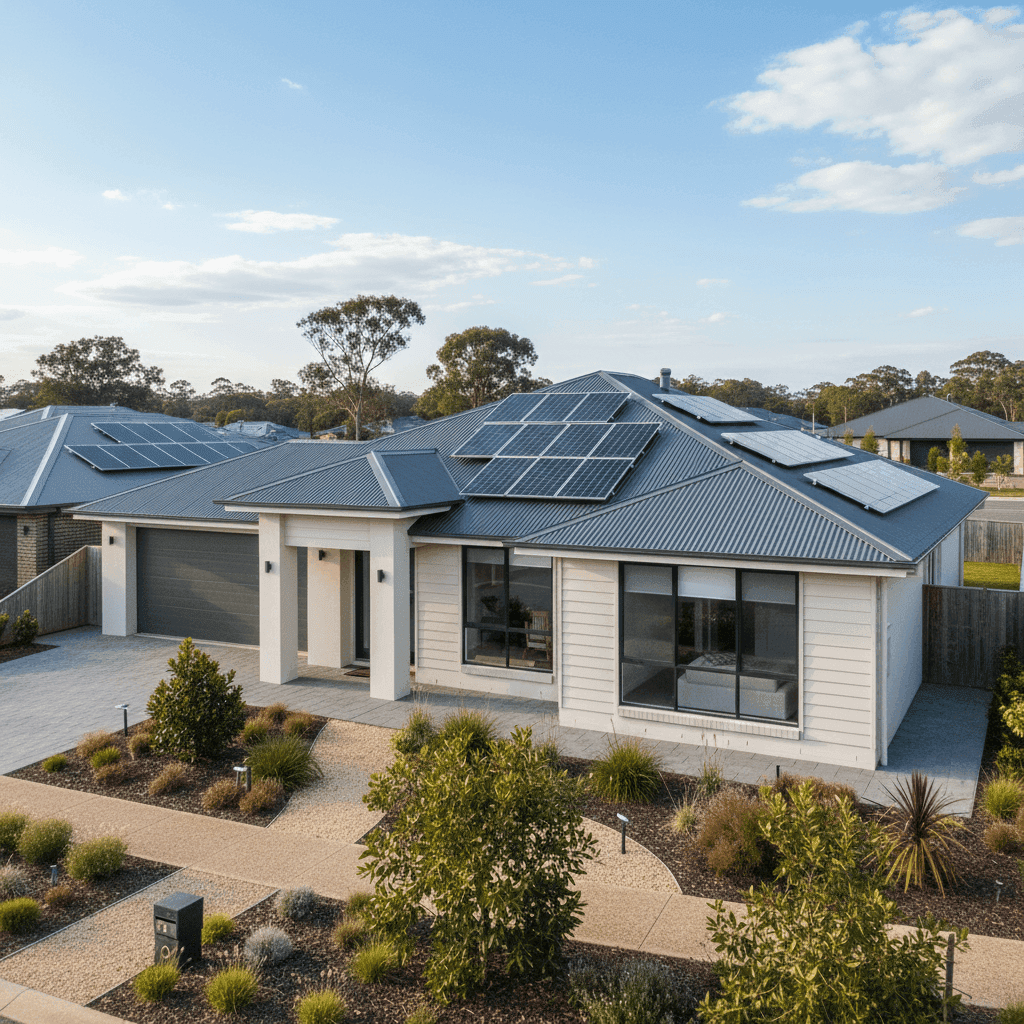
Catherine Hill Bay is one of the Central Coast's most picturesque coastal communities — a heritage-listed village tucked between Lake Macquarie and the Pacific Ocean in NSW's 2281 postcode. It's the kind of place where properties are genuinely special, and for a five-bedroom free-standing home built as recently as 2023, that sense of value extends well beyond the view. But what does it actually cost to insure a home like this — and is the quote on the table a good deal?
This article breaks down a real home and contents insurance quote for a property in Catherine Hill Bay, comparing it against local, state, and national benchmarks to help you understand what's driving the price — and what you might be able to do about it.
---
Is This Quote Fair?
The annual premium for this property came in at $5,205 per year (or $499/month), covering a building sum insured of $949,000 and contents valued at $50,000, with a $1,000 excess on both building and contents.
Our price rating for this quote is Expensive — Above Average.
To put that in context: the average premium across the 16 quotes sampled in the Catherine Hill Bay suburb sits at just $3,488 per year, with a median of $3,509. Even at the 75th percentile — meaning most homes in the area pay less — the going rate is only $3,701. This quote lands well above that upper band, suggesting the homeowner is paying a meaningful premium over what comparable properties in the area typically attract.
That said, it's worth noting that this is not a typical property. A five-bedroom, 235 sqm home built in 2023 with a $949,000 building sum insured is at the larger and more valuable end of the local market. Higher rebuild costs naturally push premiums up, and insurers price accordingly.
You can explore suburb-level pricing trends in more detail on our Catherine Hill Bay insurance stats page.
---
How Catherine Hill Bay Compares
Understanding where this quote sits relative to broader benchmarks helps put the "expensive" rating in perspective.
| Benchmark | Average Premium | Median Premium |
|---|---|---|
| Catherine Hill Bay (suburb) | $3,488/yr | $3,509/yr |
| NSW (state) | $9,528/yr | $3,770/yr |
| National | $5,347/yr | $2,764/yr |
| Lake Macquarie LGA | $11,064/yr | — |
A few things stand out here. The NSW state average of $9,528 is dramatically higher than the median of $3,770 — a classic sign that a small number of very high-risk or high-value properties are pulling the average up significantly. The same pattern appears nationally, where the average of $5,347 sits well above the median of $2,764.
Against the national average of $5,347, this quote of $5,205 is actually slightly below — which reframes the picture somewhat. And when compared to the Lake Macquarie LGA average of $11,064 (again, likely skewed by high-value waterfront properties), it looks quite reasonable.
So while this quote is expensive relative to the Catherine Hill Bay suburb sample, it's broadly in line with national norms for a large, high-value home. The suburb comparison is the most relevant local benchmark, but the property's size and rebuild value justify some of the gap.
Explore how NSW premiums compare more broadly on our NSW home insurance stats page, or check out national home insurance data for the full picture.
---
Property Features That Affect Your Premium
Several characteristics of this home have a direct bearing on what insurers charge. Here's how each one plays into the pricing:
Newly Built (2023) A 2023 construction date is generally a positive signal for insurers. Modern homes are built to current Australian Standards, which typically means better structural resilience, updated electrical and plumbing systems, and compliance with contemporary bushfire and weather-resistance codes. This can work in the homeowner's favour at renewal time.
Hardiplank/Hardiflex Cladding Fibre cement cladding like Hardiplank and Hardiflex is a popular choice in coastal areas because it resists moisture, rot, and salt air better than timber weatherboards. From an insurance perspective, it's generally viewed as a low-to-moderate risk material — not as fire-resistant as brick veneer, but considerably more durable than standard timber.
Steel/Colorbond Roof Colorbond roofing is well-regarded by insurers. It's lightweight, durable, and holds up well in high-wind conditions. It also has strong fire-resistance properties compared to older tile or timber roof types, which can positively influence premiums in bushfire-adjacent areas.
Concrete Slab Foundation A slab foundation is considered one of the more stable and low-risk options for insurers, particularly in coastal environments where soil movement and flooding can be concerns. It also reduces the risk of subfloor pest damage.
Solar Panels The presence of solar panels adds to the overall insurable value of the home. Panels themselves can be damaged by hail, storms, or fire, and their replacement cost needs to be factored into the building sum insured. Homeowners should confirm with their insurer that solar panels are explicitly covered under the policy.
Ducted Climate Control Ducted air conditioning systems are a significant asset but also a meaningful source of mechanical risk — duct leaks, compressor failures, and fire hazards from electrical faults are all considerations. This adds modestly to the risk profile and, by extension, the premium.
High Building Sum Insured ($949,000) This is arguably the biggest driver of the premium. A $949,000 rebuild cost for a 235 sqm home works out to roughly $4,038 per sqm — on the higher end, but not unreasonable for a quality new build in a coastal NSW location. Ensuring this figure is accurate is critical: underinsurance is one of the most common and costly mistakes homeowners make.
---
Tips for Homeowners in Catherine Hill Bay
1. Shop around — seriously With a quote sitting above the suburb average, there's a real opportunity to find a more competitive rate. Different insurers weight risk factors differently, and a property with modern construction and quality materials like Colorbond and fibre cement cladding may be viewed more favourably by some providers than others. Use CoverClub to compare quotes side by side.
2. Review your building sum insured annually Construction costs have risen significantly in recent years. Make sure your $949,000 sum insured reflects current rebuild costs — not the original purchase price or an outdated estimate. An independent quantity surveyor can provide a precise figure and help you avoid both underinsurance and unnecessary over-coverage.
3. Check your solar panel coverage explicitly Not all home insurance policies automatically cover solar panels, or they may impose sub-limits. Given the cost of a rooftop solar system, it's worth calling your insurer to confirm the panels are covered, for how much, and under what circumstances (storm, hail, fire, accidental damage).
4. Consider a higher excess to reduce your premium At $1,000, the excess on this policy is fairly standard. Opting for a higher voluntary excess — say $2,500 or $5,000 — can reduce your annual premium noticeably. This strategy works well if you have savings to cover smaller claims and want to lower your ongoing costs.
---
Ready to Find a Better Deal?
If you're a homeowner in Catherine Hill Bay or anywhere across NSW, it pays to compare. CoverClub makes it easy to benchmark your current premium against real quotes from multiple insurers — so you can see exactly where you stand and whether there's a better policy waiting for you.
Get a home insurance quote now at CoverClub and find out if you're paying more than you need to.