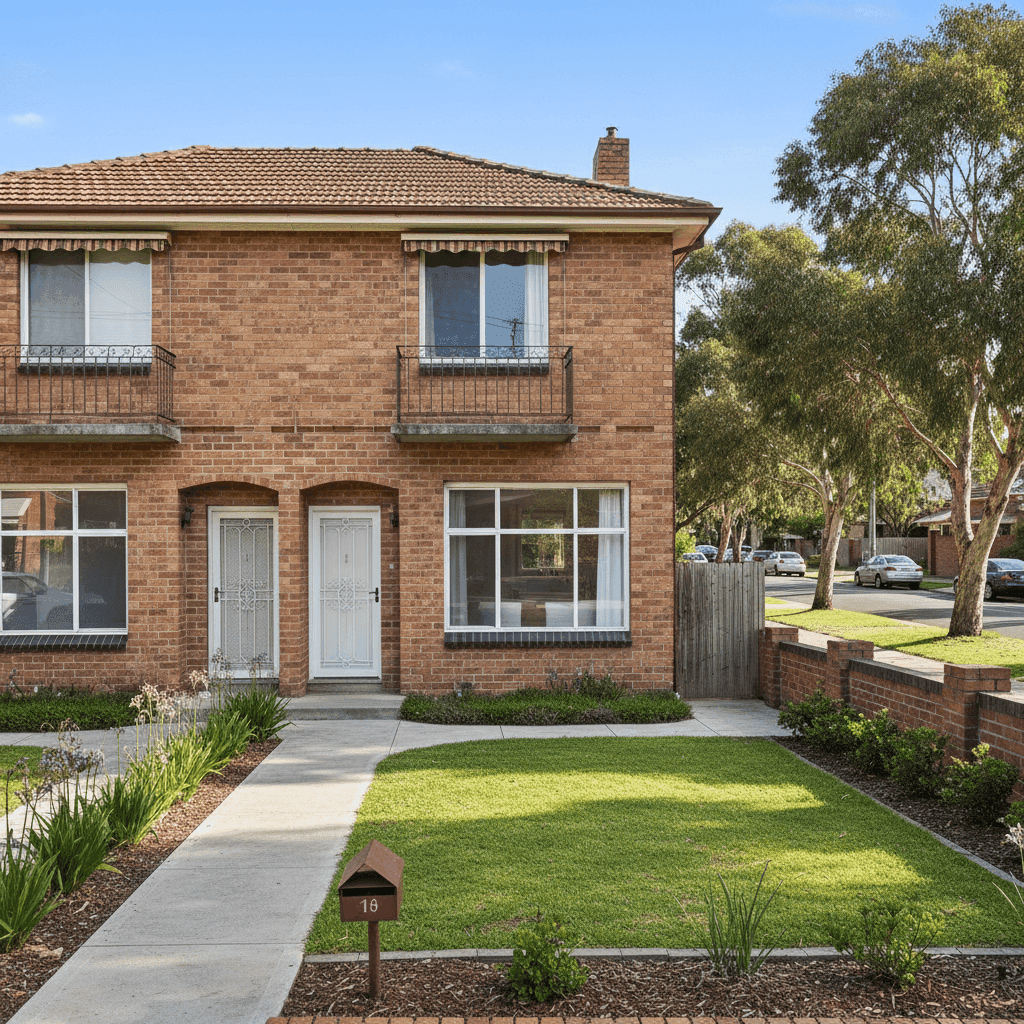
If you own a semi detached home in Caulfield East, VIC 3145, you've probably wondered whether you're paying a fair price for home and contents insurance — or whether you're leaving money on the table. This article breaks down a real insurance quote for a 2-bedroom, 2-bathroom semi detached property in the suburb, compares it against local, state, and national benchmarks, and offers practical tips to help you get the best value cover. For a broader picture of what homeowners in this postcode are paying, check out the Caulfield East insurance stats page.
---
Is This Quote Fair?
The short answer: yes — and then some. This quote comes in at $1,135 per year (or about $111 per month) for combined home and contents insurance, covering a building sum insured of $452,000 and $50,000 worth of contents. Both the building and contents excess are set at $1,000.
CoverClub rates this premium as CHEAP — below average for the area. That's a meaningful label. It doesn't just mean the price is competitive; it means it sits noticeably below what most comparable homeowners in Victoria are paying. For a policy that covers both the building and contents, that's a strong result.
Of course, price alone doesn't tell the whole story. A cheap premium is only good value if the cover is adequate. With $452,000 in building cover for a 139 sqm brick veneer property built in 2015, the sum insured appears reasonable for the current construction cost environment — though it's always worth periodically reviewing your building sum insured to keep pace with rising labour and materials costs.
---
How Caulfield East Compares
To put this quote in context, here's how it stacks up against broader benchmarks:
| Benchmark | Annual Premium |
|---|---|
| This quote | $1,135 |
| Glen Eira LGA average | $1,828 |
| VIC state average | $3,000 |
| VIC state median | $2,718 |
| National average | $5,347 |
| National median | $2,764 |
The numbers are striking. This quote is 38% below the Glen Eira LGA average, 62% below the Victorian state average, and a remarkable 79% below the national average. Even against the more conservative national median of $2,764, the saving is substantial.
It's worth noting that national averages are heavily influenced by high-risk regions — particularly cyclone-prone areas in Queensland and Western Australia, and flood-prone zones across multiple states. Caulfield East benefits from being a relatively low-risk suburban environment in metropolitan Melbourne. You can explore how Victoria compares to other states on the VIC insurance stats page, or view the full national picture at the national stats page.
---
Property Features That Affect Your Premium
Several characteristics of this property work in favour of a lower premium. Understanding these factors can help you appreciate why this quote is priced where it is — and what might change if your circumstances shift.
Brick Veneer Walls Brick veneer is one of the more insurer-friendly external wall materials in Australia. It offers solid fire resistance and durability, which typically translates to lower premiums compared to timber-framed or clad exteriors.
Tiled Roof A tiled roof is viewed favourably by insurers. Tiles are durable, fire-resistant, and less susceptible to storm damage than some alternative roofing materials. This contributes to a more competitive premium.
Concrete Slab Foundation Slab foundations are standard in modern Australian construction and generally present fewer concerns around subsidence or structural movement than older pier-and-beam or strip footings — particularly relevant in parts of Melbourne with reactive clay soils.
Relatively New Build (2015) A property built in 2015 is well within the era of modern building codes, which mandate higher standards for structural integrity, fire safety, and energy efficiency. Newer homes tend to attract lower premiums because the risk of structural failure or outdated wiring is significantly reduced.
No Pool, No Solar, No Cyclone Risk Each of these factors can add complexity — and cost — to a home insurance policy. The absence of a pool eliminates public liability exposure from that source. No solar panels means no additional coverage considerations for rooftop equipment. And sitting well outside any cyclone risk zone removes one of the most significant premium drivers seen in northern Australia.
Strata / Body Corporate Property As a body corporate property, the building insurance may be partially managed through the strata scheme — it's important to confirm exactly what the body corporate policy covers and ensure your individual policy fills any gaps, particularly around contents, fixtures, and internal improvements.
---
Tips for Homeowners in Caulfield East
Even with a competitive quote in hand, there are always ways to make sure you're getting the most from your home insurance.
1. Verify Your Building Sum Insured Annually Construction costs in Victoria have risen significantly in recent years. A building sum insured that was accurate two years ago may no longer reflect the true cost to rebuild. Review your sum insured each renewal and use a building cost calculator to sense-check the figure.
2. Understand What Your Strata Policy Covers If your body corporate holds a building insurance policy for the complex, make sure you know exactly what it includes — and what it doesn't. Common gaps include cover for internal fixtures, floating timber floors, and improvements made by individual owners. Your individual policy should complement, not duplicate, the strata cover.
3. Don't Over-Insure Contents — But Don't Under-Insure Either $50,000 in contents cover is a reasonable starting point for a 2-bedroom property, but it's worth doing a room-by-room inventory to make sure it's accurate. Over-insuring wastes money; under-insuring can leave you significantly out of pocket after a claim.
4. Consider the Trade-Off on Your Excess Both the building and contents excess on this policy sit at $1,000. Opting for a higher excess — say $2,000 — can reduce your annual premium further, but only makes sense if you're confident you could cover that amount comfortably in the event of a claim. Conversely, if cash flow is a concern, a lower excess might be worth the slightly higher premium.
---
Ready to Compare?
Whether you're renewing your existing policy or shopping for the first time, it pays to compare. The difference between a competitive quote and an average one can be hundreds — or even thousands — of dollars per year. Get a home insurance quote through CoverClub and see how your property stacks up in seconds.