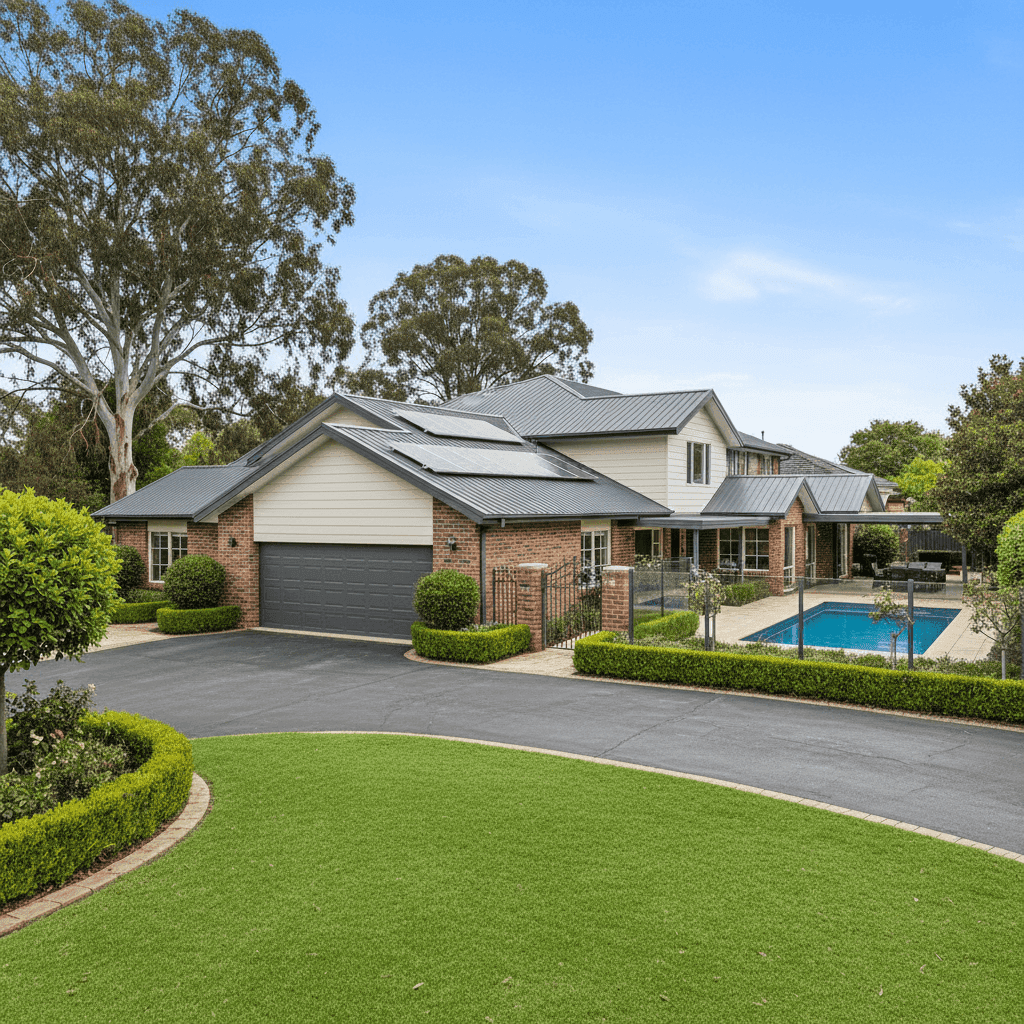
If you own a free standing home in Caulfield North, VIC 3161, you're likely paying close attention to rising insurance costs. This article breaks down a real home and contents insurance quote for a four-bedroom, three-bathroom property in the suburb, and puts it in context against local, state, and national benchmarks — so you can make a more informed decision at renewal time.
---
Is This Quote Fair?
The quote in question comes in at $4,860 per year (or $466 per month) for combined home and contents cover, with a $1,000 excess on both building and contents. The building is insured for $3,000,000 and contents for $348,000.
Our price rating for this quote is Expensive (Above Average) — and the data backs that up.
Compared to the Caulfield North suburb average of $2,331 per year, this quote is more than double what most nearby homeowners are paying. Even against the 75th percentile for the suburb ($2,889/yr), this premium sits well above the upper band of typical local pricing.
That said, context matters. This isn't an apples-to-apples comparison — the $3,000,000 building sum insured is notably high, and the property has several features (more on those below) that insurers price carefully. Still, if you're seeing a figure like this on your renewal notice, it's worth shopping around.
---
How Caulfield North Compares
Understanding where your premium sits relative to broader benchmarks is one of the most useful things you can do as a homeowner. Here's how this quote stacks up:
| Benchmark | Premium |
|---|---|
| This quote | $4,860/yr |
| Caulfield North suburb average | $2,331/yr |
| Caulfield North suburb median | $2,282/yr |
| Glen Eira LGA average | $1,828/yr |
| VIC state average | $3,000/yr |
| VIC state median | $2,718/yr |
| National average | $5,347/yr |
| National median | $2,764/yr |
A few things stand out here. First, Caulfield North premiums are actually quite competitive relative to the Victorian state average — the suburb median of $2,282 sits well below the state median of $2,718. The Glen Eira LGA average of just $1,828 is even lower, suggesting the area is generally considered lower risk by insurers.
Second, while this particular quote feels expensive locally, it's actually below the national average of $5,347. That national figure is heavily influenced by high-risk regions — particularly in Queensland, Western Australia, and Northern Australia — where cyclone, flood, and storm risk push premiums significantly higher.
You can explore how Victoria's premiums compare to the rest of the country on our VIC state insurance stats page, or dive into the national overview here.
---
Property Features That Affect Your Premium
Not all homes are priced equally, and several characteristics of this particular property will be influencing the premium — some favourably, others less so.
Double Brick Walls
Double brick construction is generally well-regarded by insurers. It offers strong resistance to fire and structural damage, and tends to hold up well in storm events. This is a positive factor for pricing.
Steel / Colorbond Roof
Colorbond roofing is durable, low-maintenance, and widely used across Australian homes. It performs well in fire-prone areas and is resistant to corrosion. Insurers typically view this favourably compared to older tile or timber roofing.
Slab Foundation
A concrete slab foundation is standard for many Australian homes and is generally considered stable and low-risk from an insurance perspective — particularly in the absence of significant soil movement or flooding risk.
Timber and Laminate Flooring
Flooring type can influence contents and building replacement costs. Timber flooring — especially hardwood — is expensive to replace, and this will factor into both the building sum insured and the overall premium.
Above-Average Fittings Quality
This property is noted as having above-average fittings, which directly increases the cost to rebuild or repair. Think stone benchtops, quality cabinetry, premium fixtures, and the like. Insurers price this into the building sum insured, which in this case is set at $3,000,000 — a figure that reflects a high-quality, larger-than-average home.
Swimming Pool
A pool adds both value and liability exposure. Most insurers factor in pool-related liability risks, and the cost to repair or replace pool infrastructure can be significant.
Solar Panels
Solar systems are now a standard inclusion on many Australian homes, but they do add to the replacement cost of the building. A quality solar installation can cost $10,000–$30,000 or more to replace, and this should be — and likely is — reflected in the building sum insured.
Ducted Climate Control
Ducted air conditioning systems are expensive to install and replace. Like solar panels, this adds to the overall rebuild cost and contributes to the higher sum insured on this property.
Construction Year: 1986
A home built in 1986 is approaching 40 years old. While double brick construction ages well, older homes can attract slightly higher premiums due to the potential for aging electrical wiring, plumbing, and structural elements that may not meet current building codes.
---
Tips for Homeowners in Caulfield North
If you're looking to get better value on your home insurance — whether you're reviewing this specific quote or your own — here are a few practical steps worth taking.
1. Review your sum insured carefully A $3,000,000 building sum insured is substantial. Make sure this figure accurately reflects the cost to rebuild your home (not its market value), including demolition and professional fees. Overinsuring drives up your premium unnecessarily, while underinsuring leaves you exposed. Use a professional building replacement estimator or speak with a quantity surveyor if you're unsure.
2. Compare multiple quotes The gap between the cheapest and most expensive insurers for the same property can be enormous. With a suburb average of $2,331 and this quote sitting at $4,860, there's clearly significant variation in the market. Get a quote through CoverClub to see how different insurers price your specific property.
3. Ask about discounts for security and safety features Many insurers offer discounts for homes with monitored alarm systems, deadbolts, and fire safety equipment. If your home has these features, make sure they're declared when getting a quote — they can meaningfully reduce your premium.
4. Consider your excess level The $1,000 excess on both building and contents is fairly standard. Opting for a higher excess (say, $2,500 or $5,000) can reduce your annual premium — a worthwhile trade-off if you have the financial buffer to cover a larger out-of-pocket cost in the event of a claim.
---
Compare Your Options with CoverClub
Whether you're reviewing a renewal notice or shopping for cover on a new property, CoverClub makes it easy to see how your quote stacks up against real data from your suburb, your state, and across Australia. Check the latest Caulfield North insurance stats or get a personalised quote today — it only takes a few minutes and could save you hundreds.