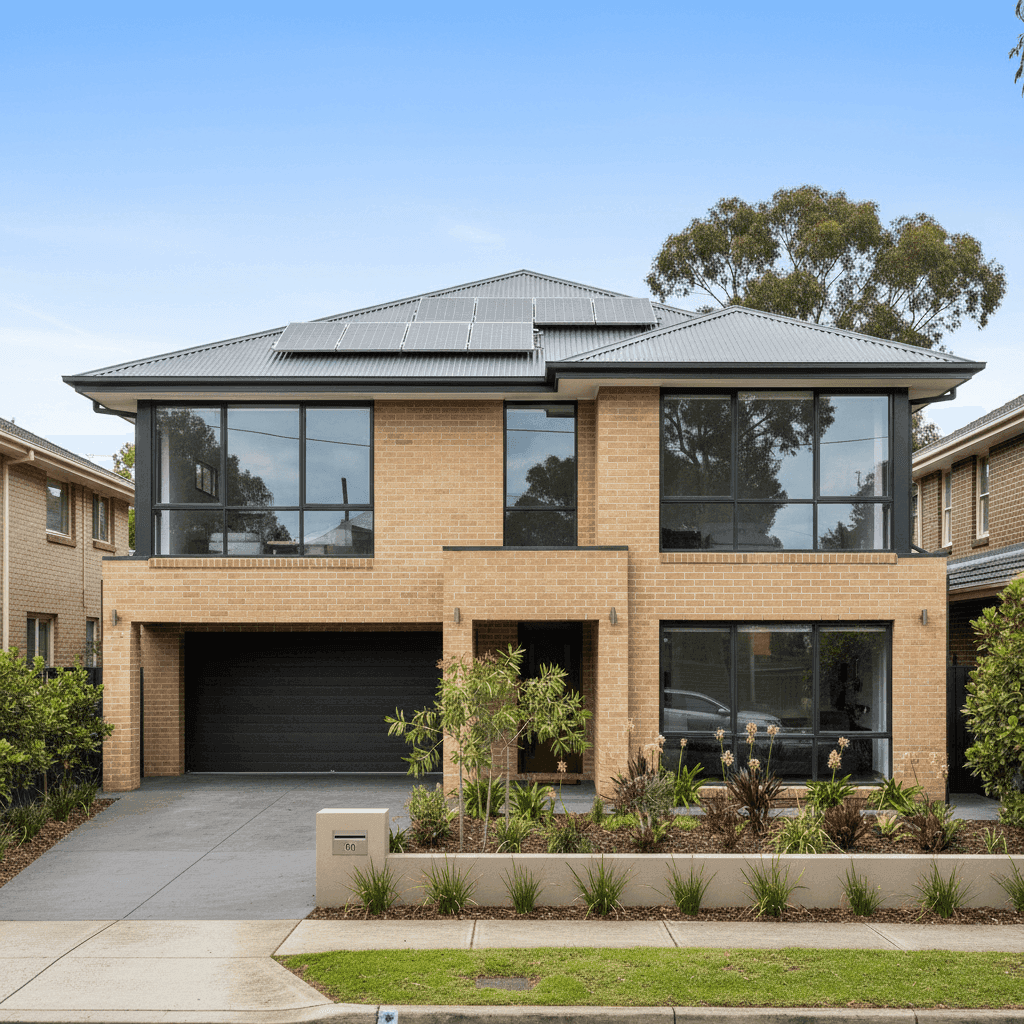
If you own a free standing home in Caulfield North, VIC 3161, you're likely paying close attention to what home insurance actually costs in your area. Premiums vary enormously — even within the same postcode — and knowing where your quote sits relative to the market can make a real difference to your household budget. In this article, we analyse a recent building insurance quote for a four-bedroom, five-bathroom free standing home in Caulfield North, and unpack exactly what's driving the price.
---
Is This Quote Fair?
The quote in question comes in at $1,743 per year (or roughly $160 per month) for building-only cover, with a $2,000 building excess and a sum insured of $1,500,000. Our price rating for this quote is CHEAP — below average for the area.
That's a meaningful result. Based on data from 98 quotes collected in the Caulfield North area, the suburb's average annual premium sits at $3,084, and the median is $2,616. This quote lands well below even the 25th percentile benchmark of $1,943 per year — meaning it's cheaper than at least three-quarters of comparable quotes in the suburb.
In plain terms: if you received this quote, you're doing better than most of your neighbours. Whether you're shopping around for the first time or reviewing your renewal, this is the kind of result worth locking in — provided the policy terms meet your needs.
---
How Caulfield North Compares
Zooming out beyond the suburb gives even more context. Here's how Caulfield North stacks up against broader benchmarks:
| Benchmark | Average Premium | Median Premium |
|---|---|---|
| Caulfield North (3161) | $3,084/yr | $2,616/yr |
| Glen Eira LGA | $1,828/yr | — |
| Victoria | $2,921/yr | $2,694/yr |
| National | $2,965/yr | $2,716/yr |
Interestingly, Caulfield North's suburb average ($3,084) runs higher than both the Victorian average ($2,921) and the national average ($2,965), suggesting that insurers price this postcode at a slight premium relative to the broader market. This could reflect the higher property values in the area, the density of older homes, or local risk factors that insurers weigh in their models.
However, the Glen Eira LGA average of $1,828 is notably lower than the Caulfield North suburb figure — hinting that premiums can vary significantly even within the same local government area. You can explore Victoria-wide insurance statistics or national home insurance data to see how your situation fits into the bigger picture.
The quote analysed here ($1,743) sits below the Glen Eira LGA average as well, making it genuinely competitive by any measure.
---
Property Features That Affect Your Premium
Several characteristics of this property are likely contributing to its favourable premium. Understanding these factors helps you see why insurers price homes the way they do.
Brick veneer construction is generally viewed positively by insurers. It offers solid fire resistance and structural durability compared to full timber or weatherboard exteriors, which can translate to lower rebuild risk — and lower premiums.
Steel/Colorbond roofing is another tick in the right column. Colorbond is lightweight, resistant to corrosion, and performs well in storms. Insurers tend to favour it over terracotta or concrete tiles, which can crack under hail or become dislodged in high winds.
Slab foundation is the standard for newer builds and is considered low-risk from an insurance perspective. It reduces the likelihood of subsidence claims and is straightforward to assess for rebuild cost purposes.
Construction year of 2025 means this is essentially a brand-new home. New builds benefit from modern building codes, up-to-date electrical and plumbing systems, and materials that meet current safety standards — all of which reduce the likelihood of a claim.
Solar panels are worth noting. While they add value to the property, they can also add a small degree of complexity to insurance assessments. It's important to confirm with your insurer that solar panels are explicitly covered under your policy, particularly for damage from storms or fire.
Above-average fittings quality will influence the sum insured rather than the base premium directly, but it's a key reason why this property carries a $1,500,000 building sum insured. High-spec kitchens, premium bathrooms (five in this case), and quality flooring all push rebuild costs higher.
Timber and laminate flooring throughout is a feature worth disclosing accurately. While it doesn't dramatically affect the base premium, it forms part of the overall rebuild cost calculation and should be reflected in your sum insured.
---
Tips for Homeowners in Caulfield North
Whether you're reviewing an existing policy or shopping for cover on a new property, here are four practical steps to make sure you're getting the best outcome.
- Don't under-insure your sum insured. With above-average fittings and a large, newly built home, the cost to rebuild can be higher than you'd expect. Use a building cost calculator or speak to a quantity surveyor to validate your $1,500,000 figure. Under-insurance is one of the most common — and costly — mistakes homeowners make.
- Review your excess carefully. This quote carries a $2,000 building excess. A higher excess typically reduces your premium, but make sure you can comfortably cover that amount out of pocket if you need to make a claim. There's no point saving $200/year on your premium if a claim leaves you short.
- Confirm solar panel coverage. Solar installations are a growing source of disputes at claim time. Ask your insurer explicitly whether your panels are covered for storm damage, fire, and accidental breakage — and whether they're included in your sum insured or listed as a separate item.
- Compare at renewal, every year. The insurance market shifts constantly, and loyalty doesn't always pay. Even if you're happy with your current insurer, running a comparison at renewal takes minutes and could save you hundreds. Caulfield North premiums range from under $1,943 (25th percentile) to over $4,409 (75th percentile) — that's a wide spread, and shopping around is how you stay on the right side of it.
---
Compare Your Home Insurance Quote Today
Whether this quote is yours or you're simply benchmarking what good value looks like in Caulfield North, the best next step is to compare. CoverClub makes it easy to see multiple quotes side by side, so you can make a confident, informed decision. Get a home insurance quote now and find out where your premium really sits — you might be surprised by what you find.
For detailed suburb-level data on Caulfield North, visit our Caulfield North insurance statistics page.