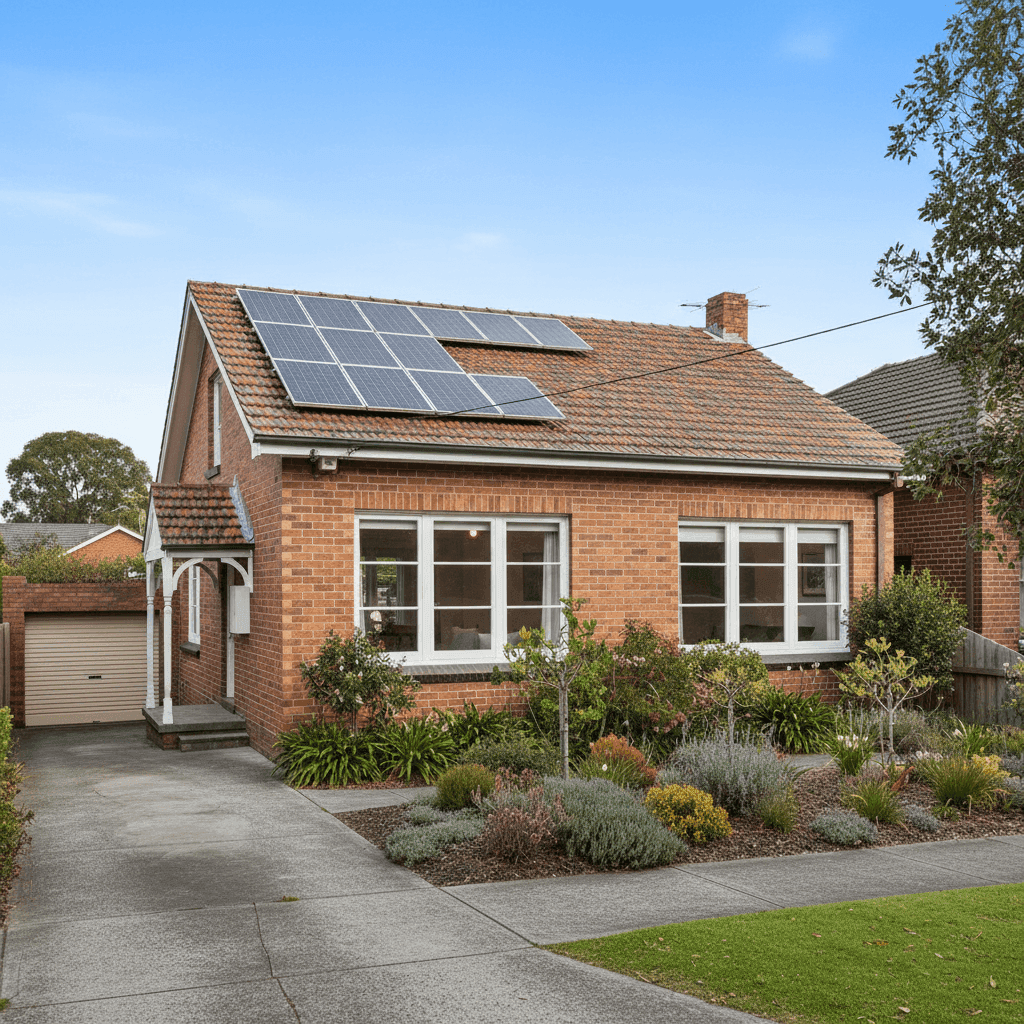
If you own a semi detached home in Caulfield South, VIC 3162, you're probably curious whether you're paying a fair price for home and contents insurance — or leaving money on the table. This article breaks down a real quote for a three-bedroom, two-bathroom semi detached property in the suburb, compares it against local, state, and national benchmarks, and highlights the property features most likely to influence what you pay. Whether you're renewing your policy or shopping around for the first time, the numbers below give you a solid foundation for making an informed decision.
---
Is This Quote Fair?
The quote in question comes in at $1,220 per year (or roughly $121/month) for combined home and contents cover, with a $438,000 building sum insured and $50,000 in contents cover. Both the building and contents excess are set at $1,000.
Our price rating for this quote is CHEAP — below average for the area. That's a meaningful finding. Based on 23 quotes sampled across Caulfield South, the suburb's average annual premium sits at $1,763, and the median lands at $1,640. This quote undercuts even the 25th percentile — meaning it's cheaper than at least 75% of comparable quotes in the same postcode.
In practical terms, that's a saving of over $540 per year compared to the suburb average, and more than $400 below the median. For a policy covering a well-appointed semi detached property, that represents genuine value — provided the policy terms, inclusions, and insurer reputation hold up to scrutiny.
---
How Caulfield South Compares
To put this quote in broader context, here's how Caulfield South stacks up across three tiers of comparison:
| Benchmark | Average Premium | Median Premium |
|---|---|---|
| Caulfield South (3162) | $1,763/yr | $1,640/yr |
| LGA: Glen Eira | $1,828/yr | — |
| Victoria (VIC) | $3,000/yr | $2,718/yr |
| National (Australia) | $5,347/yr | $2,764/yr |
A few things stand out here. First, Caulfield South sits well below the Victorian state average of $3,000/year — less than 60 cents in the dollar by comparison. Second, the national average of $5,347 is heavily skewed upward by high-risk regions such as North Queensland, coastal flood zones, and cyclone-prone areas in WA and the NT. The national median of $2,764 is a more representative figure for typical Australian homeowners, and Caulfield South still comes in comfortably below that.
The Glen Eira LGA average of $1,828 closely mirrors the suburb figure, which suggests pricing consistency across the broader council area — a sign that local risk factors are relatively uniform and well understood by insurers.
For homeowners in Caulfield South, these numbers paint an encouraging picture: this is a suburb where home insurance is genuinely affordable by both state and national standards.
---
Property Features That Affect Your Premium
Insurers don't price policies in a vacuum — every feature of your home feeds into the risk calculation. Here's how the specific characteristics of this property are likely to influence the premium:
Brick Veneer Walls Brick veneer is one of the most common external wall materials in Melbourne's middle suburbs, and insurers generally view it favourably. It offers solid fire resistance and durability, which can help keep premiums lower compared to timber-clad or weatherboard properties.
Tiled Roof Terracotta or concrete tiles are considered a low-to-moderate risk roofing material. They're durable, non-combustible, and widely used across Victorian homes built in the 1990s. This contributes positively to the risk profile.
Stump Foundation This is worth noting. Homes on stumps — particularly older timber stumps — can attract slightly higher premiums due to the risk of subsidence, pest damage, or structural movement. However, properties built in 1997 are more likely to have concrete or steel stumps, which are more stable and less of a concern for underwriters.
Timber and Laminate Flooring Flooring type can influence contents and internal damage claims. Timber and laminate floors are susceptible to water damage, which may be a consideration for claims involving burst pipes or flooding — though this property is not in a designated cyclone risk area.
Solar Panels Solar panels are increasingly common across Melbourne, and most standard home insurance policies include them as part of the building sum insured. However, it's worth confirming with your insurer that the panels are explicitly covered, particularly for damage from storm or hail events.
Ducted Climate Control Ducted heating and cooling systems are a fixed building asset and should be factored into your building sum insured. At $438,000, this property's cover appears appropriate for a 139 sqm semi detached in this part of Melbourne.
No Pool The absence of a pool removes one common source of liability and maintenance-related claims, which can modestly reduce premiums.
---
Tips for Homeowners in Caulfield South
1. Check That Your Building Sum Insured Reflects Current Rebuild Costs Construction costs have risen significantly across Victoria in recent years. A sum insured of $438,000 for a 139 sqm brick veneer semi detached is in the right ballpark, but it's worth running a building cost calculator annually to ensure you're not underinsured. Rebuilding costs in Melbourne's inner south-east can exceed $3,000–$3,500 per sqm when factoring in demolition, site access, and trades.
2. Confirm Solar Panel Coverage Explicitly Ask your insurer to confirm in writing that your solar panel system is covered under the building policy. Some policies include panels automatically; others require them to be listed as a specified item. Given the replacement cost of a typical rooftop system, this is not a detail to overlook.
3. Review Your Contents Sum Insured Carefully $50,000 in contents cover is a common starting point, but it can be easy to underestimate the total replacement value of furniture, appliances, clothing, and electronics. A quick room-by-room audit often reveals that most households need more cover than they initially assumed.
4. Consider Your Excess Level Strategically Both the building and contents excess on this policy are set at $1,000. Opting for a higher excess — say, $2,000 — can meaningfully reduce your annual premium, but only makes sense if you have the financial buffer to cover it in the event of a claim. Conversely, if cash flow is a concern, a lower excess may be worth the slightly higher premium.
---
Compare Home Insurance Quotes in Caulfield South
This quote demonstrates that it's entirely possible to secure strong home and contents cover in Caulfield South at a price well below the local average — but the only way to know if your quote is competitive is to compare. CoverClub makes it easy to see multiple quotes side by side, tailored to your specific property and cover needs.
Get a home insurance quote for your Caulfield South property →
You can also explore detailed premium data for your area at the Caulfield South insurance stats page.