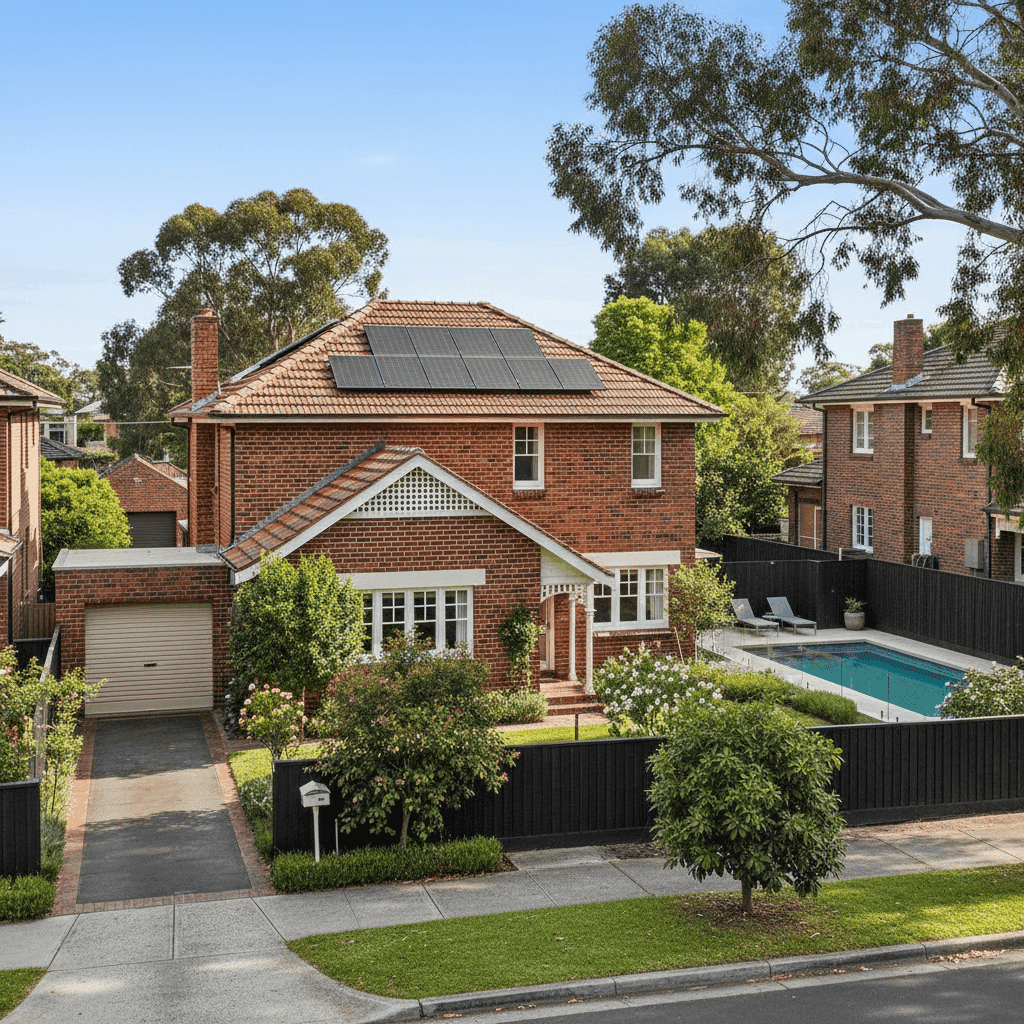
If you own a free standing home in Caulfield, VIC 3162, you've probably wondered whether you're paying a fair price for your home and contents insurance — or whether you could be doing better. In this article, we break down a real insurance quote for a five-bedroom, three-bathroom brick veneer home in Caulfield, and stack it up against suburb, state, and national benchmarks so you can make a more informed decision.
---
Is This Quote Fair?
The quote in question comes in at $2,180 per year (or $218/month) for combined home and contents cover, with a building sum insured of $1,000,000 and contents valued at $50,000. Both the building and contents excess are set at $1,000.
Our pricing analysis rates this quote as Fair — Around Average. That's not a bad result, but it does leave room to explore whether a better deal is available elsewhere.
To put it in context: the suburb average premium in Caulfield sits at $1,875/year, with a median of $1,663/year. This quote lands above both of those figures, which is worth noting. However, it falls comfortably within the 25th–75th percentile range of $1,356 to $2,411 — meaning it's not an outlier, but it's sitting in the upper half of what locals typically pay.
The higher-than-median price is likely driven by the property's size, age, and added features (more on those below), rather than any red flag in the pricing itself.
---
How Caulfield Compares
One of the most useful things you can do when evaluating any insurance quote is zoom out and look at the broader picture. Here's how Caulfield stacks up against the rest of Victoria and the country, based on data from CoverClub's Caulfield suburb stats:
| Benchmark | Average Premium | Median Premium |
|---|---|---|
| Caulfield (3162) | $1,875/yr | $1,663/yr |
| Glen Eira LGA | $1,828/yr | — |
| Victoria | $3,000/yr | $2,718/yr |
| National | $5,347/yr | $2,764/yr |
The numbers tell an encouraging story for Caulfield homeowners. Premiums in this suburb are significantly lower than the Victorian state average of $3,000/year — and they're a fraction of the national average of $5,347/year, which is heavily influenced by high-risk areas in Queensland and Western Australia prone to cyclones and flooding.
You can explore Victoria-wide insurance data and national home insurance statistics to see just how favourably Melbourne's inner south-east compares to the rest of the country.
The Glen Eira LGA average of $1,828/year closely mirrors the Caulfield suburb figure, suggesting consistent pricing across the local government area — always a good sign that there are no hidden localised risk factors pushing premiums up unexpectedly.
---
Property Features That Affect Your Premium
Every insurer weighs up dozens of variables when pricing a policy. For this particular property, several features are worth highlighting:
Age and Construction (1930, Brick Veneer, Tiled Roof)
Built in 1930, this home is nearly a century old — and that matters to insurers. Older homes can carry higher rebuild costs due to heritage-style materials, non-standard room layouts, and the need to meet modern building codes during repairs. Brick veneer walls are generally viewed favourably (solid and fire-resistant), and a tiled roof is considered a low-risk roofing material compared to iron or Colorbond in some contexts.
Stump Foundation and Timber Flooring
The home sits on stumps, which is common for pre-war Melbourne properties. While stumps can be re-stumped and are well understood by builders, insurers may factor in the potential for subsidence or movement over time. Combined with timber and laminate flooring, water damage claims can be more costly — something underwriters take into account.
Pool, Solar Panels, and Ducted Climate Control
The presence of a swimming pool adds liability exposure and increases the overall insured value of the property. Solar panels are increasingly common on Australian homes but can complicate roof repairs and add to replacement costs. Ducted climate control is a premium fitting that adds to the building's replacement value. All three features contribute to a higher sum insured — and a correspondingly higher premium.
Building Size and Sum Insured
At 139 sqm and insured for $1,000,000, the building sum insured is on the higher end for a home of this footprint. This may reflect the cost of rebuilding a period home with quality finishes to current standards, including demolition, materials, and labour in metropolitan Melbourne.
---
Tips for Homeowners in Caulfield
Whether you're renewing your policy or shopping around for the first time, here are some practical steps to help you get better value:
- Review your sum insured carefully. A $1,000,000 building sum insured is substantial — make sure it reflects the actual cost to rebuild your home (not its market value). Use a building cost calculator or speak to a quantity surveyor to avoid over-insuring, which directly inflates your premium.
- Bundle your building and contents cover. This quote already combines home and contents, which typically attracts a discount compared to holding separate policies. If you haven't already bundled, it's one of the simplest ways to reduce your total outlay.
- Increase your excess strategically. With both excesses currently set at $1,000, consider whether you could comfortably absorb a higher excess (say, $2,000) in the event of a claim. Many insurers will reduce your annual premium meaningfully in exchange for a higher excess — particularly useful if you have a good claims history.
- Compare quotes annually. The insurance market shifts every year, and loyalty doesn't always pay. Running a fresh comparison at renewal time — especially through a platform like CoverClub — takes minutes and could save you hundreds. Based on the suburb data from 42 quotes, there's meaningful spread between the cheapest and most expensive policies available in Caulfield.
---
Ready to Find a Better Rate?
Whether this quote looks right to you or you suspect you're paying too much, the smartest move is to compare. CoverClub makes it easy to see what other insurers are offering for homes just like yours in Caulfield and across Melbourne's inner south-east.
Get a home insurance quote today and find out if you could be paying less — without sacrificing the cover you need.