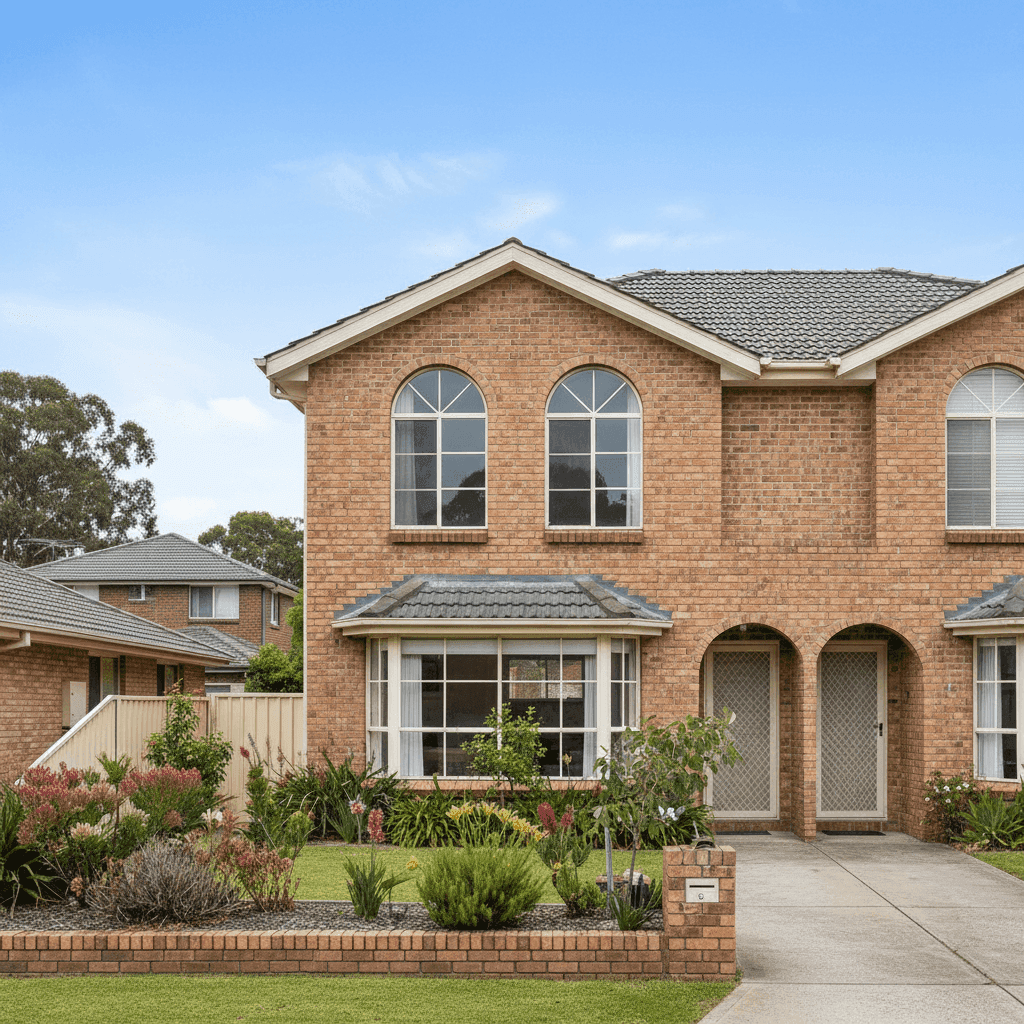
Cecil Hills is a well-established residential suburb in Sydney's south-west, sitting within the Liverpool Local Government Area. Known for its family-friendly streets and mix of brick homes built largely during the 1990s, it's the kind of suburb where home insurance is a serious consideration — especially for semi detached properties where shared walls and proximity to neighbouring dwellings add a layer of complexity to your cover. This article breaks down a recent Home and Contents insurance quote for a 4-bedroom, 3-bathroom semi detached home in Cecil Hills, and puts the price in context against local, state, and national benchmarks.
---
Is This Quote Fair?
The annual premium on this quote comes in at $1,868 per year (or $183/month), covering a building sum insured of $804,000 and $20,000 in contents. The price rating assigned to this quote is FAIR — Around Average, which is a reasonable outcome for a property of this size and type.
To understand what "around average" actually means here, it helps to look at what other Cecil Hills homeowners are paying. The suburb average sits at $1,824/year, and the median is $1,669/year. This quote lands just above both of those figures — roughly $44 above the suburb average and $199 above the median. That's not a dramatic overpayment by any stretch, but it does suggest there may be room to shop around, particularly if you're looking to trim costs.
The building excess of $2,000 and contents excess of $1,000 are fairly standard settings. A higher excess generally reduces your premium, so if you're comfortable absorbing more out-of-pocket cost in a claim, adjusting these figures could bring the annual cost down further.
---
How Cecil Hills Compares
One of the most striking things about this quote is just how favourably Cecil Hills stacks up against broader benchmarks. Explore the full Cecil Hills insurance stats to see how premiums in this suburb trend over time.
Here's a quick snapshot of how this $1,868 quote compares across different geographic levels:
| Benchmark | Average Premium | Median Premium |
|---|---|---|
| Cecil Hills (suburb) | $1,824/yr | $1,669/yr |
| Liverpool LGA | $2,768/yr | — |
| NSW (state) | $3,801/yr | $3,410/yr |
| National | $2,965/yr | $2,716/yr |
The numbers tell a clear story: Cecil Hills homeowners are paying significantly less than the NSW state average and the national average. This quote, at $1,868, is nearly half the NSW average of $3,801 — a remarkable difference that reflects both the suburb's relatively low risk profile and the nature of the property type.
Compared to the broader Liverpool LGA average of $2,768, this quote is also well below the local government area benchmark — saving nearly $900 per year compared to the typical Liverpool homeowner. You can dig into NSW-wide insurance data or check out national home insurance statistics to see just how much premiums can vary across the country.
It's worth noting that the suburb sample size here is 19 quotes, which is a reasonable dataset for a suburb of this size, though a larger sample would give even greater confidence in these averages.
---
Property Features That Affect Your Premium
Several characteristics of this property play a meaningful role in determining the premium. Understanding them can help you make sense of your quote — and potentially identify areas for adjustment.
Brick Veneer Construction Brick veneer is one of the most common wall types in Sydney's suburban housing stock, and insurers generally view it favourably. It offers good fire resistance and structural durability compared to timber-framed or clad alternatives, which can translate to more competitive premiums.
Tiled Roof A tiled roof is considered a standard, reliable roofing material in Australia. It's durable and relatively low-risk from an insurer's perspective compared to older or more vulnerable roof types like iron sheeting on ageing structures.
Slab Foundation Concrete slab foundations are typical for homes built in the 1990s across western Sydney. They're structurally sound and don't carry the same risks as raised timber subfloors, which can be susceptible to moisture and pest damage.
Construction Year: 1996 At around 28–29 years old, this home is mature but not aged. Properties from this era are generally well-regarded by insurers — they were built to reasonable standards and are past the "new build" phase where defects can emerge, but not yet at the point where significant wear and tear becomes a major underwriting concern.
Ducted Climate Control The presence of ducted climate control is worth noting. This system adds value to the building and increases the complexity of any rebuild or repair, which is factored into the sum insured. It's important to ensure the building sum insured of $804,000 adequately reflects the cost of replacing this system as part of a full rebuild.
Semi Detached Configuration As a semi detached property, this home shares at least one wall with a neighbouring dwelling. This can influence insurance in subtle ways — damage to a shared wall, for instance, may involve coordination with the adjoining owner. It's worth reviewing your policy to understand how boundary wall damage is handled.
No Pool, No Solar Panels The absence of a swimming pool removes a common source of liability claims and maintenance-related damage. Similarly, no solar panels means there's no risk of panel-related roof damage or electrical faults from that source — both factors that can nudge premiums upward when present.
---
Tips for Homeowners in Cecil Hills
1. Review Your Building Sum Insured Regularly With a 268 sqm semi detached home, the $804,000 building sum insured needs to reflect current construction costs — not just the market value of the property. Building costs in Sydney have risen considerably in recent years. Use a building calculator or speak with a quantity surveyor to make sure you're not underinsured.
2. Consider Increasing Your Excess to Lower Your Premium The current building excess of $2,000 is moderate. If you have savings available to cover a higher out-of-pocket cost in the event of a claim, increasing your excess could meaningfully reduce your annual premium. Even moving to a $3,000 or $4,000 excess can make a noticeable difference.
3. Don't Underestimate Your Contents A $20,000 contents value is on the lower end for a 4-bedroom, 3-bathroom home. Take the time to walk through each room and add up the replacement value of furniture, appliances, clothing, and electronics. Many homeowners discover they're underinsured on contents when they actually need to make a claim.
4. Compare Quotes Annually The insurance market shifts year to year, and loyalty doesn't always pay. Given that this quote sits above the suburb median, it's worth putting it to the test against other providers. Even a modest saving of $200–$300 per year adds up significantly over time.
---
Ready to Find a Better Deal?
Whether you're happy with your current quote or looking to see what else is out there, comparing your options is always a smart move. At CoverClub, we make it easy to benchmark your premium against real data from your suburb and beyond. Get a home insurance quote today and see how your current cover stacks up — you might be surprised at what's available.