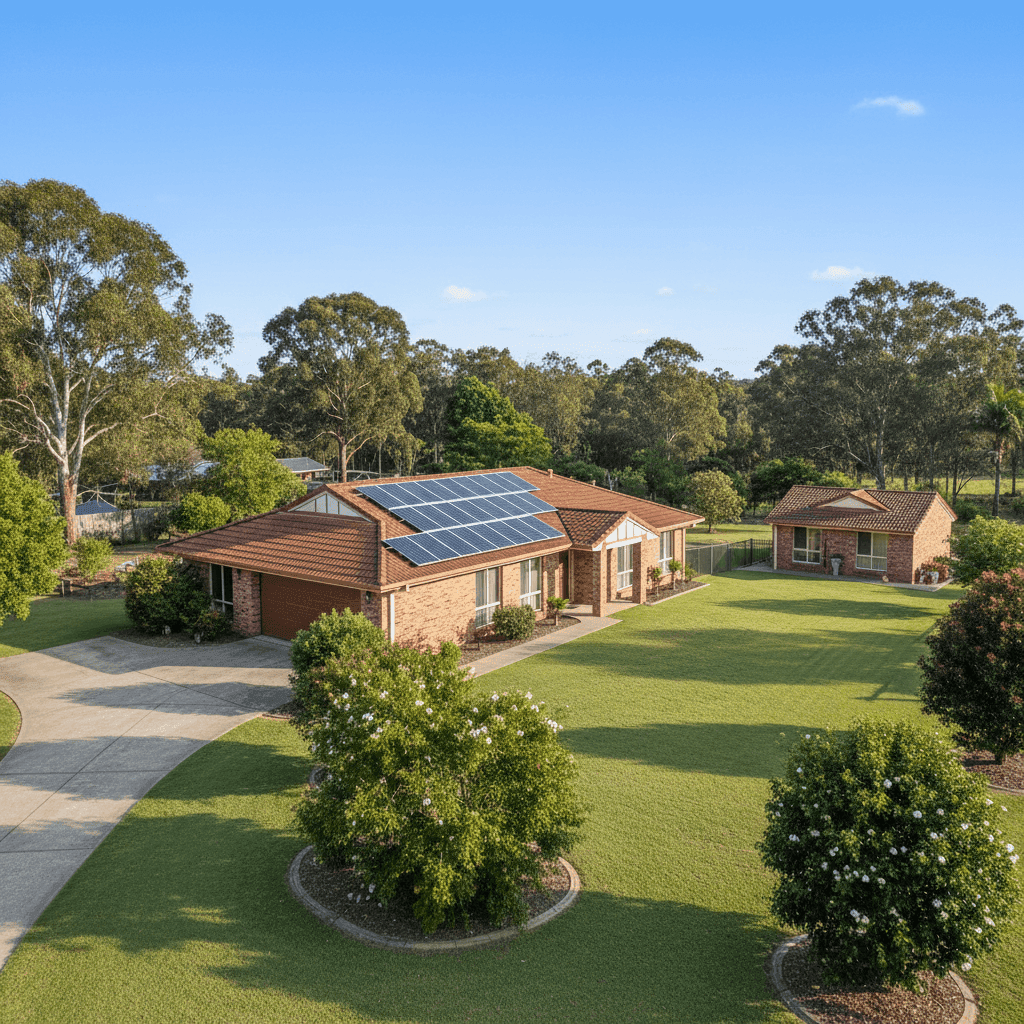
Cedar Grove is a quiet semi-rural suburb tucked into the Logan hinterland of South East Queensland, sitting at postcode 4285. It's the kind of area that attracts families looking for space — larger blocks, a relaxed lifestyle, and a bit of distance from the urban sprawl. But when it comes to home insurance, location matters enormously, and understanding what you're paying — and why — can save you hundreds of dollars a year.
This article breaks down a real home and contents insurance quote for a four-bedroom, two-bathroom free-standing home in Cedar Grove, examining how the premium stacks up against local, state, and national benchmarks.
---
Is This Quote Fair?
The annual premium for this property came in at $1,858 per year (or $182/month), covering a building sum insured of $466,000 and contents valued at $27,000. CoverClub's pricing engine rates this quote as CHEAP — below average for the area.
That's a meaningful result. With a building excess of $3,000 and a contents excess of $600, the policy does carry higher-than-typical excess levels, which naturally helps bring the premium down. Homeowners should weigh that trade-off carefully: a lower annual cost is appealing, but it means more out-of-pocket expense at claim time.
Still, even accounting for the excess structure, this quote represents solid value for a property of this size and age in the Logan region.
---
How Cedar Grove Compares
To put the $1,858 figure in proper context, here's how it sits against the relevant benchmarks:
| Benchmark | Premium |
|---|---|
| This quote | $1,858/yr |
| Cedar Grove suburb average | $2,366/yr |
| Cedar Grove suburb median | $2,250/yr |
| Cedar Grove 25th percentile | $2,094/yr |
| Logan LGA average | $4,049/yr |
| QLD state average | $4,547/yr |
| QLD state median | $3,931/yr |
| National average | $2,965/yr |
| National median | $2,716/yr |
This quote comes in $508 below the suburb average and sits well under the suburb's 25th percentile of $2,094 — meaning it's cheaper than at least 75% of quotes collected for Cedar Grove. You can explore the full Cedar Grove suburb insurance stats to see how other properties in the area are being priced.
The contrast with the broader Logan LGA average ($4,049) and the Queensland state average ($4,547) is striking. Cedar Grove's postcode appears to benefit from lower flood and storm risk classifications compared to many other parts of Logan and South East Queensland, which can dramatically reduce premiums. Compared to the national average of $2,965, this quote is also 37% cheaper — a significant saving for any household budget.
It's worth noting that the suburb sample size is 14 quotes, which is a reasonable dataset for a smaller suburb but not enormous. Averages can shift as more data comes in, so it pays to check back regularly.
---
Property Features That Affect Your Premium
Several characteristics of this property likely contribute to its favourable pricing:
Brick Veneer Construction Brick veneer walls are generally well-regarded by insurers. They offer good fire resistance and structural durability, which can translate into lower risk assessments compared to timber-clad or weatherboard homes.
Tiled Roof A concrete or terracotta tiled roof is considered a lower-risk roofing material than Colorbond in some hail-prone areas, though this can vary by insurer. The roof was constructed in 1991, so it's worth having it inspected periodically to ensure it remains in good condition — ageing tiles can become a factor in claims assessments.
Slab Foundation A concrete slab foundation is standard for Queensland homes of this era and is generally viewed favourably, offering stability and reducing the risk of subsidence-related claims.
Solar Panels The property has solar panels installed, which can be a double-edged sword for insurance. Some policies cover rooftop solar as part of the building sum insured; others treat it as a separate item. Homeowners should confirm with their insurer that the solar system is adequately covered under the $466,000 building sum insured.
Granny Flat The presence of a granny flat adds complexity to a home insurance policy. Whether it's used as a rental, for family accommodation, or sits vacant, it's essential to ensure the granny flat's structure and any contents within it are explicitly covered. Some standard policies exclude or limit coverage for secondary dwellings — always read the Product Disclosure Statement (PDS) carefully.
No Pool, No Ducted Climate Control The absence of a pool removes a common source of liability and equipment claims. No ducted air conditioning system also means fewer mechanical components that could fail and generate a claim.
Not in a Cyclone Risk Zone Cedar Grove falls outside Queensland's designated cyclone risk areas, which is a significant factor in keeping premiums lower than many northern Queensland postcodes where cyclone levies can add hundreds of dollars to annual premiums.
---
Tips for Homeowners in Cedar Grove
1. Review Your Building Sum Insured Annually Construction costs have risen sharply in recent years. A sum insured of $466,000 may have been appropriate at the time the policy was taken out, but rebuilding costs — particularly for a four-bedroom home with a granny flat — can escalate quickly. Underinsurance is one of the most common and costly mistakes homeowners make. Use a building cost calculator or speak with a quantity surveyor to validate your figure.
2. Clarify Granny Flat Coverage Before renewing or switching policies, ask your insurer directly: is the granny flat covered under the main building policy? Are its contents (if furnished) included? Is there any liability coverage if a tenant is injured? Getting clear answers in writing protects you at claim time.
3. Confirm Solar Panel Coverage Check whether your solar panels — including inverter and mounting hardware — are covered under the building section of your policy, and up to what value. If the system was recently upgraded or expanded, make sure the sum insured reflects the current replacement cost.
4. Compare Quotes at Renewal Even if you're happy with your current premium, the insurance market moves. Given that this quote already sits well below the suburb average, there may still be room to find comparable cover at a better price — or to find a policy with a lower excess that offers better value overall. Get a fresh quote at CoverClub to see what's available for your property.
---
Compare Your Home Insurance Today
Whether you're a long-time Cedar Grove resident or you've recently moved into the area, it's always worth making sure your home and contents insurance is working as hard as your premium dollars. CoverClub makes it easy to compare quotes tailored to your property's specific features — from the granny flat out back to the solar panels on the roof. Start your free comparison now and find out if you're getting the best deal available.