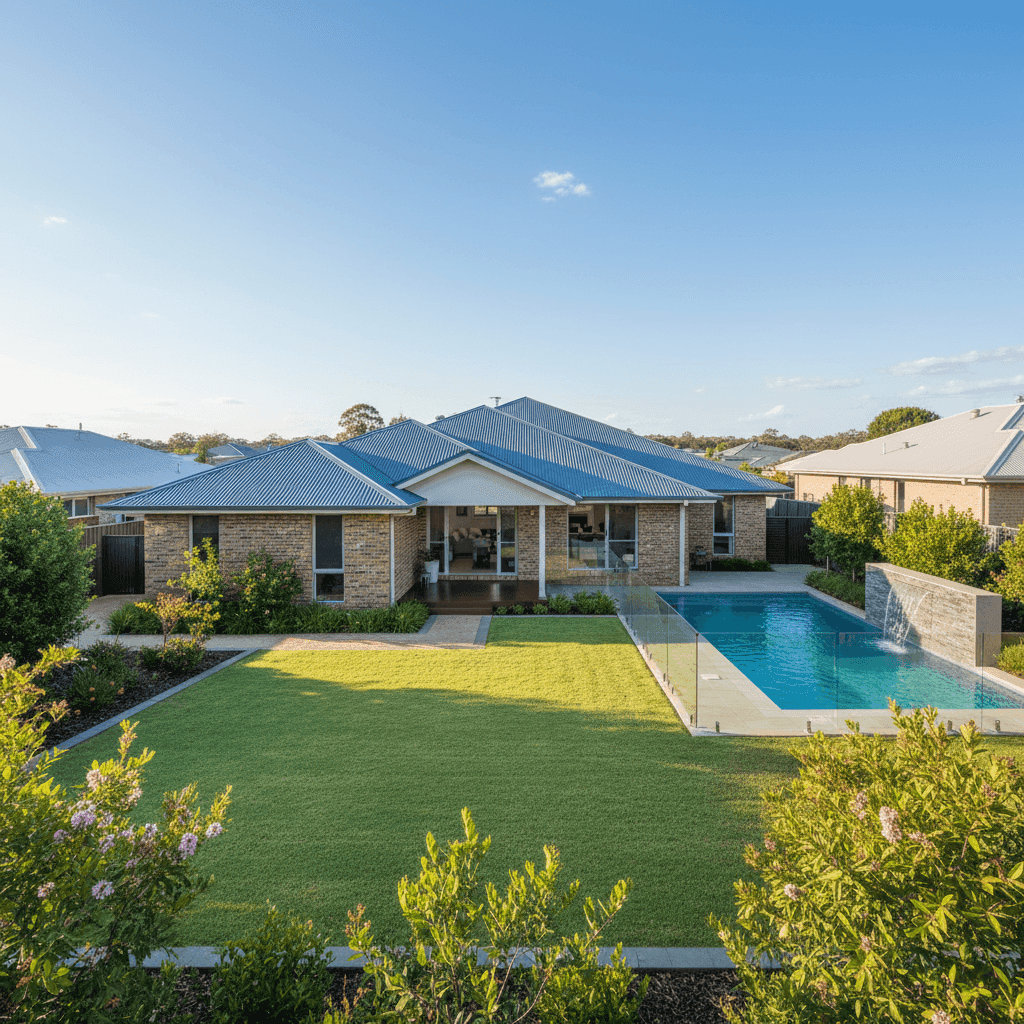
Cedar Grove is a quiet, semi-rural suburb nestled in Logan City, roughly 50 kilometres south of Brisbane's CBD. Known for its acreage lifestyle and leafy surrounds, it attracts families looking for space without straying too far from urban conveniences. For owners of a free standing home in this pocket of South East Queensland, understanding what drives your home insurance premium — and whether you're paying a fair price — is well worth the effort.
This article breaks down a real home and contents insurance quote for a four-bedroom, three-bathroom free standing home in Cedar Grove (postcode 4285), built in 1993, and compares it against local, state, and national benchmarks.
---
Is This Quote Fair?
The annual premium for this property came in at $2,444 per year (or $234 per month), covering a building sum insured of $737,000 and contents valued at $106,000. Both the building and contents excess are set at $2,000.
Our pricing analysis rates this quote as FAIR — around average. That's a reasonable result for a home of this size and specification, and here's why that context matters.
The suburb average for Cedar Grove sits at $2,304 per year, with a median of $2,416. This quote lands just $28 above the suburb median — essentially right in the middle of the pack for the local market. The 25th percentile for the area is $1,594, while the 75th percentile reaches $2,913, meaning this premium falls comfortably within the central range of what Cedar Grove homeowners are paying.
It's worth noting that the suburb sample size of 13 quotes is relatively modest, so these figures should be interpreted as indicative rather than definitive. That said, the consistency between the average and median suggests the data isn't being skewed by outliers.
---
How Cedar Grove Compares
To appreciate how well-positioned this quote is, it helps to zoom out and look at the broader picture.
| Benchmark | Average Premium | Median Premium |
|---|---|---|
| Cedar Grove (suburb) | $2,304/yr | $2,416/yr |
| Logan LGA | $4,617/yr | — |
| Queensland (state) | $9,129/yr | $3,903/yr |
| National | $5,347/yr | $2,764/yr |
The numbers tell an interesting story. While Cedar Grove's suburb average looks modest, the Queensland state average of $9,129 is dramatically higher — driven largely by high-risk coastal and cyclone-prone areas in North Queensland, which push the mean upward significantly. The state median of $3,903 is a more representative figure, and Cedar Grove's median of $2,416 sits well below it.
Compared to the national average of $5,347, Cedar Grove homeowners are paying considerably less — a reflection of the suburb's relatively low exposure to extreme weather events and its distance from high-risk flood zones. The national median of $2,764 is closer to what local homeowners are experiencing, and this particular quote sits just below that mark.
The Logan LGA average of $4,617 is notably higher than Cedar Grove's suburb figures, suggesting that other parts of the Logan council area carry more risk (likely flood-prone suburbs closer to waterways), which pulls the LGA average up. Cedar Grove's semi-rural elevation and positioning appear to work in homeowners' favour here.
---
Property Features That Affect Your Premium
Several characteristics of this property influence how insurers assess and price the risk.
Brick veneer construction with a Colorbond roof is generally viewed favourably by insurers. Brick veneer walls offer solid fire resistance and durability, while steel/Colorbond roofing is lightweight, long-lasting, and performs well in high-wind conditions — an important consideration even in non-cyclone areas. Together, these materials tend to attract more competitive premiums compared to timber-framed or fibro homes.
Slab foundation is the standard for Queensland homes of this era and presents no particular concern for insurers, provided the site has adequate drainage. Homes built on slabs can be more vulnerable to subsidence in certain soil conditions, but this is generally not a significant issue in Cedar Grove's geology.
Timber and laminate flooring can be a factor in contents claims — these floor types are susceptible to water damage and may influence how insurers assess internal risk. It's worth ensuring your contents sum insured accounts for the cost of replacing or repairing these floors if they're not covered under the building policy.
The swimming pool adds a modest amount to the premium, both as an asset requiring coverage and as a liability consideration. Pools can also affect claims related to water damage or accidental injury, so it's important to confirm your policy covers pool-related incidents adequately.
Ducted climate control is a significant fixed asset and should be explicitly covered under the building sum insured. At $737,000, the building cover for a 214 sqm home seems appropriately calibrated, but homeowners should periodically review whether their sum insured keeps pace with rising construction costs.
No cyclone risk is a meaningful factor in keeping this premium competitive. Many Queensland properties, particularly in the north, attract significant loadings for cyclone cover. Cedar Grove's inland location means this surcharge doesn't apply here.
---
Tips for Homeowners in Cedar Grove
1. Review your building sum insured annually Construction costs in South East Queensland have risen sharply in recent years. A sum insured that was accurate two or three years ago may no longer reflect the true cost of rebuilding your home. Use a building cost calculator or speak with a quantity surveyor to ensure you're not underinsured.
2. Consider your excess carefully Both the building and contents excess on this policy are set at $2,000. While a higher excess generally reduces your premium, it also means more out-of-pocket costs at claim time. If your financial buffer is limited, it may be worth comparing quotes with a lower excess to find the right balance.
3. Check your pool and outbuilding coverage If you have a pool, fencing, pump equipment, or garden sheds on the property, confirm these are explicitly included in your policy. Some insurers cap or exclude coverage for outbuildings and pool infrastructure unless specified.
4. Bundle strategically, but compare first Combining home and contents insurance under one policy (as in this quote) can simplify your admin and sometimes attract a discount. However, it's not always the cheapest option. Use a comparison tool to check whether separate policies from different providers might offer better value.
---
Compare Your Own Quote
Whether you're a new homeowner in Cedar Grove or simply overdue for a policy review, it pays to know where your premium stands. CoverClub makes it easy to benchmark your quote against real data from your suburb, LGA, and across Queensland.
Get a home insurance quote today and see how your premium compares — you might be surprised by what you find.