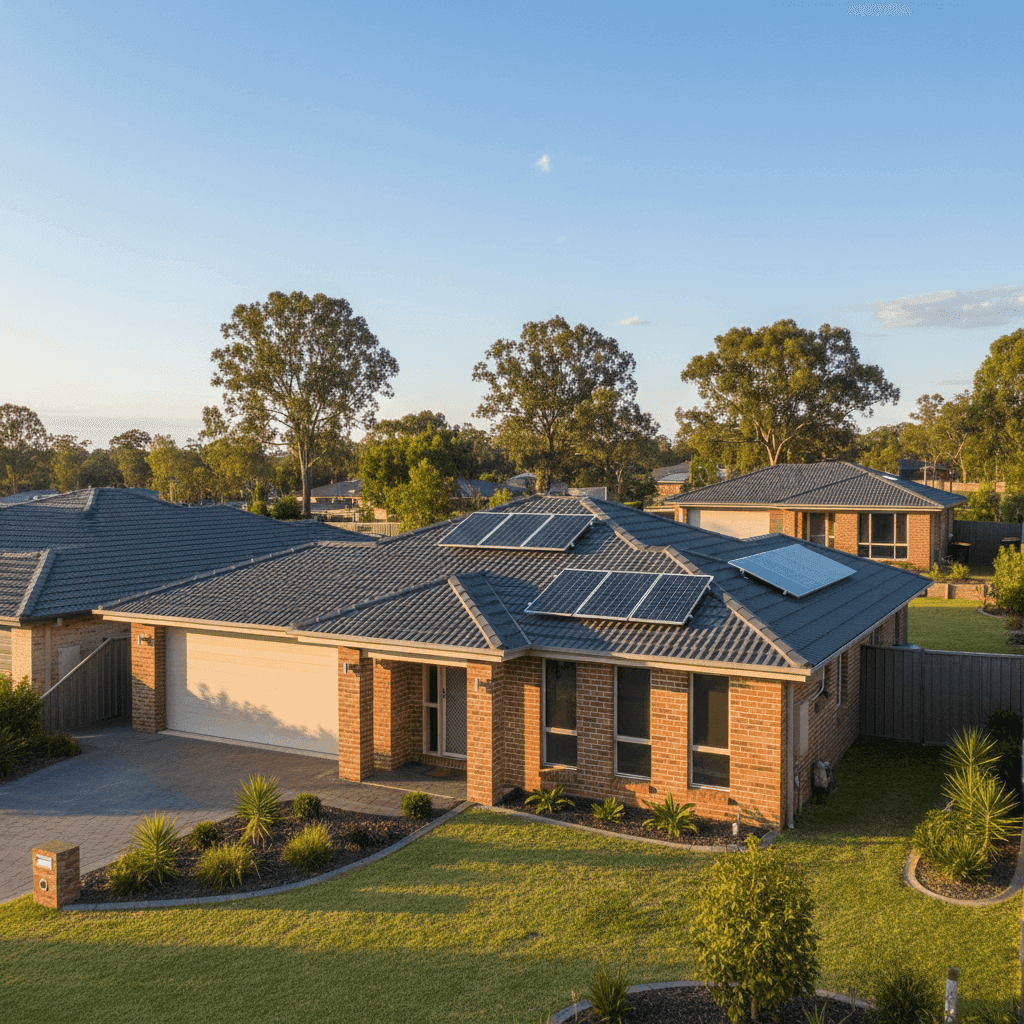
Cedar Grove is a quiet, semi-rural suburb nestled in Logan City, about 50 kilometres south of Brisbane. With its leafy streets and spacious blocks, it's a popular choice for families seeking a relaxed lifestyle within commuting distance of the city. But what does it actually cost to insure a free standing home here — and is the price you're being quoted a fair one? This article breaks down a real home and contents insurance quote for a 4-bedroom property in Cedar Grove (postcode 4285) and puts it into context against local, state, and national benchmarks.
---
Is This Quote Fair?
The quote in question comes in at $2,110 per year (or $206/month) for combined home and contents cover, with a building sum insured of $485,000 and contents valued at $28,000. Both the building and contents excess are set at $500.
Our price rating for this quote is FAIR — Around Average, and the data backs that up.
Compared to the suburb average of $2,304/yr for Cedar Grove, this quote sits roughly $194 below the local average and a more notable $306 below the suburb median of $2,416/yr. That means this homeowner is doing better than at least half of their neighbours when it comes to insurance costs — a solid result.
It's worth noting that the suburb sample size here is 13 quotes, which gives a reasonable but not exhaustive picture of the local market. Still, the consistency between the average and median figures suggests the data is fairly reliable.
The quote also falls comfortably within the interquartile range for Cedar Grove — between the 25th percentile ($1,594/yr) and the 75th percentile ($2,913/yr) — meaning it's neither unusually cheap nor alarmingly expensive. Homeowners paying below $1,594 may have lower coverage levels or older, simpler properties, while those above $2,913 may have higher-value homes, additional risk factors, or simply haven't shopped around recently.
---
How Cedar Grove Compares
To truly appreciate this quote, it helps to zoom out and look at the broader picture.
| Benchmark | Premium |
|---|---|
| This Quote | $2,110/yr |
| Cedar Grove Suburb Average | $2,304/yr |
| Cedar Grove Suburb Median | $2,416/yr |
| Logan LGA Average | $4,617/yr |
| QLD State Average | $9,129/yr |
| QLD State Median | $3,903/yr |
| National Average | $5,347/yr |
| National Median | $2,764/yr |
The figures here tell a striking story. The Queensland state average of $9,129/yr is dramatically higher than what Cedar Grove homeowners are typically paying — a difference driven largely by the inclusion of high-risk coastal and cyclone-prone areas in the state average. North Queensland in particular pulls that figure up significantly.
Even the national average of $5,347/yr is more than double this quote, and the national median of $2,764/yr is still above what's been quoted here. Cedar Grove's position as a non-cyclone-risk suburb in South East Queensland gives it a meaningful pricing advantage over much of the country.
The Logan LGA average of $4,617/yr is also considerably higher than the Cedar Grove suburb average, suggesting that some parts of Logan face elevated risks — whether from flooding, storm damage, or higher property values — that don't apply equally across the entire council area.
---
Property Features That Affect Your Premium
Several characteristics of this property work in the homeowner's favour from an insurance pricing perspective.
Brick veneer construction with a tiled roof is generally viewed favourably by insurers. Brick veneer offers solid fire resistance and structural durability, while tiles are considered a more resilient roofing material compared to metal or asbestos sheeting. Together, they contribute to a lower risk profile than timber-framed or clad homes.
Slab foundation is the standard for Queensland homes of this era and presents no particular risk flag for insurers. Combined with tile flooring throughout, the property has limited susceptibility to water damage from minor leaks compared to homes with timber floors.
Construction year of 1991 places the home in a generation that generally meets modern building standards without the complications of very old wiring or plumbing, but also without the premium pricing that comes with a brand-new build.
Solar panels are worth noting — while they add value to the property, they can slightly increase the cost of rebuilding, which is factored into the building sum insured. Ensuring the sum insured accurately reflects the replacement cost of the panels is important.
Ducted climate control is another feature that adds to the replacement value of the home. These systems can be expensive to reinstall, and it's worth confirming they're adequately covered under the building or contents policy.
The granny flat is a significant consideration. Many standard home insurance policies don't automatically extend full cover to a secondary dwelling on the same property. Homeowners should verify with their insurer that the granny flat — including its structure and any contents within it — is explicitly covered under the policy terms.
The 214 sqm building size and standard fittings quality help keep the sum insured at a reasonable level. High-end finishes or a larger footprint would push the rebuild cost — and therefore the premium — higher.
---
Tips for Homeowners in Cedar Grove
1. Confirm your granny flat is fully covered This is the single most important action item for this property. Contact your insurer directly and ask whether the granny flat is included in the building sum insured and whether any contents inside it are covered. If not, you may need a separate policy or an endorsement added to your existing cover.
2. Review your building sum insured annually With construction costs continuing to rise across Australia, a sum insured that was accurate two years ago may now be insufficient. Use a building calculator or speak to a quantity surveyor to ensure $485,000 still reflects the true cost of rebuilding your home — including the solar panels and ducted air conditioning system.
3. Don't overlook contents coverage At $28,000, the contents value on this policy is relatively modest for a 4-bedroom home with a granny flat. Consider doing a room-by-room audit of your belongings — furniture, appliances, clothing, electronics, and items in the granny flat — to make sure you're not underinsured.
4. Shop around at renewal time Even though this quote rates as fair, insurance premiums can vary significantly between providers for the same property. Setting a reminder to compare quotes before your renewal date each year is one of the easiest ways to avoid paying more than you need to.
---
Compare Your Options with CoverClub
Whether you're renewing your current policy or insuring a Cedar Grove property for the first time, it pays to see what the market has to offer. CoverClub makes it easy to compare home and contents insurance quotes side by side, so you can be confident you're getting genuine value — not just a familiar brand name. Get a quote today at CoverClub and see how your premium stacks up against your neighbours.