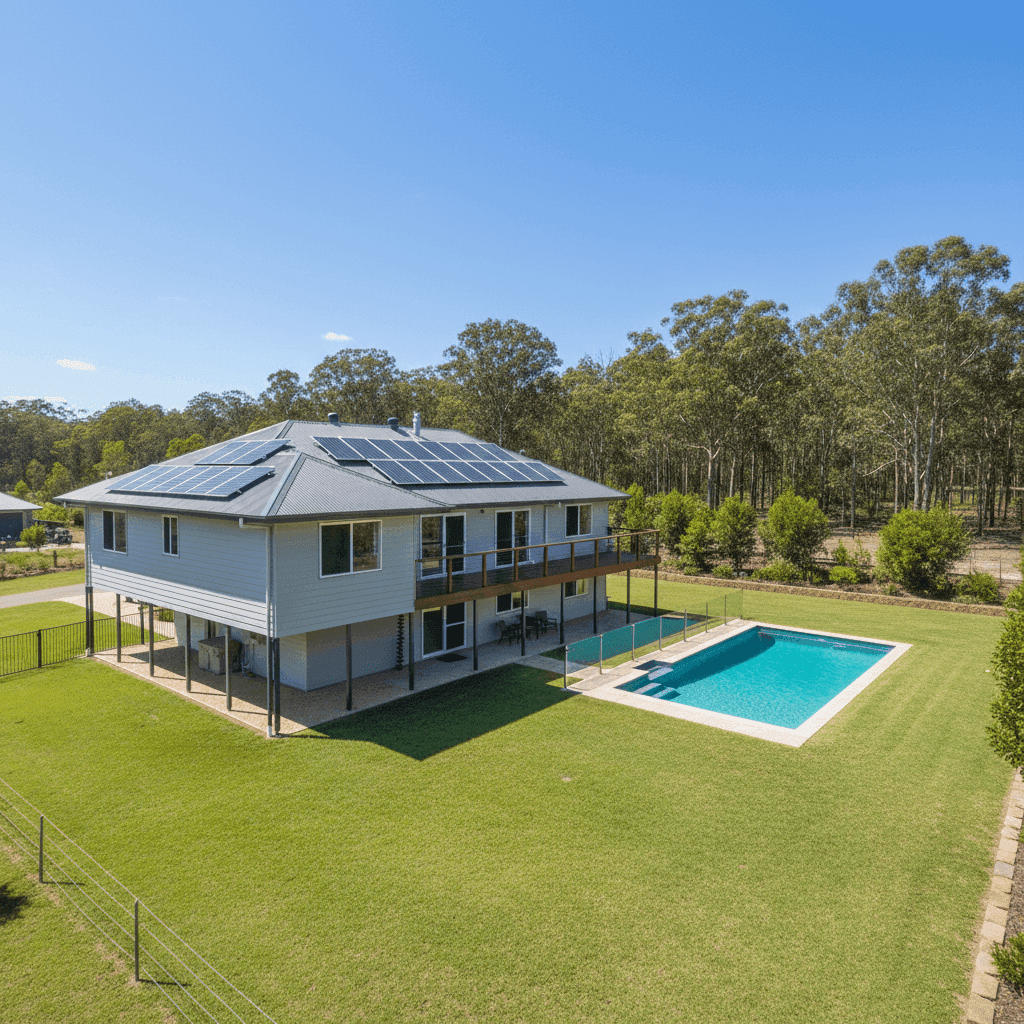
Cedar Vale is a quiet semi-rural suburb nestled in Logan City, roughly 45 kilometres south of Brisbane's CBD. With its leafy blocks, elevated terrain, and a mix of established and newer homes, it's a popular choice for families seeking space without straying too far from urban conveniences. This article breaks down a real home and contents insurance quote for a four-bedroom free-standing home in Cedar Vale (postcode 4285), examines whether the price is reasonable, and offers practical guidance for local homeowners looking to get the most from their cover.
---
Is This Quote Fair?
The quote in question comes in at $3,492 per year (or $335 per month) for combined home and contents insurance, covering a building sum insured of $609,000 and $50,000 worth of contents. Both the building and contents excess are set at $1,000.
Our pricing engine has rated this quote as Fair — Around Average, and the numbers back that up. Compared to the Cedar Vale suburb average of $3,245 per year, this quote sits roughly 8% above the local mean — not dramatically so, but enough to suggest there may be room to shop around. It falls comfortably within the suburb's interquartile range of $2,576 to $3,996, which means it's neither a standout bargain nor an outlier on the expensive end.
When you zoom out to the broader Queensland picture, the quote actually looks quite competitive. The state average premium is a steep $9,129 per year, heavily skewed by high-risk coastal and cyclone-prone regions in Far North Queensland. The state median — a more representative figure at $3,903 — still sits above this quote, reinforcing that Cedar Vale homeowners are in a relatively favourable position compared to many Queenslanders.
Against national benchmarks, the story is similarly encouraging. Australia's national average premium is $5,347 per year, while the national median is $2,764. This quote exceeds the national median, but that's largely a reflection of Queensland's elevated risk profile and the size and value of the property in question.
---
How Cedar Vale Compares
Here's a snapshot of where this quote sits in context:
| Benchmark | Premium |
|---|---|
| This Quote | $3,492/yr |
| Cedar Vale Suburb Average | $3,245/yr |
| Cedar Vale Suburb Median | $3,178/yr |
| Cedar Vale 25th Percentile | $2,576/yr |
| Cedar Vale 75th Percentile | $3,996/yr |
| Logan LGA Average | $4,617/yr |
| QLD State Average | $9,129/yr |
| QLD State Median | $3,903/yr |
| National Average | $5,347/yr |
| National Median | $2,764/yr |
Note: Suburb data is based on a sample of 13 quotes — a relatively small dataset, so treat averages as a useful guide rather than a definitive benchmark.
One particularly telling comparison is against the Logan LGA average of $4,617 per year. Cedar Vale's premiums are noticeably lower than the broader Logan City average, which likely reflects the suburb's lower density, reduced theft exposure, and more favourable flood risk profile compared to some other parts of the LGA closer to waterways.
---
Property Features That Affect Your Premium
Several characteristics of this property have a meaningful influence on the premium quoted.
Hardiplank/Hardiflex cladding is generally viewed favourably by insurers. As a fibre cement product, it offers solid resistance to fire, rot, and impact — all factors that reduce claim likelihood and can contribute to more competitive pricing compared to older timber weatherboard homes.
Steel/Colorbond roofing is another positive signal. Colorbond is durable, lightweight, and performs well in storms — a key consideration in South East Queensland, where severe thunderstorms and hail events are a seasonal reality. It's also non-combustible, which matters for bushfire risk assessments.
Pole/stump foundations elevate the home above ground level, which can offer some protection against localised surface water flooding. However, elevated homes can also present greater wind uplift risk during storms, which insurers factor into their modelling. At less than one metre of elevation, this property sits in a modest category that generally doesn't attract significant loading.
Timber and laminate flooring is a common feature in Queensland homes and doesn't typically push premiums up significantly, though it can affect contents and building replacement costs compared to tiled floors.
The property also features a swimming pool, solar panels, and ducted climate control — all of which add to the overall replacement value of the home and are reflected in the $609,000 building sum insured. Solar panels in particular can be a point of complexity in insurance policies; it's worth confirming with your insurer whether the panels are covered under the building policy and to what extent.
Cedar Vale falls outside designated cyclone risk zones, which is a meaningful advantage for Queensland homeowners. Properties in Far North Queensland can pay several times more for the same level of cover due to cyclone exposure — so this is a genuine cost saving for Cedar Vale residents.
---
Tips for Homeowners in Cedar Vale
1. Review your building sum insured regularly Construction costs have risen sharply in recent years. A sum insured of $609,000 for a 214 sqm home works out to roughly $2,845 per square metre — broadly in line with current rebuild costs for a standard-quality home in South East Queensland, but worth revisiting annually to ensure you're not underinsured.
2. Check your solar panel coverage Many standard home insurance policies cover solar panels as part of the building, but some exclude them or apply sub-limits. Given the prevalence of solar in Queensland, it's worth reading the Product Disclosure Statement carefully or asking your insurer directly.
3. Compare quotes before renewing With 13 quotes in our Cedar Vale dataset ranging from around $2,576 to $3,996 per year, there's clearly meaningful variation in the market. Loyalty doesn't always pay — insurers often reserve their best pricing for new customers, so it pays to compare quotes at renewal time.
4. Consider your excess strategically Both the building and contents excess on this policy are set at $1,000. Opting for a higher voluntary excess can reduce your annual premium, which may make sense if you have a healthy emergency fund and are primarily insuring against major, infrequent events rather than smaller claims.
---
Ready to Find a Better Rate?
Whether you're renewing your current policy or insuring a home for the first time, it pays to compare. CoverClub makes it easy to see how your quote stacks up against real data from your suburb, your LGA, and across Australia. Get a home insurance quote today and find out if you're getting the value you deserve.