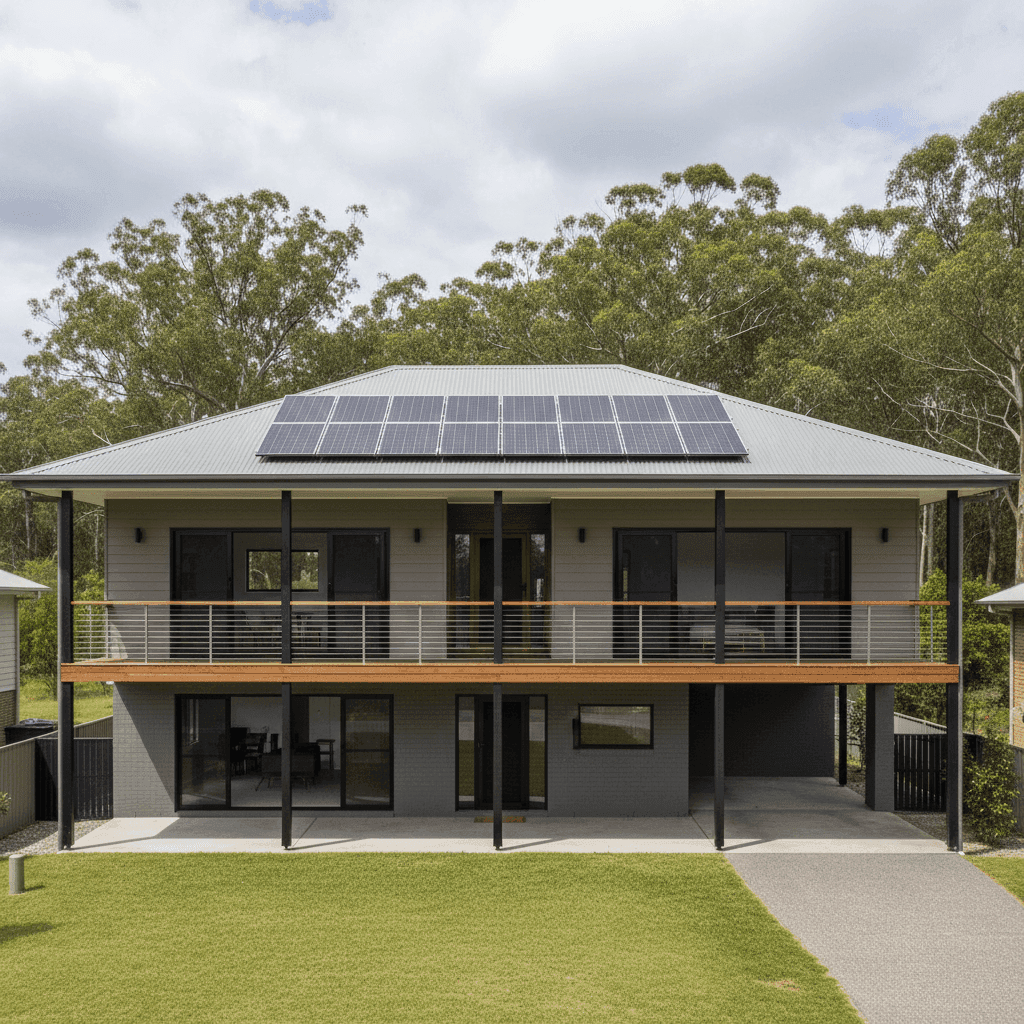
If you own a free standing home in Cedar Vale, QLD 4285, you've probably noticed that insurance premiums in South East Queensland can vary enormously — and not always in ways that feel fair. This article breaks down a real home and contents insurance quote for a three-bedroom, two-bathroom property in Cedar Vale, compares it against local, state, and national benchmarks, and offers practical tips to help you make the most of your cover.
---
Is This Quote Fair?
The quote in question comes to $4,359 per year (or $426 per month) for combined home and contents insurance, covering a building sum insured of $1,188,000 and $50,000 in contents. Both the building and contents excess are set at $1,000.
Our price rating for this quote is EXPENSIVE — above average for the Cedar Vale area.
To put that in perspective, the suburb average premium sits at $3,245 per year, and the median is even lower at $3,178 per year. This quote comes in roughly $1,100 above the suburb average — a meaningful gap worth investigating before simply accepting the figure at renewal.
That said, context matters. The 75th percentile for Cedar Vale premiums is $3,996 per year, which means this quote actually sits above the most expensive quarter of local policies. Several property-specific factors — including the construction era, pole foundation, and high building sum insured — likely contribute to the elevated figure. We'll dig into those shortly.
---
How Cedar Vale Compares
Understanding where Cedar Vale sits in the broader insurance landscape helps frame whether this premium is genuinely steep or simply reflective of local conditions.
| Benchmark | Average Premium | Median Premium |
|---|---|---|
| Cedar Vale (QLD 4285) | $3,245/yr | $3,178/yr |
| Logan LGA | $4,617/yr | — |
| Queensland | $9,129/yr | $3,903/yr |
| National | $5,347/yr | $2,764/yr |
(Based on a sample of 13 quotes in Cedar Vale. [View full Cedar Vale stats](https://coverclub.com.au/stats/QLD/4285/cedar-vale) | [QLD state data](https://coverclub.com.au/stats/QLD) | [National comparison](https://coverclub.com.au/stats/national))
A few things stand out here. Queensland's average premium of $9,129 per year is dramatically higher than its median of $3,903 — a sign that a relatively small number of very high-risk properties (think cyclone-prone Far North Queensland) are pulling the average upward significantly. Cedar Vale, located in the Logan region south-west of Brisbane, is not a cyclone risk area, which is a meaningful advantage for homeowners here.
The Logan LGA average of $4,617 per year is notably higher than Cedar Vale's suburb average, suggesting that Cedar Vale is actually one of the more affordable pockets within the broader Logan council area. Even so, this particular quote at $4,359 is nudging close to the LGA average, which warrants a closer look at what's driving the cost.
---
Property Features That Affect Your Premium
Several characteristics of this property are likely influencing the premium — some upward, some in a more neutral direction.
Construction Era (1984)
Homes built in the early-to-mid 1980s are now over 40 years old. Insurers factor in the age of a property when assessing risk, as older homes may have ageing electrical systems, plumbing, and roofing materials that increase the likelihood of a claim. A 1984 build isn't ancient, but it does sit outside the range of newer construction that typically attracts the most competitive rates.
Pole (Stump) Foundation
This is one of the more significant rating factors for this property. Homes built on poles — common throughout Queensland, particularly in hilly or flood-prone areas like parts of the Logan hinterland — carry a different risk profile than slab-on-ground homes. Pole foundations can be more susceptible to certain types of movement and damage, and some insurers price this accordingly.
Steel / Colorbond Roof
On the positive side, a steel Colorbond roof is generally viewed favourably by insurers. It's durable, fire-resistant, and performs well in storms compared to older tile or fibrous cement alternatives. This may be partially offsetting costs that other factors are pushing up.
Solar Panels
This property has solar panels installed. While solar is fantastic for energy bills, it does add to the replacement cost of the home — and insurers need to account for that in the building sum insured. It's worth confirming your policy explicitly covers solar panels, as coverage can vary between providers.
High Building Sum Insured ($1,188,000)
At 139 square metres, a sum insured of $1,188,000 works out to roughly $8,550 per square metre — which is on the higher end. Building replacement costs have risen sharply in recent years due to construction labour shortages and material price inflation, but it's worth double-checking this figure against a current building cost calculator to ensure it's accurate rather than over-estimated.
---
Tips for Homeowners in Cedar Vale
1. Review Your Building Sum Insured
As noted above, the $1,188,000 sum insured is a key driver of this premium. Use an independent building replacement cost estimator (many insurers provide these for free) to verify whether this figure is appropriate for a 139 sqm home in the Logan area. Over-insuring can mean unnecessarily high premiums.
2. Shop Around — Seriously
With only 13 quotes in our Cedar Vale sample, there's meaningful variation in the market. The gap between the 25th percentile ($2,576/yr) and 75th percentile ($3,996/yr) is over $1,400 — clear evidence that different insurers price this suburb very differently. Get a fresh quote at CoverClub to see what competing insurers are currently offering.
3. Ask About Discounts for Your Colorbond Roof and Solar
Some insurers offer discounts for properties with modern roofing materials or security features. It's always worth asking your insurer directly whether your Colorbond roof or solar installation qualifies for any premium reduction.
4. Consider Your Excess Level
Both the building and contents excess on this policy are set at $1,000. Increasing your excess — say, to $2,000 or $2,500 — can meaningfully reduce your annual premium. Just make sure you're comfortable covering that amount out of pocket in the event of a claim.
---
Ready to Compare?
A quote that's rated expensive doesn't have to be the end of the story. Insurance markets are competitive, and the right cover at a better price is often just a few clicks away. [Compare home insurance quotes at CoverClub](https://coverclub.com.au/?focus=address) to see how your current premium stacks up and whether there's a better deal waiting for you. It's free, fast, and tailored to your property.