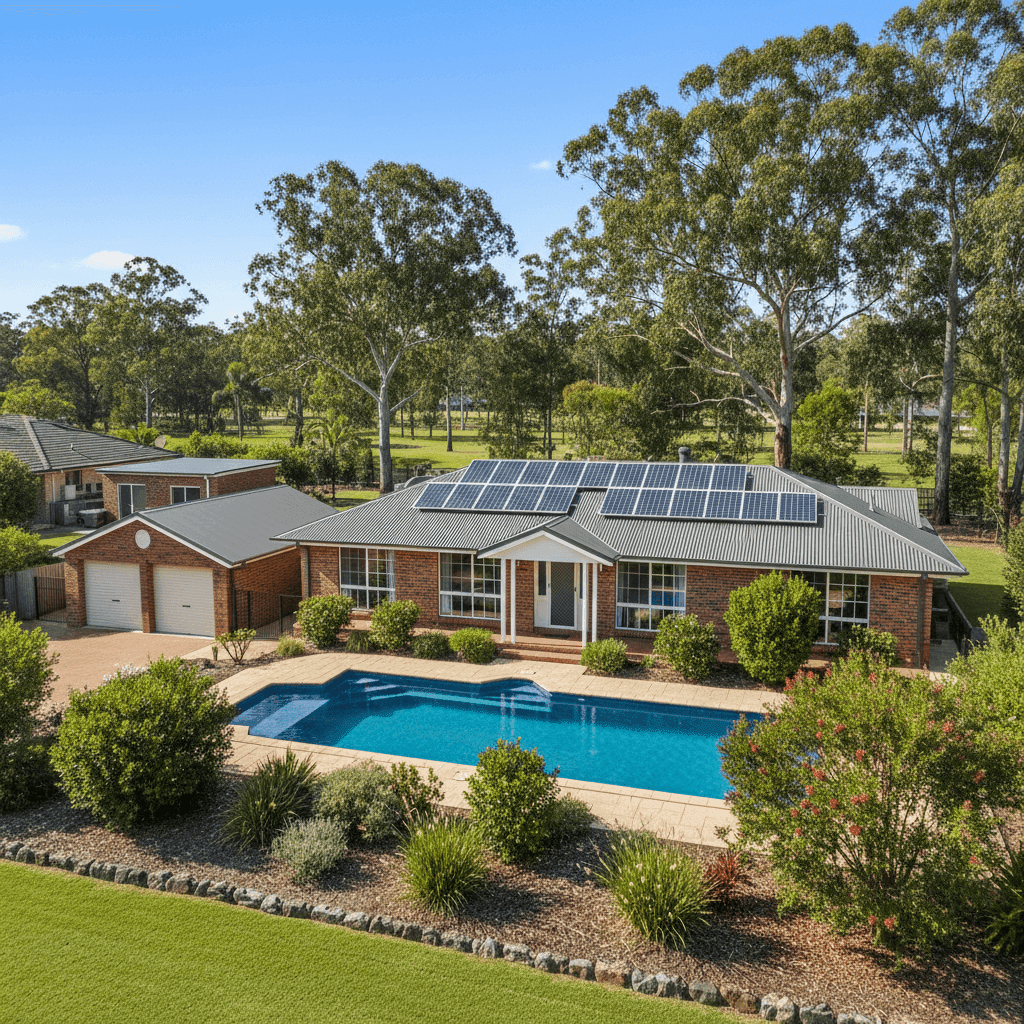
Cedar Vale is a semi-rural suburb nestled in Logan City, about 45 kilometres south of Brisbane's CBD. Known for its leafy blocks and relaxed lifestyle, it attracts families looking for space without straying too far from urban conveniences. For owners of a larger free standing home in this area, getting home and contents insurance right is an important financial decision — and understanding what drives your premium can save you real money.
This article breaks down a recent home and contents insurance quote for a six-bedroom free standing home in Cedar Vale (postcode 4285), comparing it against local, state, and national benchmarks to help you understand whether you're getting a fair deal.
---
Is This Quote Fair?
The quoted annual premium for this property is $3,514 per year (or around $337 per month), covering a building sum insured of $920,000 and contents valued at $202,000. Both the building and contents carry a $1,000 excess.
Our independent price rating for this quote is Fair — Around Average. That assessment is backed by the numbers: the suburb average premium sits at $3,245 per year, and the median is $3,178 per year. This quote lands comfortably within the suburb's typical range, sitting between the 25th percentile ($2,576/yr) and the 75th percentile ($3,996/yr) — closer to the upper-middle of the pack, which makes sense given the size and features of this property.
In short, you're not overpaying dramatically, but there's room to explore whether a more competitive quote exists. A six-bedroom home with a pool, solar panels, ducted climate control, and a granny flat is a more complex risk than the average Cedar Vale property, so some premium loading above the suburb median is expected and reasonable.
---
How Cedar Vale Compares
Understanding how your suburb stacks up against broader benchmarks puts your premium in proper perspective. Here's how Cedar Vale measures up:
| Benchmark | Average Premium | Median Premium |
|---|---|---|
| Cedar Vale (4285) | $3,245/yr | $3,178/yr |
| Queensland | $9,129/yr | $3,903/yr |
| National | $5,347/yr | $2,764/yr |
| LGA (Logan City) | $4,617/yr | — |
Note: Based on a sample of 13 quotes in the Cedar Vale suburb.
A few things stand out here. Queensland's average premium of $9,129 per year is dramatically higher than its median of $3,903 — a clear sign that high-risk coastal and cyclone-prone properties are pulling the state average upward. Cedar Vale, which is not classified as a cyclone risk area, benefits from that lower-risk profile and sits well below the state average.
Compared to the Logan LGA average of $4,617 per year, this quote is also noticeably lower — another positive signal. Nationally, the median of $2,764 is slightly lower than Cedar Vale's median, reflecting the wide variation in property types and risk profiles across the country.
The takeaway: Cedar Vale is a relatively affordable suburb for home insurance by Queensland standards, and this quote sits in a reasonable position within that landscape.
---
Property Features That Affect Your Premium
Several characteristics of this property influence the premium, both positively and negatively. Here's what matters most:
Size and value: A six-bedroom, three-bathroom home with a building sum insured of $920,000 is a substantial asset. Larger homes cost more to rebuild, and higher sums insured naturally attract higher premiums. The contents value of $202,000 also reflects a well-furnished household.
Construction quality: Brick veneer external walls and a steel/Colorbond roof are both well-regarded by insurers. Colorbond roofing in particular is durable, fire-resistant, and performs well in storms — all factors that can positively influence your risk profile. A concrete slab foundation adds further structural stability.
Flooring: Timber and laminate flooring is classified as above-average quality, which aligns with the property's "above average" fittings rating. Higher-quality finishes increase the cost to repair or replace, which is factored into the premium.
Pool: A swimming pool adds liability considerations and increases the overall replacement value of the property, contributing to a slightly higher premium. It also requires appropriate fencing and safety compliance under Queensland law.
Solar panels: Rooftop solar systems represent a meaningful asset — panels, inverters, and associated wiring can cost tens of thousands of dollars to replace. Insurers factor this into their calculations, though solar is increasingly common and well-understood by the market.
Ducted climate control: Ducted air conditioning systems are expensive to repair or replace and are included in the building sum insured. Their presence is consistent with the above-average fittings quality rating.
Granny flat: A secondary dwelling on the property adds complexity for insurers — it increases the total insurable value and may have its own fixtures, fittings, and contents. It's worth confirming with your insurer that the granny flat is explicitly covered under your policy.
No cyclone risk: Cedar Vale falls outside Queensland's cyclone risk zones, which is a meaningful premium advantage compared to coastal and far-north Queensland properties.
---
Tips for Homeowners in Cedar Vale
1. Confirm your granny flat is covered Not all standard home insurance policies automatically extend full cover to secondary dwellings. Review your policy wording carefully and ask your insurer directly whether the granny flat — including its fixtures and any contents — is included. Some policies may require an endorsement or separate listing.
2. Review your building sum insured regularly Construction costs in south-east Queensland have risen significantly in recent years. A sum insured of $920,000 may have been accurate when the policy was first set up, but it's worth recalculating using a building cost estimator to ensure you're not underinsured. Underinsurance is one of the most common and costly mistakes homeowners make.
3. Check your solar panel coverage Confirm whether your solar panels are covered under the building section of your policy, and whether the cover includes accidental damage, storm damage, and breakdown. Some insurers offer more comprehensive solar cover than others — it's worth comparing.
4. Compare quotes before renewal With a "Fair — Around Average" price rating, there's a reasonable chance a comparable policy exists at a lower price point. Loyalty doesn't always pay in insurance — the market rewards those who shop around. Use CoverClub's free comparison tool to benchmark your renewal quote before you commit.
---
Find a Better Deal with CoverClub
Whether you're renewing your existing policy or insuring a property for the first time, comparing quotes is the single most effective way to make sure you're not overpaying. CoverClub makes it easy to see how your premium stacks up against others in Cedar Vale, across Queensland, and nationally — all in one place. Get a quote today and find out if you could be paying less for the same level of cover.