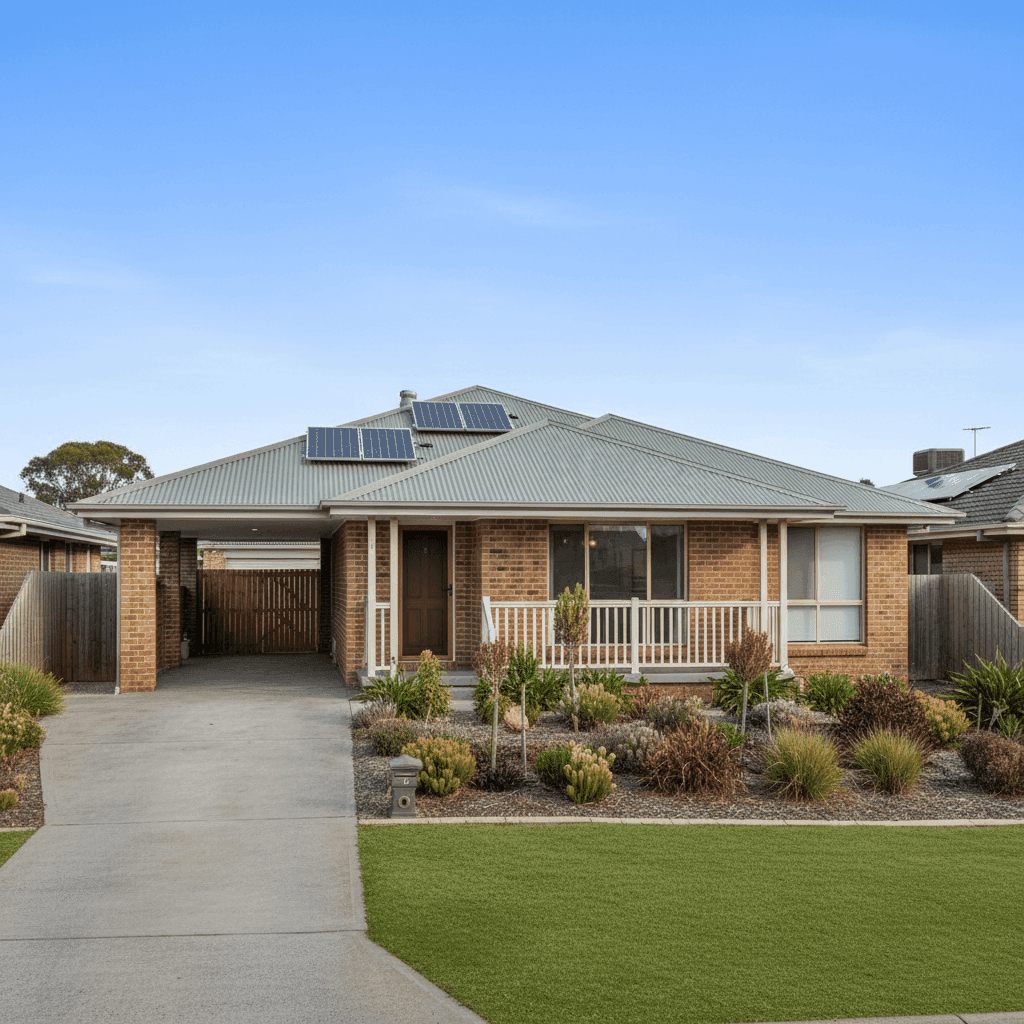
If you own a four-bedroom free standing home in Centenary Heights, QLD 4350, you're probably curious whether the premium you're paying for home and contents insurance is competitive — or whether you're leaving money on the table. This article breaks down a real quote for a brick veneer home in this Toowoomba suburb, comparing it against local, state, and national benchmarks so you can make a more informed decision at renewal time.
---
Is This Quote Fair?
The quote in question sits at $1,196 per year (or $119/month) for combined home and contents cover, with a building sum insured of $361,000 and contents valued at $100,000. The building excess is $3,000 and the contents excess is $1,000.
Our pricing model rates this quote as FAIR — around average for the area. That's a meaningful finding. It tells you the premium isn't a bargain, but it's also not inflated. For a 1978-built home with standard fittings, this kind of result suggests the insurer has priced the risk reasonably without padding the margin excessively.
That said, "fair" doesn't mean you can't do better. It simply means this quote sits within a reasonable range for what the market is offering in Centenary Heights right now.
---
How Centenary Heights Compares
To put the $1,196 annual premium in context, here's how it stacks up against available data for the area and beyond:
| Benchmark | Premium |
|---|---|
| This quote | $1,196/yr |
| Suburb average (4350) | $1,453/yr |
| Suburb median (4350) | $1,697/yr |
| Suburb 25th percentile | $889/yr |
| Suburb 75th percentile | $2,045/yr |
| LGA average (Toowoomba) | $2,535/yr |
| QLD state average | $4,547/yr |
| QLD state median | $3,931/yr |
| National average | $2,965/yr |
| National median | $2,716/yr |
(Based on [26 quotes collected for Centenary Heights](https://coverclub.com.au/stats/QLD/4350/centenary-heights). See also [QLD state insurance data](https://coverclub.com.au/stats/QLD) and [national home insurance statistics](https://coverclub.com.au/stats/national).)
The $1,196 quote sits below both the suburb average and median, which is a positive sign. It also comes in well under the broader Toowoomba LGA average of $2,535 and is dramatically lower than the Queensland state average of $4,547 — a figure heavily skewed by high-risk coastal and cyclone-prone regions further north.
This gap between Centenary Heights premiums and the Queensland state average is worth noting. Much of QLD carries elevated insurance costs due to flood, storm surge, and cyclone exposure. Centenary Heights, sitting inland on the Darling Downs at around 700 metres above sea level, benefits from a significantly lower natural disaster risk profile than coastal Queensland. That geographic advantage is reflected in the numbers.
Compared to the national average of $2,965, this quote is also well below the mark — roughly 60% cheaper — which underscores just how much location shapes insurance pricing across Australia.
---
Property Features That Affect Your Premium
Several characteristics of this property influence how insurers assess and price the risk:
Brick Veneer Construction Brick veneer is one of the most common wall types in Australian suburban homes and is generally viewed favourably by insurers. It offers solid fire resistance and structural durability, which can contribute to more competitive premiums compared to timber-framed or clad homes.
Colorbond Steel Roof A steel Colorbond roof is a strong asset from an insurance perspective. It's durable, low-maintenance, and performs well in hail and wind events — all factors that reduce the likelihood of a weather-related claim. Insurers typically price this roof type more favourably than older tile or fibrous cement options.
Slab Foundation A concrete slab foundation is considered stable and low-risk. Unlike homes on stumps or piers, slab homes have fewer vulnerabilities to subsidence, termite ingress under the floor, or moisture-related damage — all of which can influence underwriting decisions.
Construction Year: 1978 Homes built in the late 1970s can attract slightly higher premiums due to ageing infrastructure — particularly plumbing, electrical wiring, and roofing materials that may be approaching end of life. However, a well-maintained 1978 home with modern upgrades (such as a Colorbond roof) can still attract reasonable rates, as appears to be the case here.
Solar Panels The presence of solar panels adds a modest layer of complexity to the insurance picture. Panels represent an additional asset that may or may not be covered under a standard building policy, and they can be a target in hail events. It's worth confirming with your insurer whether your solar system is included in the building sum insured and what conditions apply.
Standard Fittings and No Pool Standard-quality fittings keep the replacement cost estimate grounded, which helps avoid over-insurance. The absence of a pool also removes a common source of liability and maintenance-related claims, keeping the risk profile clean.
---
Tips for Homeowners in Centenary Heights
1. Review your building sum insured regularly A $361,000 sum insured for a 130 sqm home in Centenary Heights may be appropriate today, but construction costs have risen significantly in recent years. Use a building cost calculator annually to ensure you're not underinsured — especially given the age of the home and potential need for full reconstruction to current building codes.
2. Clarify solar panel coverage Ask your insurer explicitly whether your solar panels are covered under the building policy, and if so, up to what value. Some policies exclude panels or cap coverage. If your system isn't adequately covered, you may need to adjust your sum insured or seek an endorsement.
3. Consider your excess levels strategically This policy carries a $3,000 building excess — on the higher end. A higher excess typically lowers your premium, but it means more out-of-pocket cost if you need to claim. Assess your financial buffer and decide whether a lower excess (at a slightly higher premium) makes more sense for your situation.
4. Shop around at renewal Even with a "fair" rating, the spread of premiums in Centenary Heights is wide — from $889 at the 25th percentile to $2,045 at the 75th. That's a $1,156 difference for similar properties. Comparing quotes at renewal could move you meaningfully closer to the lower end of that range.
---
Ready to Compare?
Whether you're renewing soon or just benchmarking your current policy, it pays to see what the broader market is offering. Get a home insurance quote at CoverClub and compare your options side by side — it only takes a few minutes and could save you hundreds each year.