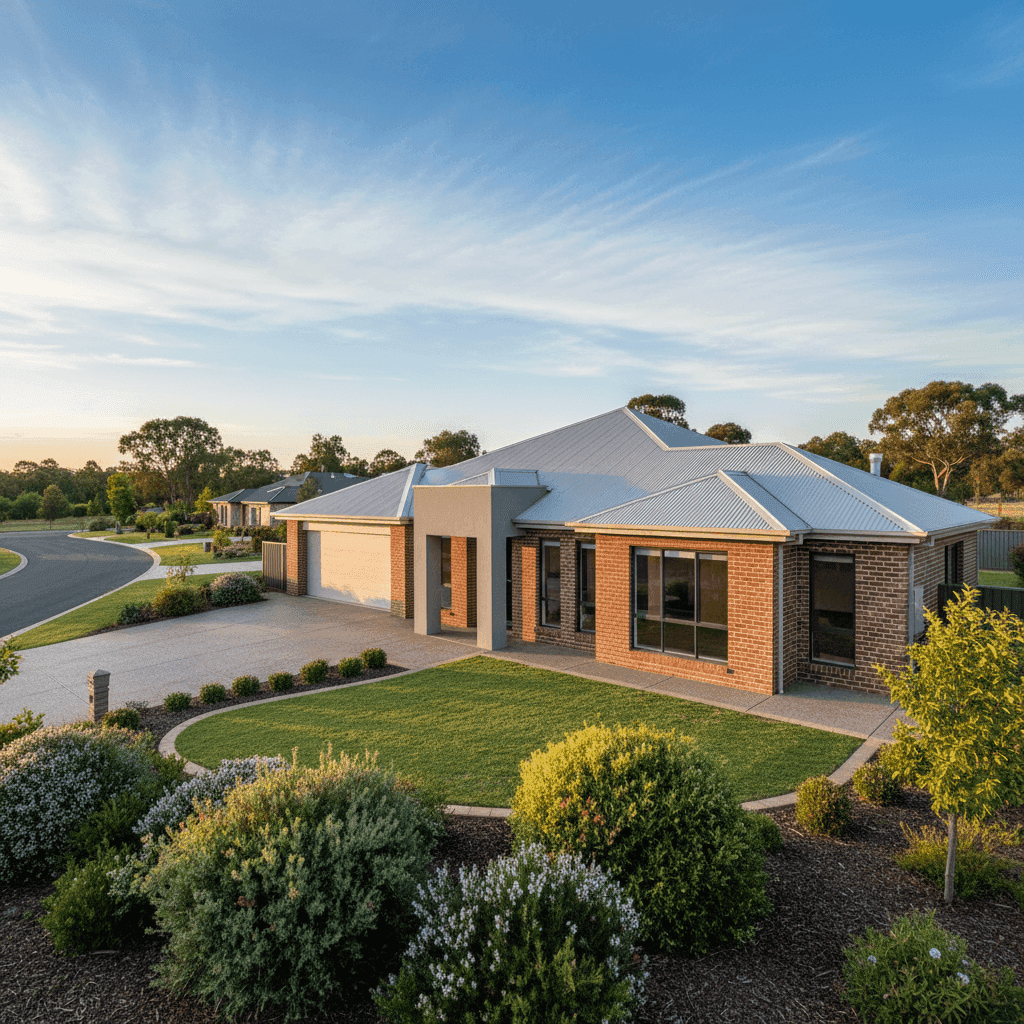
If you own a free standing home in Ceres, VIC 3221, you've probably wondered whether you're paying a fair price for home and contents insurance — or quietly overpaying year after year. This article breaks down a real insurance quote for a five-bedroom property in Ceres, compares it against local, state, and national benchmarks, and offers practical tips to help you make a more informed decision at renewal time.
---
Is This Quote Fair?
The quote in question comes in at $2,210 per year (or $216/month) for a combined home and contents policy, covering a building sum insured of $970,000 and $200,000 in contents. Both the building and contents excess are set at $1,000.
Our price rating for this quote is Expensive — Above Average.
To put that in context: the suburb average annual premium in Ceres sits at just $1,550, with a median of $1,578. This quote is roughly $660 above the suburb average — that's a 43% premium over what most Ceres homeowners are paying, based on our sample of 31 quotes in the area.
That said, it's worth noting that this property is not a typical Ceres home. At 286 sqm with five bedrooms, two bathrooms, above-average fittings quality, and a building sum insured of $970,000, it sits firmly at the upper end of the local property spectrum. Larger, higher-value homes naturally attract higher premiums — so while the quote is on the expensive side, it's not entirely without explanation.
---
How Ceres Compares
Understanding where Ceres sits in the broader insurance landscape is useful context for any homeowner reviewing their policy.
| Benchmark | Average Premium | Median Premium |
|---|---|---|
| Ceres (3221) | $1,550/yr | $1,578/yr |
| Greater Geelong LGA | $1,852/yr | — |
| Victoria | $2,921/yr | $2,694/yr |
| National | $2,965/yr | $2,716/yr |
Ceres is notably affordable compared to both state and national averages. The VIC state average of $2,921/yr is nearly double the Ceres suburb average, and the national average of $2,965/yr tells a similar story. Even within the Greater Geelong LGA, Ceres homeowners tend to pay less than the $1,852 LGA average.
This suggests Ceres is generally considered a lower-risk suburb by insurers — likely due to its relatively low exposure to extreme weather events, bushfire risk, and flood-prone areas compared to other parts of Victoria. For the majority of Ceres homeowners, this translates to more competitive premiums.
The quote analysed here, at $2,210/yr, actually sits below the Victorian and national averages — which provides some comfort. However, relative to the local Ceres benchmark, there's a meaningful gap worth investigating.
---
Property Features That Affect Your Premium
Several characteristics of this particular property help explain why the quote lands above the suburb average.
Size and sum insured: At 286 sqm and a building sum insured of $970,000, this is a substantial home. Rebuild costs scale with size and quality, and insurers price accordingly. A higher sum insured means greater exposure for the insurer — and a higher premium for you.
Above-average fittings quality: Kitchens with stone benchtops, premium appliances, engineered timber flooring, and high-spec bathrooms all increase the cost to rebuild or repair. Insurers factor in fittings quality when calculating premiums, and "above average" fittings can add meaningfully to your annual cost.
Brick veneer construction: This is generally viewed favourably by insurers. Brick veneer walls offer solid fire resistance and durability, which can help moderate premiums compared to timber-framed or clad exteriors.
Steel/Colorbond roof: Colorbond roofing is widely regarded as one of the more resilient roofing materials available in Australia — resistant to corrosion, fire, and high winds. This is a positive risk factor that may help offset some of the premium loading from the home's size and fittings.
Concrete slab foundation: Slab foundations are structurally stable and typically well-regarded by insurers. They reduce the risk of subsidence and pest-related structural damage compared to raised timber subfloors.
Ducted climate control: While ducted systems add comfort, they also add to the insured value of the home. Replacing a ducted heating and cooling system can cost tens of thousands of dollars, and this is reflected in the contents or building sum insured.
No pool, no solar panels: The absence of a pool removes a common liability risk, and no solar panels means fewer concerns around fire risk or equipment damage claims. Both factors work in the homeowner's favour.
---
Tips for Homeowners in Ceres
1. Review your sum insured carefully A $970,000 building sum insured is significant. Make sure this figure reflects the actual cost to rebuild your home — not its market value. Overinsuring drives up your premium unnecessarily, while underinsuring can leave you seriously exposed at claim time. Tools like the Cordell Sum Sure calculator can help you estimate an accurate rebuild cost.
2. Compare quotes before renewing Given that this quote sits above the suburb average, it's well worth comparing offers from multiple insurers before automatically renewing. Premiums for the same property can vary by hundreds of dollars between providers. Get a comparison quote at CoverClub to see what else is available.
3. Consider your excess settings Both the building and contents excess on this policy are set at $1,000. In many cases, opting for a higher voluntary excess — say $2,000 — can reduce your annual premium noticeably. If you have the financial buffer to cover a larger out-of-pocket amount in the event of a claim, this can be a smart trade-off.
4. Check your contents sum insured $200,000 in contents cover is a reasonable figure for a five-bedroom home with above-average fittings, but it's worth doing a room-by-room audit to confirm accuracy. Many homeowners underestimate the replacement value of their belongings — particularly electronics, furniture, clothing, and jewellery — while others overestimate and pay for cover they don't need.
---
Find a Better Deal with CoverClub
Whether you're buying a new policy or approaching renewal, comparing your options is one of the easiest ways to make sure you're not overpaying. CoverClub makes it simple to benchmark your current premium against real quotes from across the market. Start your comparison today and see how much you could save on home and contents insurance in Ceres.