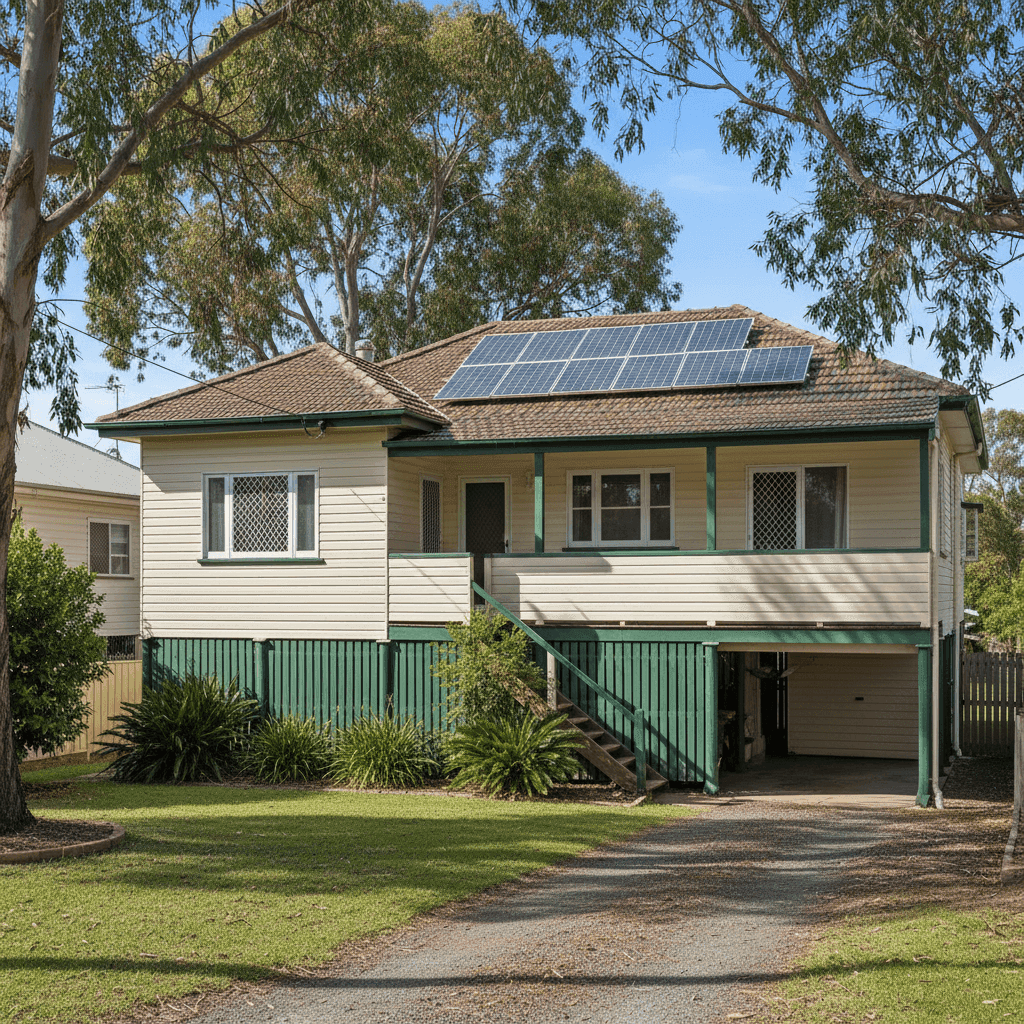
Cessnock sits in the heart of the Hunter Valley — a region better known for its wineries than its weather woes, but that doesn't mean home insurance is a simple affair. For owners of a three-bedroom, free-standing home in this part of New South Wales, understanding what drives your premium can mean the difference between overpaying and getting genuinely good value. This article breaks down a real quote for a property in Cessnock (postcode 2325), compares it against local and national benchmarks, and offers practical guidance for homeowners in the area.
---
Is This Quote Fair?
The quote in question covers both building and contents — $503,000 in building cover and $185,000 in contents cover — with an annual premium of $2,992 (or $273/month). Both the building and contents excess are set at $1,000.
Our price rating for this quote is Expensive (Above Average), meaning it sits above what most comparable properties in the suburb are paying. Specifically, this premium lands above the 75th percentile for Cessnock, which sits at $2,689 per year. In practical terms, roughly three-quarters of quotes in the suburb came in cheaper than this one.
That said, "expensive" is relative. The sum insured here is substantial — over half a million dollars in building cover alone — and the property has several features (more on those below) that insurers price carefully. It's also worth noting that the premium is still well below the suburb's average of $21,660/year, which is heavily skewed by a small number of very high-risk or high-value properties in the sample.
The more meaningful benchmark is the suburb median of $1,944/year. This quote sits about $1,048 above that midpoint, which is a meaningful gap and worth investigating further through a comparison.
---
How Cessnock Compares
To put this quote in context, here's how Cessnock stacks up against broader benchmarks. You can explore the full data on our Cessnock insurance stats page, the NSW state overview, and national insurance statistics.
| Benchmark | Average Premium | Median Premium |
|---|---|---|
| Cessnock (2325) | $21,660/yr | $1,944/yr |
| NSW (State) | $9,528/yr | $3,770/yr |
| National | $5,347/yr | $2,764/yr |
A few things stand out here. First, Cessnock's median premium of $1,944 is actually well below the NSW state median of $3,770 — suggesting that, on the whole, the suburb is considered a relatively lower-risk area by insurers. The national median of $2,764 further reinforces this; Cessnock sits comfortably below it.
This makes the above-average rating for this particular quote more notable. The property's specific characteristics — rather than its location alone — appear to be doing a lot of the heavy lifting on price.
It's also worth flagging that the suburb average ($21,660) is dramatically higher than the median, which typically signals a small number of outlier quotes pulling the figure upward. With a sample size of 56 quotes, one or two very high-value or high-risk properties can distort the average significantly. Always focus on the median as the more reliable reference point.
---
Property Features That Affect Your Premium
Several characteristics of this property are likely influencing the premium — some pushing it higher, others potentially keeping it in check.
Hardiplank / Hardiflex Cladding
The external walls are clad in Hardiplank (Hardiflex), a fibre cement product that's durable and relatively fire-resistant. This is generally viewed favourably by insurers compared to timber weatherboard, though it can be more costly to repair or replace than brick veneer, which may nudge premiums slightly upward.
Concrete Roof
A concrete tile roof is considered one of the more resilient roofing materials available — resistant to fire, wind, and hail. This is typically a positive factor for insurers and may help moderate the premium compared to properties with Colorbond or older terracotta tiles that are prone to cracking.
Stump Foundation (Elevated by At Least 1 Metre)
This is a significant factor. The home sits on stumps and is elevated by at least one metre, giving it a Queenslander-style raised profile. While elevation can actually reduce flood risk in some scenarios, insurers also consider the increased exposure to wind uplift and the added complexity of repairs to the subfloor and stumps. Elevated homes can also be more expensive to rebuild, which affects the sum insured calculation.
Construction Year: 1975
At roughly 50 years old, this home predates many modern building codes. Older homes often carry higher premiums due to the likelihood of outdated wiring, plumbing, and materials that are more expensive to source and replace. This is a common driver of above-average premiums for properties of this era.
Solar Panels
The presence of solar panels adds replacement value to the property and is increasingly factored into building sums insured. If your policy doesn't explicitly cover solar panels, it's worth confirming with your insurer — but most modern home and contents policies do include them as part of the building cover.
No Pool, No Ducted Climate Control
The absence of a pool and ducted air conditioning simplifies the risk profile slightly and keeps the contents and building valuations from climbing further.
---
Tips for Homeowners in Cessnock
1. Review Your Building Sum Insured Annually
At $503,000, the building cover here is substantial. Construction costs have risen sharply in recent years, so it's important to ensure your sum insured reflects current rebuild costs — not the original purchase price or an outdated estimate. Underinsurance is one of the most common and costly mistakes Australian homeowners make.
2. Get Multiple Quotes Before Renewing
Given that this quote sits above the 75th percentile for the suburb, there's a reasonable chance a comparable policy could be found at a lower price point. Use a comparison service like CoverClub to see quotes side by side before your renewal date.
3. Ask About Stump and Subfloor Cover
If your home is elevated on stumps, confirm exactly what your policy covers in terms of subfloor structures, stump replacement, and any damage resulting from movement or decay. This is a common gap in older elevated homes.
4. Consider Your Excess Strategically
Both excesses here are set at $1,000. Opting for a higher excess (say, $2,000 or $2,500) can meaningfully reduce your annual premium. If you have a good claims history and a financial buffer to cover a higher out-of-pocket cost, this can be a smart trade-off.
---
Ready to Compare?
If you're a homeowner in Cessnock or the broader Hunter Valley region, it pays to shop around. Premiums can vary significantly between insurers for the same property — sometimes by hundreds of dollars a year. Head to CoverClub to compare home and contents quotes in minutes, tailored to your property's specific features and location.