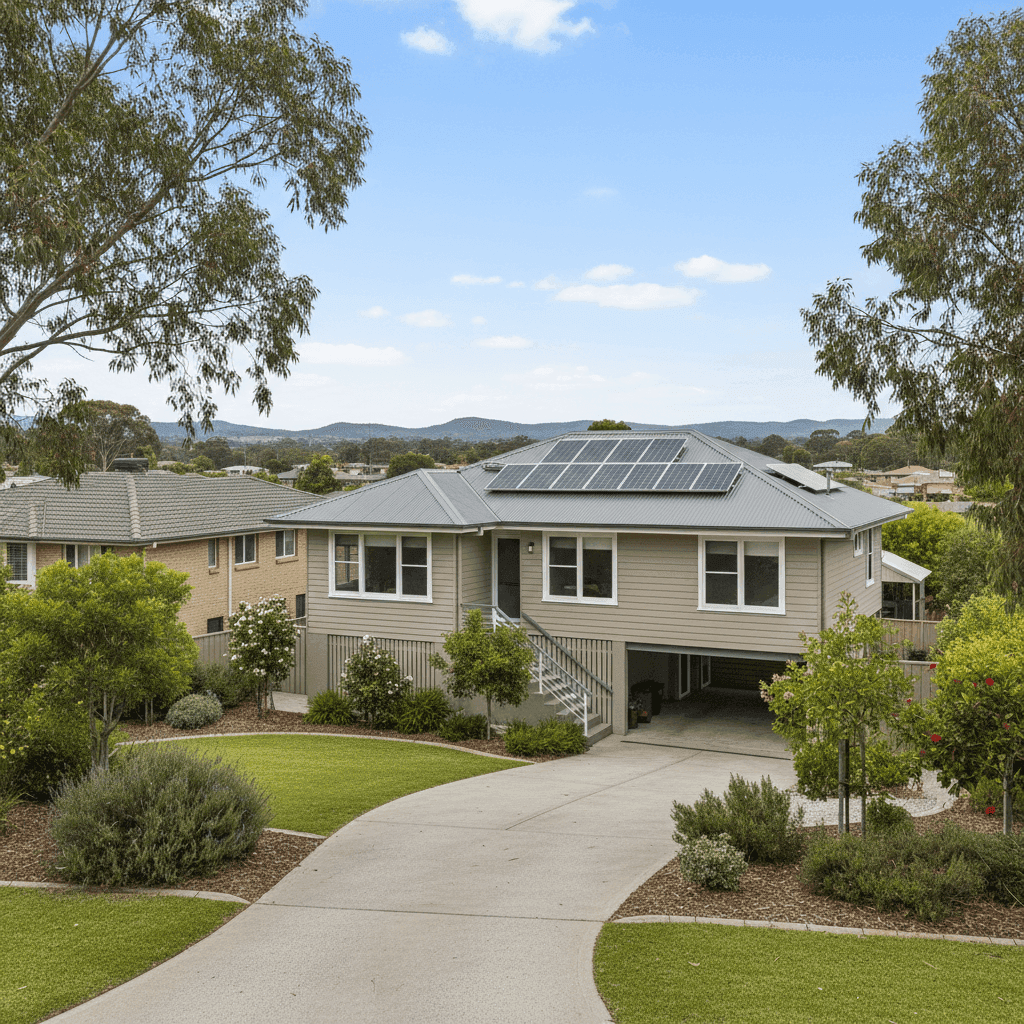
Cessnock sits at the heart of the Hunter Valley — a region known for its vineyards, heritage streetscapes, and a housing stock that tells the story of NSW's industrial past. For owners of free standing homes in this postcode, understanding what you should be paying for home and contents insurance is just as important as choosing the right policy. This article breaks down a real quote for a four-bedroom property in Cessnock (NSW 2325) and puts it in context against local, state, and national benchmarks.
---
Is This Quote Fair?
The quote in question comes in at $1,893 per year (or $188/month) for combined home and contents cover, with a building sum insured of $757,000 and contents valued at $122,000. The building excess sits at $3,000, with a $1,000 excess on contents.
Our pricing engine has rated this quote as Fair — Around Average, which is an encouraging result for the policyholder. It's not the cheapest cover available, but it's meaningfully below several key benchmarks, suggesting the insurer has priced this property competitively relative to the risk profile.
To put it plainly: this homeowner is not overpaying. The quote lands well below both the suburb average and the NSW state average, which is a solid outcome given the property's age and construction characteristics.
---
How Cessnock Compares
Digging into the numbers reveals just how well this quote stacks up. Based on data from 91 quotes collected for the Cessnock 2325 area:
| Benchmark | Premium |
|---|---|
| This Quote | $1,893/yr |
| Suburb 25th Percentile | $1,523/yr |
| Suburb Median | $1,998/yr |
| Suburb Average | $2,728/yr |
| Suburb 75th Percentile | $3,216/yr |
| NSW State Average | $3,801/yr |
| NSW State Median | $3,410/yr |
| National Average | $2,965/yr |
| National Median | $2,716/yr |
| LGA Average (Central Coast NSW) | $4,412/yr |
At $1,893/yr, this quote sits just below the suburb median of $1,998, meaning roughly half of comparable Cessnock properties are paying more. Compared to the NSW state average of $3,801/yr, this quote represents a saving of nearly $1,900 annually — a significant difference.
It's also worth noting the LGA average of $4,412/yr (recorded under Central Coast NSW). While geographic classification can sometimes cause anomalies in LGA-level data, the contrast underscores how competitive this particular quote is.
Against the national average of $2,965/yr, this quote is still more than $1,000 cheaper per year. For a property of this size and age, that's a meaningful result.
---
Property Features That Affect Your Premium
Several characteristics of this property will have influenced how insurers assessed the risk — and therefore the premium.
Age of Construction (1953)
Homes built in the early 1950s carry inherent risks that newer builds don't. Ageing plumbing, wiring, and structural elements can increase the likelihood of claims, and insurers typically factor this into their pricing. That said, a well-maintained heritage home can still attract competitive premiums if the risk is managed appropriately.
Hardiplank / Hardiflex External Walls
Fibre cement cladding such as Hardiplank and Hardiflex is generally viewed favourably by insurers. It's durable, fire-resistant, and low-maintenance compared to timber weatherboard. This is likely a positive factor in keeping the premium reasonable.
Steel / Colorbond Roof
Colorbond roofing is a strong asset from an insurance perspective. It's resistant to fire, rot, and corrosion, and performs well in high-wind conditions. Insurers tend to view this material positively, which can help moderate premiums.
Stump Foundation
Homes on stumps (also known as pier and beam foundations) are common in older NSW properties. While they allow for good airflow and can be easier to inspect for damage, they can also be more susceptible to movement and pest activity. This may be a neutral-to-slightly-negative factor depending on the insurer's risk model.
Timber / Laminate Flooring
Timber floors add to the character of older homes but can be costly to repair or replace after water damage or fire. Insurers may account for this when calculating the building sum insured.
Solar Panels
The presence of solar panels adds replacement value to the property and introduces a small element of additional risk (primarily from electrical faults or storm damage). Most standard home insurance policies cover solar panels as part of the building, but it's worth confirming this with your insurer.
Building Size (205 sqm)
At 205 square metres, this is a generously sized four-bedroom home. A larger footprint naturally increases the cost to rebuild, which is reflected in the $757,000 building sum insured. Ensuring your sum insured keeps pace with construction cost inflation is critical — underinsurance is one of the most common and costly mistakes homeowners make.
---
Tips for Homeowners in Cessnock
1. Review Your Sum Insured Annually
Construction costs in NSW have risen sharply in recent years. A building sum insured set two or three years ago may no longer be sufficient to cover a full rebuild. Use an online building cost calculator or speak with a quantity surveyor to verify your figure each year.
2. Consider Your Excess Levels Carefully
This policy carries a $3,000 building excess — higher than average. While a higher excess typically reduces your annual premium, it also means a larger out-of-pocket cost when you make a claim. Make sure you have that amount readily accessible, and consider whether a lower excess might be worth the extra premium cost.
3. Maintain Your Home's Key Risk Areas
For an older home on stumps, regular inspections of the subfloor, roof, and guttering can make a real difference — both in preventing claims and in demonstrating to insurers that the property is well maintained. Some insurers may ask about maintenance history when assessing claims.
4. Compare Quotes Before Renewal
Even a quote rated "Fair" can be beaten. Insurance markets shift each year, and loyalty doesn't always pay. Running a fresh comparison at renewal time is one of the easiest ways to ensure you're not paying more than you need to.
---
Find a Better Deal with CoverClub
Whether you're renewing an existing policy or insuring a new property in Cessnock, comparing quotes is the smartest first step. CoverClub makes it easy to see what multiple insurers would charge for your specific home — in minutes, with no obligation. Get a home insurance quote today and find out if you could be paying less.