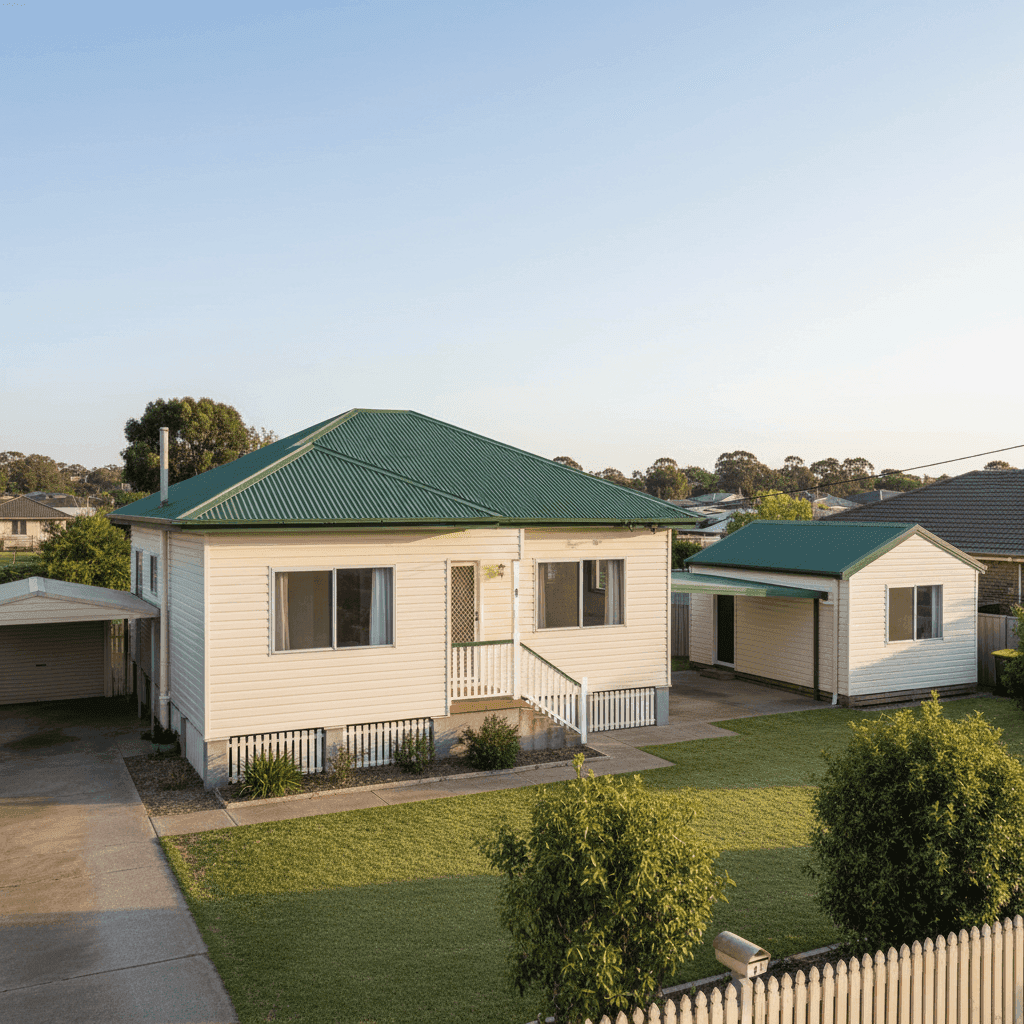
If you own a free standing home in Cessnock, NSW 2325, you're probably aware that insurance costs can vary wildly depending on your property's age, construction, and location. This article breaks down a real building insurance quote for a three-bedroom home in the area — and puts it in context against what other Cessnock homeowners, and Australians more broadly, are paying.
---
Is This Quote Fair?
The quote in question comes in at $1,491 per year (or roughly $146 per month) for building-only cover on a 130 sqm free standing home insured for $362,000. According to CoverClub's pricing data, this quote is rated CHEAP — below the suburb average — which is genuinely good news for the homeowner.
To put that in perspective:
- The suburb average for Cessnock (postcode 2325) sits at $2,728/yr, based on 91 quotes in our dataset.
- The suburb median is $1,998/yr.
- Even the 25th percentile — meaning only 25% of quotes are cheaper — comes in at $1,523/yr.
At $1,491, this quote actually falls below the 25th percentile, meaning it's cheaper than at least 75% of quotes we've seen for this suburb. That's a strong result by any measure.
---
How Cessnock Compares
Zooming out beyond the suburb paints an even clearer picture of just how competitive this premium is.
| Benchmark | Annual Premium |
|---|---|
| This Quote | $1,491 |
| Cessnock Suburb Average | $2,728 |
| Cessnock Suburb Median | $1,998 |
| NSW State Average | $3,801 |
| NSW State Median | $3,410 |
| National Average | $2,965 |
| National Median | $2,716 |
| LGA Average (Central Coast) | $4,203 |
Across the board, this quote outperforms every benchmark — sitting well below the NSW state average of $3,801/yr, the national average of $2,965/yr, and even the broader LGA average of $4,203/yr for the Central Coast region.
It's worth noting that Cessnock itself tends to be more affordable to insure than many other parts of New South Wales. The suburb average of $2,728 is meaningfully lower than the state average, which reflects the area's relatively lower exposure to some of the catastrophic risk factors (such as coastal flooding or cyclone zones) that drive premiums higher elsewhere in the state. You can explore the full Cessnock suburb insurance stats here.
---
Property Features That Affect Your Premium
Several characteristics of this particular home play a role in arriving at this competitive premium. Here's a closer look at the factors most likely influencing the price:
Vinyl Cladding Walls
Vinyl cladding is a lightweight, low-maintenance external wall material. While it's generally affordable to repair or replace, some insurers price it slightly differently to brick veneer or full brick construction — so it's worth confirming your insurer is comfortable with this material and that it's correctly declared on your policy.
Steel / Colorbond Roof
Colorbond steel roofing is one of the most insurer-friendly roof types in Australia. It's durable, fire-resistant, and performs well in high-wind events. Homes with Colorbond roofs often attract more competitive premiums than those with older materials like fibrous cement or terracotta tiles that are more prone to storm damage or breakage.
Stump Foundation
This 1985-built home sits on stumps, which is common for homes of this era in regional NSW. Stump foundations can be a consideration for insurers — particularly around subsidence or pest damage risk — but they're well understood and widely accepted. Keeping stumps in good condition is important both structurally and from an insurance perspective.
Built in 1985
At roughly 40 years old, this home sits in a bracket that most insurers are comfortable with, provided it's been well maintained. Homes built before 1990 can sometimes attract loading if they have older electrical wiring or plumbing, so it's worth ensuring any upgrades have been noted.
Granny Flat
The presence of a granny flat adds complexity to a building insurance policy. It's critical to confirm that the granny flat is explicitly included in your sum insured and covered under the policy — not all standard policies automatically extend to secondary dwellings. At $362,000 sum insured for the combined property, homeowners should verify this figure adequately reflects the rebuild cost of both structures.
No Pool, Solar Panels, or Ducted Climate Control
The absence of a pool, solar panels, and ducted air conditioning keeps this risk profile relatively straightforward. Each of those features can add to rebuild costs and, in some cases, to the premium itself — so their absence here contributes to the competitive price.
---
Tips for Homeowners in Cessnock
Whether you're reviewing an existing policy or shopping around for the first time, here are a few practical steps worth taking:
- Check your sum insured covers the granny flat. As mentioned above, secondary dwellings are sometimes excluded or underinsured. Get a proper rebuild cost estimate that accounts for both the main home and the granny flat — don't rely on market value as a proxy for rebuild cost.
- Review your excess carefully. This policy carries a $3,000 building excess, which is on the higher side. A higher excess typically reduces your premium, but it also means you'll need to cover more out of pocket before your insurer steps in. Make sure you're comfortable with that trade-off, particularly for mid-range claims like storm damage or burst pipes.
- Keep records of your home's condition and any upgrades. If you've updated the electrical wiring, replaced plumbing, or re-stumped the property since 1985, document it. This information can support your case with an insurer and may help reduce any age-related loading on your premium.
- Compare quotes annually. The insurance market shifts constantly, and loyalty doesn't always pay. The fact that this quote is below the suburb's 25th percentile is great — but that can change at renewal. Running a comparison each year through CoverClub takes only a few minutes and could save you hundreds.
---
Find a Better Deal on Your Cessnock Home Insurance
Whether this quote reflects your own situation or you're simply researching what home insurance should cost in Cessnock, the data is clear: there's a wide range of pricing in this suburb, and getting multiple quotes is the best way to ensure you're not overpaying. At CoverClub, we make it easy to compare building and contents insurance options side by side — so you can find cover that suits both your property and your budget. Start comparing quotes today.