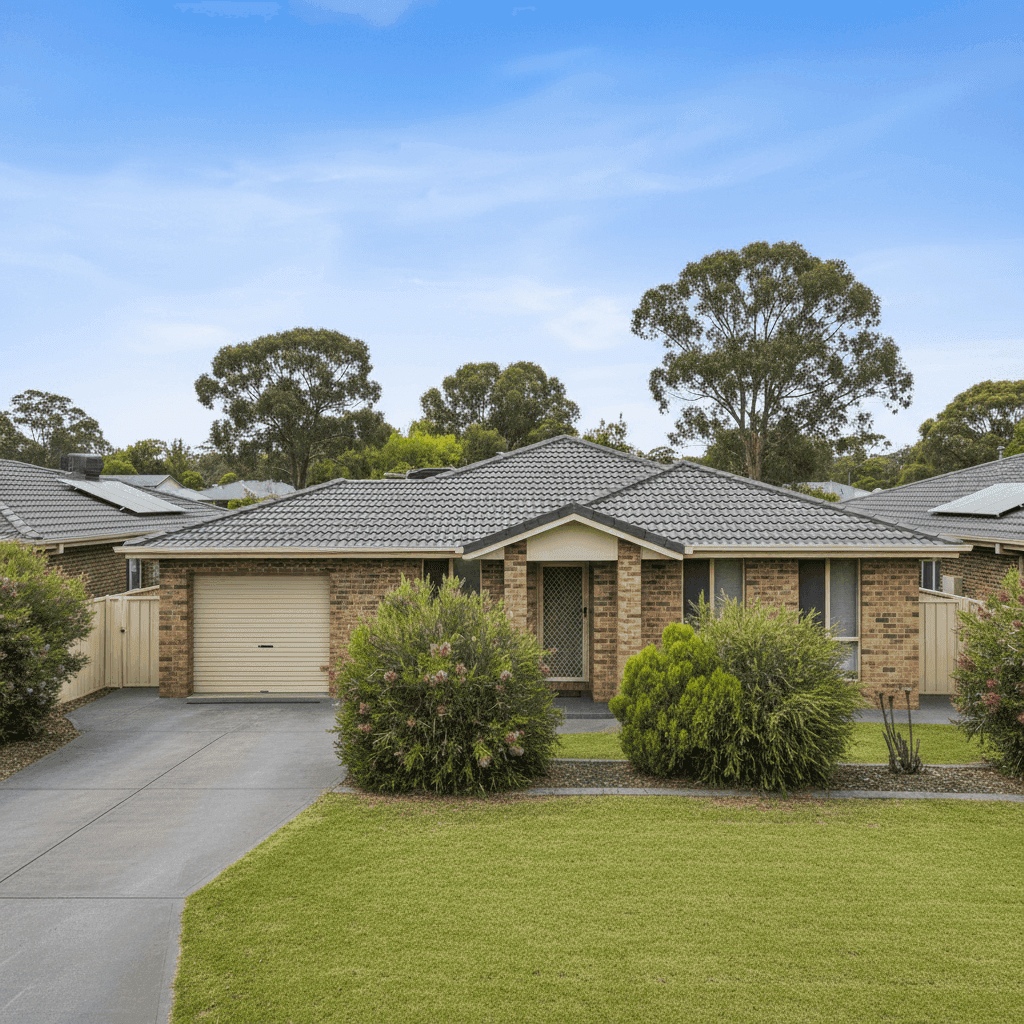
Cessnock, nestled in the heart of the Hunter Valley in New South Wales, is a well-established regional town known for its proximity to world-class wineries, affordable housing, and a strong sense of community. For owners of a free standing home in this area, understanding what you should expect to pay for home and contents insurance — and whether your current quote is competitive — can make a real difference to your household budget.
This article breaks down a recent insurance quote for a 3-bedroom, 1-bathroom free standing home in Cessnock (postcode 2325), comparing it against local, state, and national benchmarks to help you make an informed decision.
---
Is This Quote Fair?
The quote in question comes in at $2,676 per year (or $256 per month) for combined home and contents cover, with a building sum insured of $626,000 and contents valued at $100,000. Both the building and contents excess are set at $1,000.
Our price rating for this quote is FAIR — Around Average, and the data backs that up.
Looking at suburb-level statistics for Cessnock (NSW 2325), the median premium sits at $1,944 per year, while the 75th percentile reaches $2,689 per year. At $2,676, this quote lands just below the 75th percentile threshold — meaning it's more expensive than roughly three-quarters of comparable quotes in the area, but only marginally so. It's not a bargain, but it's not wildly out of step either.
The wide gap between the suburb's average premium of $21,660 and its median of $1,944 is worth noting. This kind of disparity typically signals that a small number of very high-risk or high-value properties are pulling the average upward significantly. For most homeowners in Cessnock, the median is a far more useful reference point — and against that benchmark, this quote is sitting around 38% above the midpoint, which is reasonable given the higher-than-average sum insured.
---
How Cessnock Compares
To put this quote in broader context, here's how Cessnock stacks up against New South Wales and national figures:
| Benchmark | Average Premium | Median Premium |
|---|---|---|
| Cessnock (NSW 2325) | $21,660/yr | $1,944/yr |
| NSW State | $9,528/yr | $3,770/yr |
| National | $5,347/yr | $2,764/yr |
On a median basis, Cessnock actually comes in notably cheaper than both the NSW state median ($3,770) and the national median ($2,764). This suggests that for a typical home in the suburb, insurance is relatively affordable compared to many other parts of the country — good news for local homeowners.
The quote of $2,676 sits above the Cessnock median but below the NSW and national medians, which reinforces the "fair" rating. You're paying a little more than the local midpoint, but less than what the average NSW or Australian homeowner pays for similar cover.
For reference, the LGA average for Central Coast (NSW) is $8,387 per year — though it's worth noting this LGA classification may group Cessnock with a broader coastal region that carries higher risk profiles, so direct comparisons should be treated with some caution.
---
Property Features That Affect Your Premium
Several characteristics of this property will influence how insurers assess and price the risk:
Brick Veneer Walls Brick veneer construction is generally viewed favourably by insurers. It offers solid fire resistance and durability, which can help keep premiums more competitive compared to timber-framed or weatherboard homes.
Tiled Roof A tiled roof is considered a lower-risk roofing material than, say, corrugated iron or older asbestos-containing materials. Tiles are durable and widely accepted by insurers, though they can be susceptible to cracking from impact or movement — something to keep in mind for maintenance.
Stump Foundation Homes built on stumps (also known as pier foundations) are common in older Australian properties. While they provide good ventilation and can be easier to inspect and repair, they may attract slightly higher scrutiny from insurers due to the potential for subsidence or structural movement over time, particularly in homes built in 1985.
Construction Year: 1985 At around 40 years old, this home sits in a bracket where insurers may factor in the age of electrical wiring, plumbing, and roofing materials. Older homes can carry a modest premium loading compared to newer builds, though this is often offset by the quality of original construction — brick veneer homes from this era were typically well built.
Building Size: 214 sqm At 214 square metres, this is a mid-to-large sized home for a 3-bedroom property. The $626,000 sum insured translates to roughly $2,925 per square metre for rebuild cost — a figure that aligns reasonably well with current construction cost estimates in regional NSW, though it's always worth reviewing this annually as building costs continue to rise.
No Pool, Solar, or Ducted Climate Control The absence of a pool, solar panels, and ducted air conditioning simplifies the risk profile and removes several common sources of claims or premium loadings. This likely contributes to a more straightforward, competitive quote.
---
Tips for Homeowners in Cessnock
1. Review your sum insured regularly Construction costs in regional NSW have risen sharply in recent years. A rebuild estimate that was accurate two or three years ago may now be significantly understated. Underinsurance is one of the most common — and costly — mistakes homeowners make. Use a building cost calculator or speak with a local builder to sense-check your sum insured annually.
2. Consider raising your excess to lower your premium With both building and contents excesses set at $1,000, there's room to explore whether a higher excess (say, $2,000 or $2,500) could meaningfully reduce your annual premium. If you have a solid emergency fund and are unlikely to make small claims, this can be a smart trade-off.
3. Bundle your building and contents cover This quote already combines building and contents — a smart move. Insurers typically offer better value on bundled policies, and managing a single policy is administratively simpler. If you're currently holding separate policies, it's worth comparing a combined quote.
4. Compare quotes at renewal time The insurance market in Cessnock shows significant variation — with premiums ranging from around $1,198 (25th percentile) to $2,689 (75th percentile) for comparable properties. That's a spread of nearly $1,500 per year. Shopping around at renewal, rather than auto-renewing, is one of the easiest ways to ensure you're not overpaying.
---
Ready to Compare?
Whether you're renewing your current policy or shopping for cover for the first time, comparing multiple quotes is the single most effective way to find the right balance of price and protection. At CoverClub, you can get a home insurance quote in minutes and see how your premium stacks up against real data from your suburb and beyond. Don't leave money on the table — compare today.