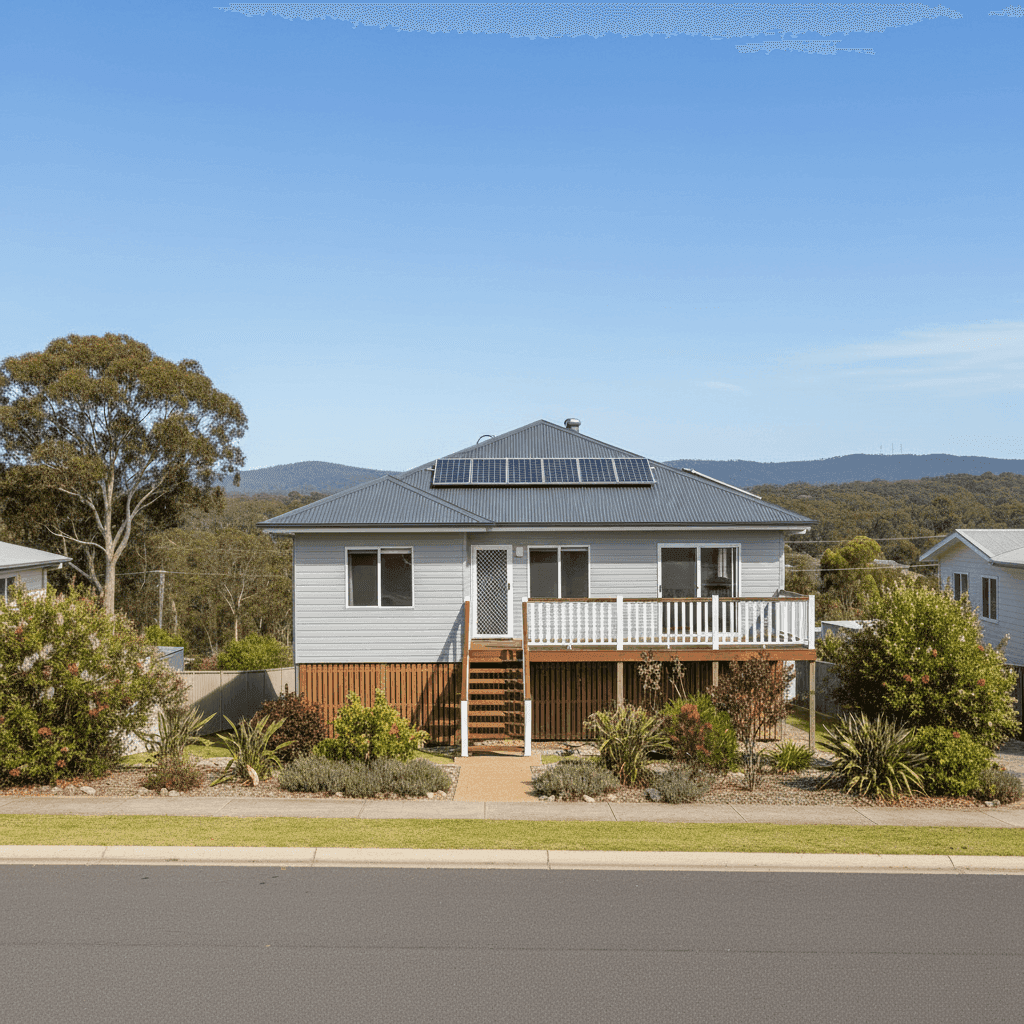
If you own a free standing home in Chain Valley Bay, NSW 2259, you've probably wondered whether you're paying a fair price for home and contents insurance — or quietly overpaying while your neighbour bags a better deal. This article breaks down a real quote for a three-bedroom, two-bathroom home in the suburb and puts it in context against local, state, and national benchmarks so you can make a more informed decision.
---
Is This Quote Fair?
The quote in question comes in at $2,139 per year (or $215 per month) for combined home and contents cover, with a building sum insured of $593,000 and contents valued at $103,000. The building excess sits at $3,000, while the contents excess is a more modest $1,000.
Our price rating for this quote is FAIR — around average. That might sound underwhelming, but in the context of the broader insurance market, "average" is actually a reasonable outcome. It means this quote isn't an outlier in either direction — it's not a bargain, but it's not excessive either.
To put it plainly: there's room to do better, but there's also plenty of room to do worse.
---
How Chain Valley Bay Compares
Understanding where your premium sits relative to your neighbours — and the broader market — is one of the most useful things you can do as a homeowner. Here's how this quote stacks up:
| Benchmark | Premium |
|---|---|
| This quote | $2,139/yr |
| Chain Valley Bay suburb average | $1,865/yr |
| Chain Valley Bay suburb median | $1,632/yr |
| Chain Valley Bay 25th percentile | $1,244/yr |
| Chain Valley Bay 75th percentile | $2,310/yr |
| NSW state average | $9,528/yr |
| NSW state median | $3,770/yr |
| National average | $5,347/yr |
| National median | $2,764/yr |
| Cessnock LGA average | $2,462/yr |
(Based on 39 quotes collected for the Chain Valley Bay area. See full [Chain Valley Bay suburb stats](https://coverclub.com.au/stats/NSW/2259/chain-valley-bay).)
A few things stand out here. At $2,139 per year, this quote is above the suburb median of $1,632 and slightly above the suburb average of $1,865 — but still comfortably within the suburb's interquartile range (between $1,244 and $2,310). That means roughly half of all quotes in the area come in cheaper, but a meaningful portion also come in more expensive.
Compared to the Cessnock LGA average of $2,462, this quote is actually tracking below the local government area benchmark — a positive sign.
The NSW state picture is dramatic by comparison. The state average of $9,528 is heavily skewed by high-risk and high-value properties across the state, but even the NSW median of $3,770 is well above what this homeowner is paying. Similarly, the national average of $5,347 and national median of $2,764 both sit above this quote. You can explore broader NSW insurance data and national benchmarks to dig deeper.
The takeaway? This home is being insured at a rate that looks reasonable against most wider benchmarks, even if there's some headroom to negotiate within the local suburb market.
---
Property Features That Affect Your Premium
Insurance pricing is never one-size-fits-all. Insurers assess dozens of property characteristics when calculating a premium, and this home has several features worth understanding.
Hardiplank / Hardiflex Cladding
The external walls are clad in Hardiplank Hardiflex, a fibre cement product that's popular in Australian residential construction. It's generally viewed favourably by insurers — it's non-combustible, resistant to rot, and holds up well in coastal and humid conditions. This is a neutral-to-positive factor for pricing.
Steel / Colorbond Roof
A Colorbond steel roof is one of the most insurer-friendly roofing materials available. It's durable, fire-resistant, and widely used in modern Australian homes. Expect this to work in your favour compared to older materials like terracotta tiles or timber shingles.
Elevated Foundation (Stumps, 1m+)
The home sits on stumps and is elevated by at least one metre. This style — reminiscent of a Queenslander — offers real practical benefits: improved ventilation, reduced ground moisture, and critically, some degree of flood resilience. For a property in the Lake Macquarie area near waterways and low-lying terrain, elevation can be a meaningful risk mitigant in the eyes of an insurer.
Solar Panels
The home has solar panels installed, which adds a modest layer of complexity to the insurance picture. Solar systems represent a real replacement cost in the event of damage and may not be automatically included in all building policies. It's worth confirming with your insurer that the solar system is explicitly covered under the building sum insured.
Timber / Laminate Flooring
Timber and laminate flooring can be more susceptible to water damage than tiled surfaces, which is something to keep in mind — particularly for an elevated home where plumbing leaks or flooding could affect the subfloor area.
Construction Year: 2015
A home built in 2015 benefits from relatively modern building codes and construction standards. Newer builds typically attract lower premiums than older properties, all else being equal.
---
Tips for Homeowners in Chain Valley Bay
1. Shop Around — Even If Your Quote Looks Fair
A "fair" rating means you're not being gouged, but it also means better prices exist in the market. The suburb's 25th percentile sits at $1,244 per year — nearly $900 less than this quote. Comparing multiple insurers through a platform like CoverClub takes minutes and could yield meaningful savings.
2. Check That Your Solar Panels Are Covered
Solar panel replacement costs can run into the thousands. Review your policy documents carefully to confirm whether the panels are included in your building sum insured, or whether they require a separate endorsement. If it's unclear, call your insurer and get confirmation in writing.
3. Review Your Building Sum Insured Annually
With construction costs rising significantly across Australia in recent years, a sum insured set even two or three years ago may no longer reflect true rebuild costs. A $593,000 building sum insured for a 139 sqm home works out to roughly $4,266 per square metre — which is broadly in line with current estimates for quality residential construction, but worth revisiting each year.
4. Consider Your Excess Carefully
The $3,000 building excess on this policy is on the higher end. While a higher excess typically reduces your premium, it also means a larger out-of-pocket cost when you need to make a claim. Think about whether that trade-off makes sense for your financial situation — particularly for weather-related events that can affect multiple parts of a property at once.
---
Compare Your Quote Today
Whether you're renewing your existing policy or shopping for the first time, it pays to know where you stand. CoverClub makes it easy to benchmark your home insurance premium against real data from your suburb, LGA, and state. Get a quote today and find out whether you're paying a fair price — or whether it's time to switch.