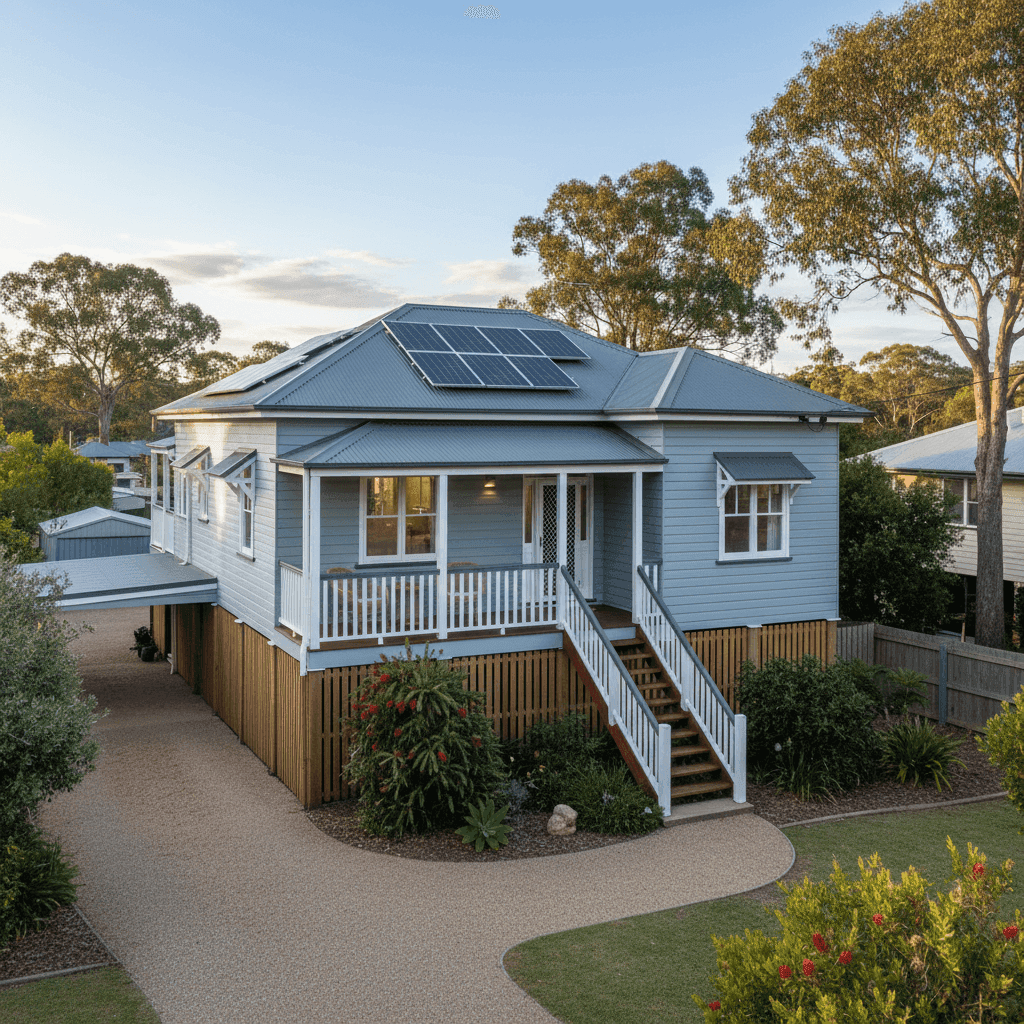
If you own a free standing home in Chain Valley Bay, NSW 2259, you already know the area offers a relaxed, semi-rural lifestyle on the shores of Lake Macquarie — but that doesn't mean your insurance bill should be anything but sharp. This article breaks down a real home and contents insurance quote for a 3-bedroom weatherboard property in the suburb, compares it against local and national benchmarks, and offers practical tips to help you get better value on your cover.
---
Is This Quote Fair?
The quote in question comes in at $3,812 per year (or $365/month) for combined home and contents insurance, covering a building sum insured of $456,000 and contents valued at $40,000, each with a $1,000 excess.
Our price rating for this quote is Expensive — above average for the area.
To put that in perspective, the suburb average premium in Chain Valley Bay sits at just $1,865/yr, and the median is even lower at $1,632/yr. That means this quote is more than double the typical price paid by other homeowners in the same postcode. Even at the 75th percentile — meaning 75% of quotes in the suburb are cheaper — the figure is only $2,310/yr, still well below what's been quoted here.
So while the quote isn't outlandish by NSW standards (more on that below), it does warrant a closer look. Several property-specific factors are likely pushing the premium up, and there may be real opportunities to reduce the cost without sacrificing meaningful cover.
---
How Chain Valley Bay Compares
Understanding where your suburb sits relative to broader benchmarks helps frame whether a premium is genuinely high or simply reflects the local risk profile.
| Benchmark | Average Premium | Median Premium |
|---|---|---|
| Chain Valley Bay (postcode 2259) | $1,865/yr | $1,632/yr |
| LGA (Cessnock) | $2,462/yr | — |
| NSW | $9,528/yr | $3,770/yr |
| National | $5,347/yr | $2,764/yr |
A few things stand out here. First, Chain Valley Bay is actually a relatively affordable suburb to insure compared to both the state and national picture. The NSW average premium of $9,528/yr is heavily skewed by high-risk coastal and flood-prone areas, while the state median of $3,770/yr is a more realistic comparison point — and this quote still sits above it.
Nationally, the median premium is $2,764/yr, again lower than the $3,812 quoted here. At the LGA level, the Cessnock average of $2,462/yr further reinforces that this particular quote is on the higher end for the region.
You can explore the full data for this suburb at our Chain Valley Bay insurance stats page, compare it against NSW-wide figures, or view the national overview.
---
Property Features That Affect Your Premium
Not all homes are priced equally, and several characteristics of this property are likely contributing to a higher-than-average premium.
Weatherboard Timber Construction
Weatherboard wood external walls are one of the most significant premium drivers for Australian home insurers. Timber is considerably more susceptible to fire than brick or rendered masonry, and it also carries a higher risk of rot, pest damage, and moisture ingress over time. Insurers price this risk accordingly, and it's common to see premiums 20–40% higher for timber-clad homes compared to equivalent brick properties.
Steel/Colorbond Roof
On the positive side, a Colorbond steel roof is generally viewed favourably by insurers. It's durable, fire-resistant, and performs well in high-wind conditions. This likely provides a modest offset to the timber wall loading.
Elevated on Stumps
The home sits on stump foundations and is elevated by less than one metre. While a stump foundation can introduce some vulnerability to underfloor moisture and movement, the elevation itself can actually be a flood mitigation factor — keeping the floor level above potential inundation. Insurers assess this differently depending on the flood zone, so it's worth confirming your flood risk rating with your insurer.
Solar Panels
The presence of solar panels adds replacement value to the building sum insured and may contribute marginally to the premium. Panels can be damaged by hail or storm events, and their reinstallation cost is factored into the overall building valuation.
Ducted Climate Control
Ducted air conditioning systems are a meaningful inclusion in the building sum insured. These systems are expensive to replace and can be damaged by storm or electrical surge events, which may nudge the premium slightly higher.
Building Size and Age
At 130 sqm and built in 2000, this is a modestly sized home of moderate age. The 2000 construction year means it was built under relatively modern building codes, which is a mild positive from a risk perspective. However, at over 25 years old, some components (roofing, plumbing, electrical) may be approaching end-of-life, which insurers factor into their assessments.
---
Tips for Homeowners in Chain Valley Bay
If your quote is coming in above the suburb average, there are several steps worth taking before you simply accept the price.
1. Shop Around — Seriously
With a suburb median of $1,632/yr and a quote of $3,812/yr, there is significant room to find a more competitive price. Insurers use very different pricing models, and the same property can attract wildly different premiums across providers. Use a comparison tool like CoverClub to line up multiple quotes side by side.
2. Review Your Sum Insured
A building sum insured of $456,000 for a 130 sqm home in this area is worth double-checking. Over-insuring your home doesn't mean a bigger payout — insurers only pay the cost to rebuild, not the sum insured if it exceeds actual rebuild costs. Use a building cost calculator to confirm your figure is accurate, as an inflated sum insured directly inflates your premium.
3. Consider a Higher Excess
Both the building and contents excess on this policy are set at $1,000. Opting for a higher voluntary excess — say $2,000 or $2,500 — can meaningfully reduce your annual premium. This works well if you're unlikely to make small claims and want to lower your ongoing cost.
4. Ask About Discounts
Many insurers offer discounts for bundling home and contents (which this policy does), paying annually rather than monthly, having security systems installed, or being a long-term customer. It's always worth calling your insurer directly to ask what's available — these discounts aren't always applied automatically.
---
Ready to Compare?
Whether you're renewing your policy or shopping for the first time, comparing quotes is the single most effective way to ensure you're not overpaying. CoverClub makes it easy to see what other homeowners in Chain Valley Bay are paying and find a policy that fits your property and your budget.