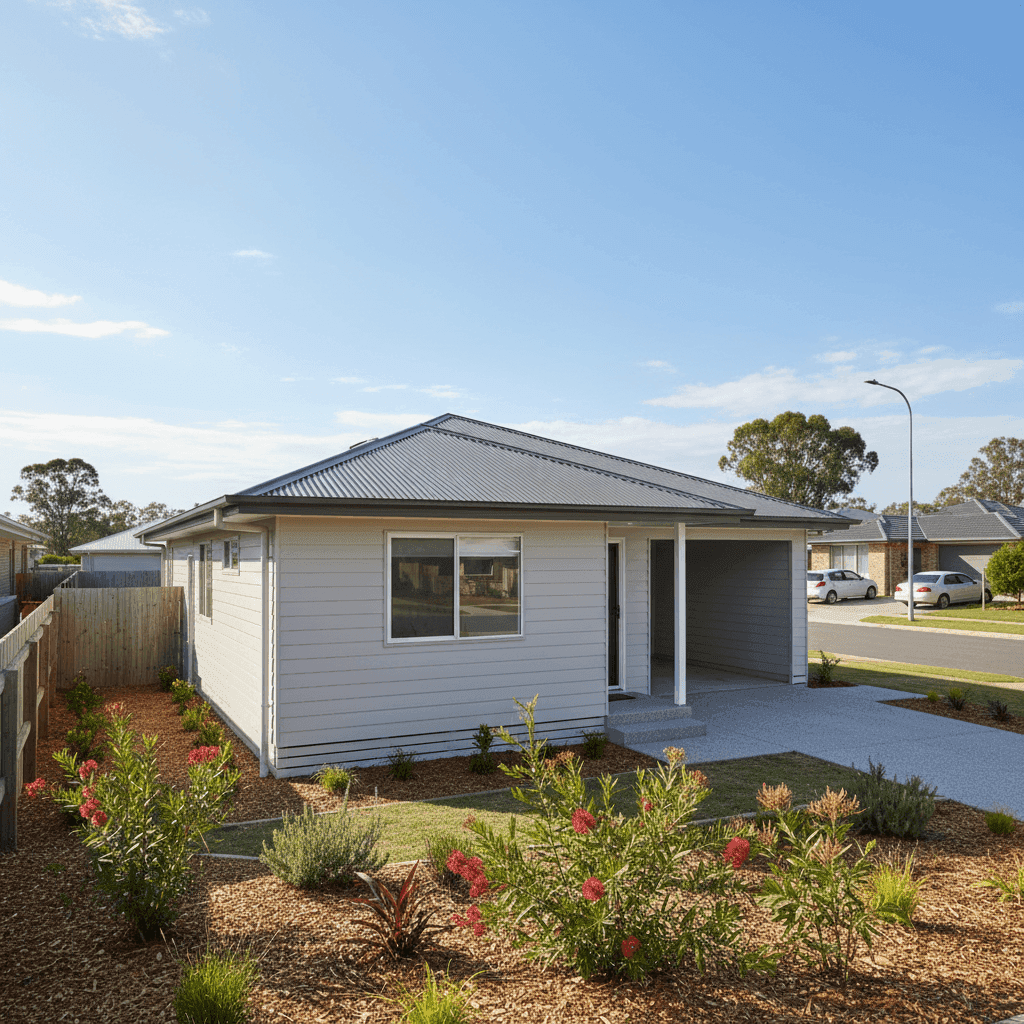
Chambers Flat is a quiet residential suburb sitting within the Logan region of South East Queensland — and like much of the area, home insurance costs here can vary significantly depending on your property's characteristics and the insurer you choose. This article breaks down a recent building-only insurance quote for a two-bedroom, two-bathroom free standing home in Chambers Flat (postcode 4133), examining how it stacks up against local, state, and national benchmarks.
---
Is This Quote Fair?
The short answer: yes — in fact, it's exceptionally competitive.
This quote came in at $1,220 per year (or $119 per month), earning a price rating of CHEAP — meaning it sits well below the average for the area. To put that in perspective, the suburb average for Chambers Flat sits at $3,501 per year, and even the 25th percentile — the cheapest quarter of quotes — comes in at $1,921 per year. This quote undercuts even that lower benchmark by more than $700 annually.
For homeowners wondering whether they're overpaying, this quote is a useful reference point. It demonstrates that with the right combination of property features and insurer, building-only cover in Chambers Flat can be secured for a fraction of what many locals are paying.
The building excess is set at $2,000, which is on the moderate-to-higher end. A higher excess generally contributes to a lower premium, so this is one factor worth keeping in mind — if you ever need to make a claim, you'll be covering the first $2,000 yourself.
---
How Chambers Flat Compares
To understand just how competitive this quote is, it helps to zoom out and look at the broader pricing landscape.
| Benchmark | Annual Premium |
|---|---|
| This Quote | $1,220 |
| Chambers Flat 25th Percentile | $1,921 |
| Chambers Flat Median | $3,283 |
| Chambers Flat Average | $3,501 |
| Chambers Flat 75th Percentile | $4,766 |
| LGA (Logan) Average | $3,411 |
| QLD State Average | $4,547 |
| QLD State Median | $3,931 |
| National Average | $2,965 |
| National Median | $2,716 |
What stands out immediately is that Chambers Flat — and Queensland more broadly — sits significantly above the national average. The state average of $4,547 is more than 50% higher than the national average of $2,965, reflecting the elevated risk profile that comes with insuring properties in Queensland, where severe weather events, flooding, and storm damage are recurring concerns.
Even within the Logan LGA, the average premium of $3,411 is nearly three times what this particular quote came in at. You can explore suburb-level insurance statistics for Chambers Flat, Queensland-wide data, and national benchmarks to see how your own property compares.
---
Property Features That Affect Your Premium
Several characteristics of this property likely contribute to its favourable premium. Understanding these factors can help any homeowner make sense of their own quote.
Modern Construction (2022)
Built in 2022, this home is relatively new — and newer builds typically attract lower premiums. Modern construction must comply with updated building codes that incorporate improved structural resilience, particularly in storm-prone regions. Insurers generally view newer homes as lower risk.
Hardiplank/Hardiflex Cladding
The external walls are clad in Hardiplank Hardiflex, a fibre cement product that is highly regarded for its durability, fire resistance, and resistance to moisture and rot. This is a preferred material from an insurance perspective, particularly compared to weatherboard or older timber cladding.
Steel/Colorbond Roof
A Colorbond steel roof is one of the most insurer-friendly roofing options available in Australia. It performs well in high winds, resists corrosion, and has a long service life. In a region like South East Queensland where severe storms are not uncommon, this is a meaningful risk-reduction factor.
Concrete Slab Foundation
The property sits on a concrete slab, which provides a stable, low-maintenance foundation. Slab-on-ground construction is generally associated with lower subsidence and structural movement risk compared to older pier-and-beam or timber stump foundations.
Slight Elevation (Less Than 1m)
The home is elevated by less than one metre. While this modest elevation may offer some minor protection against surface water ingress, it falls well short of the elevation levels that would significantly reduce flood risk — something worth keeping in mind for properties in the Logan area, which has a documented history of flooding.
Compact Building Size (105 sqm)
At 105 square metres, this is a relatively modest footprint for a two-bedroom, two-bathroom home. The sum insured of $297,000 reflects the cost to rebuild the structure, and a smaller home naturally costs less to reconstruct than a larger one — contributing to a lower premium.
No Pool, Solar, or Ducted Climate Control
The absence of a swimming pool, solar panel system, and ducted air conditioning all reduce the complexity and replacement cost of the property. Each of these features adds to the sum insured and can push premiums higher.
Body Corporate / Strata Property
It's worth noting that this property is part of a body corporate or strata scheme. In many strata arrangements, the body corporate holds a master insurance policy that covers the building structure — meaning individual owners may only need contents cover. However, in some configurations (particularly for free standing homes within a community title scheme), individual building cover may still be required or advisable. Always confirm with your body corporate what is and isn't covered under the shared policy.
---
Tips for Homeowners in Chambers Flat
Whether you're reviewing an existing policy or shopping for the first time, here are a few practical steps worth taking.
1. Verify your body corporate coverage before purchasing building insurance. If your property is part of a strata or community title scheme, your body corporate may already insure the building structure. Paying for duplicate cover is an unnecessary expense — but so is assuming you're covered when you're not. Request a copy of the body corporate's certificate of currency and check what's included.
2. Review your sum insured regularly. Construction costs have risen sharply across Australia in recent years. A sum insured that was accurate when you first took out your policy may now fall short of what it would actually cost to rebuild. Use a building cost calculator or speak with a quantity surveyor to ensure your coverage reflects current rebuild costs.
3. Consider flood cover carefully. Parts of the Logan region — including areas near Chambers Flat — have experienced significant flood events. Standard home insurance policies do not always include flood cover by default, and it may be offered as an optional add-on. Given the local flood history, it's worth reviewing whether your policy includes this protection and what the specific terms are.
4. Compare quotes from multiple insurers. As this quote illustrates, premiums for the same property can vary dramatically between insurers. The difference between the cheapest and most expensive quotes in Chambers Flat spans thousands of dollars per year. Taking the time to compare is one of the most effective ways to reduce your insurance costs without reducing your coverage.
---
Ready to Find a Better Deal?
Whether your current premium is above or below the Chambers Flat average, it always pays to compare. CoverClub makes it easy to see what multiple insurers would charge for your specific property — so you can make an informed decision rather than simply renewing on autopilot. Get a quote today at CoverClub and find out if you're paying more than you need to.