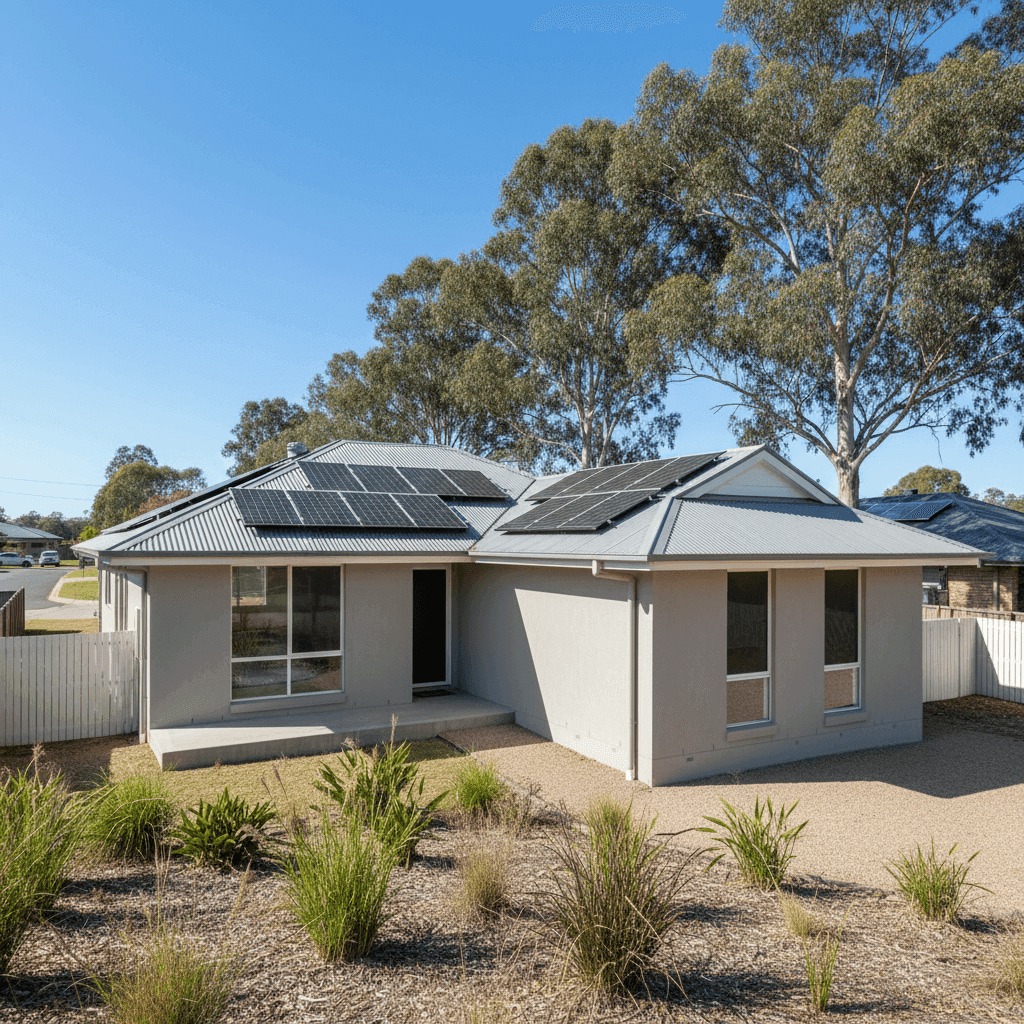
Home insurance costs can vary enormously depending on where you live, what your home is made of, and how much cover you need. This article breaks down a real home and contents insurance quote for a three-bedroom free standing home in Chambers Flat, QLD 4133 — a quiet residential suburb in the City of Logan, roughly 40 kilometres south of Brisbane's CBD. We'll look at how the quoted premium stacks up against local, state, and national benchmarks, explore the property features driving the cost, and share some practical tips for homeowners in the area.
---
Is This Quote Fair?
The quote in question comes in at $4,045 per year (or $388 per month) for combined home and contents cover, with a building sum insured of $408,000 and contents valued at $50,000. Both the building and contents excess are set at $1,000.
Our pricing engine rates this quote as Fair — Around Average, and when you dig into the numbers, that assessment holds up well. The premium sits above the suburb average of $3,501/yr and the suburb median of $3,283/yr, but it's comfortably below the 75th percentile for Chambers Flat, which sits at $4,766/yr. In other words, roughly a quarter of comparable quotes in this postcode are actually more expensive.
It's also worth noting that this quote comes in meaningfully below the Queensland state average of $4,547/yr — a figure that reflects just how exposed much of the Sunshine State is to severe weather events, including flooding, storms, and cyclones. So while the premium isn't the cheapest option on the market, it's a reasonable price for the level of cover on offer.
---
How Chambers Flat Compares
To put this quote in proper context, here's how Chambers Flat premiums compare across different benchmarks:
| Benchmark | Annual Premium |
|---|---|
| This Quote | $4,045 |
| Chambers Flat Average | $3,501 |
| Chambers Flat Median | $3,283 |
| Chambers Flat 25th Percentile | $1,921 |
| Chambers Flat 75th Percentile | $4,766 |
| LGA (Logan) Average | $3,411 |
| QLD State Average | $4,547 |
| QLD State Median | $3,931 |
| National Average | $2,965 |
| National Median | $2,716 |
(Based on 27 quotes collected for the Chambers Flat area.)
A few things stand out here. First, Chambers Flat premiums are noticeably higher than the national average — the suburb average of $3,501/yr is about 18% above the national average of $2,965/yr. This isn't surprising given Queensland's elevated exposure to storm and flood events compared to many other parts of Australia.
Second, the spread of premiums in this suburb is quite wide — from $1,921/yr at the 25th percentile all the way to $4,766/yr at the 75th percentile. That $2,845 gap underscores just how much individual property characteristics, sum insured amounts, and insurer pricing models can influence your final premium.
You can explore suburb-level data for Chambers Flat at coverclub.com.au/stats/QLD/4133/chambers-flat, compare Queensland broadly at coverclub.com.au/stats/QLD, or view national benchmarks at coverclub.com.au/stats/national.
---
Property Features That Affect Your Premium
Every home is different, and insurers weigh up a range of construction and location factors when calculating your premium. Here's how the key features of this particular property likely influence its cost:
Concrete external walls are generally viewed favourably by insurers. Concrete is highly resistant to fire and impact damage, and it performs well in severe weather. Compared to timber-framed homes, concrete construction can attract lower building premiums with some insurers.
Steel/Colorbond roofing is another tick in the box. Colorbond is durable, lightweight, and resistant to corrosion — making it a popular choice across Queensland. It holds up well in storms and is less susceptible to hail damage than some tile alternatives, which can positively influence premium pricing.
Slab foundation is the standard for most modern and post-war Queensland homes. It's generally considered low-risk from an insurance perspective, though it can be more susceptible to movement in reactive soils — something insurers may factor in depending on local ground conditions.
Timber and laminate flooring is common in homes of this era and style. While not a major premium driver on its own, it does factor into the overall contents and building replacement cost calculation.
Construction year (1975) is worth noting. Homes built in the mid-1970s predate many modern building codes, particularly around cyclone-proofing and flood resilience. Insurers may apply slightly higher risk ratings to older homes, though the concrete construction here somewhat offsets that concern.
Solar panels are present on this property. While solar systems add value and can increase the sum insured required to cover them, most standard home insurance policies include solar panels as part of the building cover — so it's worth confirming this with your insurer.
No pool and no ducted climate control help keep things simple. Both features can add complexity (and cost) to a policy, so their absence is a minor premium-friendly factor.
---
Tips for Homeowners in Chambers Flat
1. Review your sum insured regularly. With a building sum insured of $408,000 for a 130 sqm home, the per-square-metre replacement cost works out to around $3,138/sqm — which is broadly in line with current Queensland construction costs. That said, building costs have risen sharply in recent years, so it's worth revisiting this figure annually to make sure you're not underinsured.
2. Check your flood cover status. Parts of the Logan area have experienced flooding historically, and flood cover is not automatically included in every home insurance policy. Make sure your policy explicitly includes flood cover — not just storm or rainwater damage — so you're protected if the worst happens.
3. Ask about discounts for your construction type. Concrete walls and a Colorbond roof are both resilience-positive features. Some insurers offer premium discounts for homes with superior construction materials, so it's worth asking directly or using a comparison tool to see which insurers reward your home's build quality.
4. Compare quotes before your renewal date. The wide spread of premiums in Chambers Flat — from under $2,000 to nearly $5,000 per year — shows there's real money to be saved by shopping around. Don't let your policy auto-renew without checking what else is available. Even a modest saving of $300–$500/yr adds up significantly over time.
---
Ready to Compare?
Whether you're reviewing an existing policy or shopping for cover for the first time, comparing multiple quotes is the single most effective way to make sure you're getting fair value. At CoverClub, we make it easy to see how your premium stacks up and find competitive options tailored to your property. Get a quote today at coverclub.com.au and take the guesswork out of home insurance.