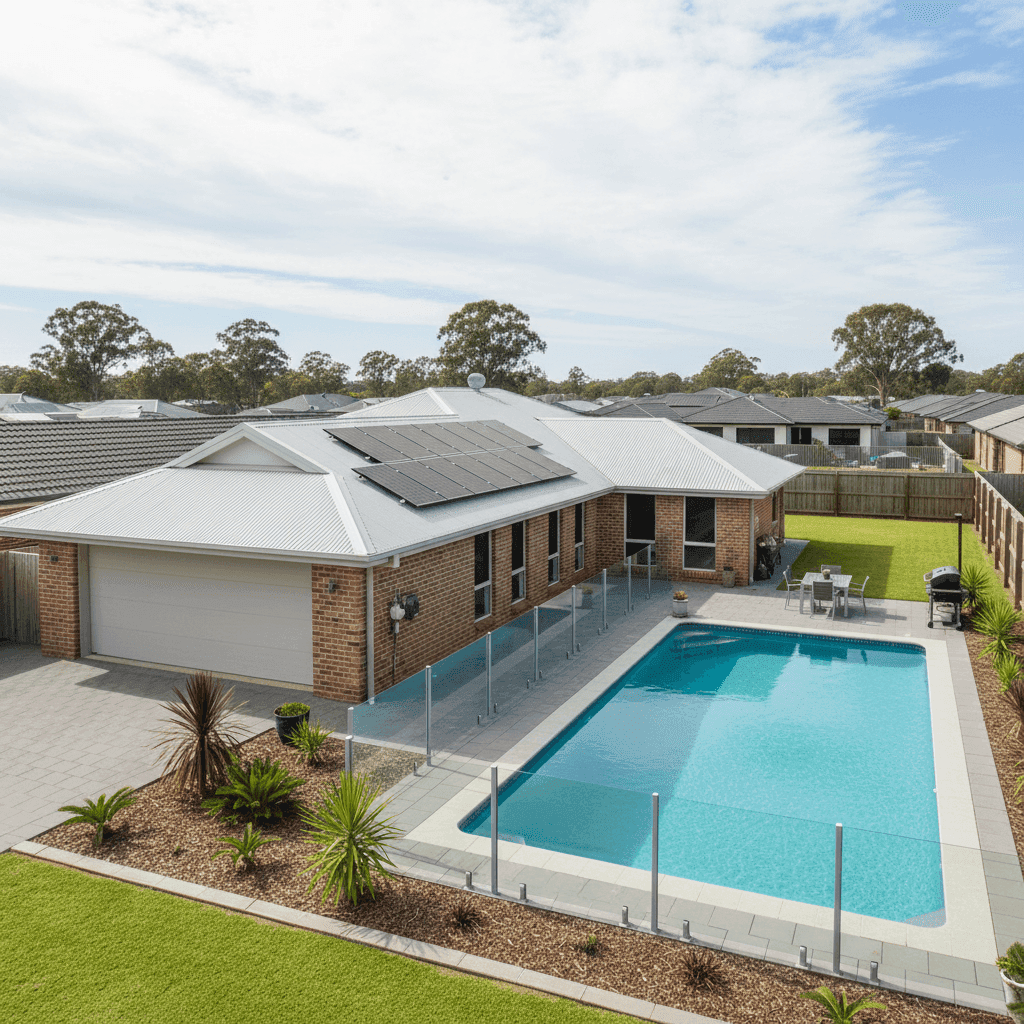
Chambers Flat is a quiet residential suburb in the Logan region of South East Queensland, sitting about 35 kilometres south of Brisbane's CBD. It's a popular choice for families seeking a bit more space without straying too far from the city — and the housing stock reflects that, with a mix of solid brick homes on generous blocks. This analysis looks at a recent home and contents insurance quote for a three-bedroom, two-bathroom free standing home in the area, and breaks down whether the price stacks up.
---
Is This Quote Fair?
The quote in question comes in at $2,348 per year (or $218 per month) for combined home and contents cover, with a building sum insured of $480,000 and contents valued at $96,000. Both the building and contents excess are set at $2,000.
Our price rating for this quote is FAIR — Around Average, and the data backs that up. Against the Chambers Flat suburb average of $3,748/yr, this quote is sitting comfortably below the typical price paid in the area — roughly 37% cheaper than the suburb average. Even compared to the suburb median of $3,355/yr, this quote comes in well under what most local homeowners are paying.
That said, "fair" doesn't mean "the best available." There's a meaningful spread of premiums in this suburb, with the cheapest quarter of quotes coming in at or below $2,046/yr (the 25th percentile) and the most expensive quarter exceeding $5,162/yr. This quote sits between the 25th and 50th percentile — a solid result, but with some room to potentially do better depending on the insurer and policy features.
---
How Chambers Flat Compares
To put this quote in broader context, it helps to zoom out and look at Queensland-wide and national benchmarks.
| Benchmark | Average Premium | Median Premium |
|---|---|---|
| Chambers Flat (suburb) | $3,748/yr | $3,355/yr |
| Logan LGA | $4,617/yr | — |
| Queensland (state) | $9,129/yr | $3,903/yr |
| Australia (national) | $5,347/yr | $2,764/yr |
A few things stand out here. Queensland's state average of $9,129/yr is dramatically higher than both the national average and local suburb figures — a reflection of the outsized impact that high-risk coastal and cyclone-prone areas have on the state-wide numbers. Cairns, Townsville, and other northern Queensland postcodes can attract eye-watering premiums, which pulls the QLD average up significantly.
Chambers Flat, by contrast, is not classified as a cyclone risk area, which helps keep premiums more manageable. The suburb average of $3,748/yr is also well below the Logan LGA average of $4,617/yr, suggesting that Chambers Flat properties are generally viewed as lower risk within the broader local government area.
At $2,348/yr, this quote beats the suburb average, the LGA average, and the national average — though it does sit slightly above the national median of $2,764/yr when you factor in that this is a combined home and contents policy covering a reasonably sized home with a solid rebuild value.
---
Property Features That Affect Your Premium
Several characteristics of this property work in the homeowner's favour when it comes to insurance pricing.
Brick veneer construction is generally well-regarded by insurers. It's durable, fire-resistant, and widely used across Australian suburbia, meaning repair costs are predictable and trades are readily available. Combined with a steel/Colorbond roof, this home has a construction profile that insurers tend to price competitively — Colorbond roofing is long-lasting, low-maintenance, and performs well in storms.
The concrete slab foundation is another positive. Slab homes typically don't face the same subsidence or pest-related risks as homes on stumps or timber bearers, which can translate to lower premiums in some cases.
Tile flooring throughout the home is a practical choice in Queensland's climate and is generally considered durable and easy to replace, which may have a modest positive effect on contents and building assessments.
On the flip side, there are a few features that add value — and therefore some cost — to the policy:
- Swimming pool: Pools increase the replacement value of the property and can introduce liability considerations, both of which can nudge premiums upward.
- Solar panels: A rooftop solar system adds to the building sum insured. Panels can be damaged by hail, storms, or falling debris, and quality coverage should include them explicitly.
- Ducted climate control: A full ducted system is a significant fixed asset. Replacement costs for ducted air conditioning can run into the tens of thousands, so it's important this is captured in your building sum insured.
The home was built in 1996, placing it in a generation of construction that is generally well-understood by insurers — not so old as to raise concerns about outdated materials or wiring, but mature enough that some components may be approaching end-of-life and worth monitoring.
With a building sum insured of $480,000 for a 139 sqm home, the per-square-metre rebuild cost works out to roughly $3,453/sqm — a reasonable figure for a brick veneer home with standard fittings in South East Queensland, though homeowners should periodically review this figure against current construction costs, which have risen sharply in recent years.
---
Tips for Homeowners in Chambers Flat
1. Review your building sum insured annually Construction costs across Queensland have increased significantly since 2020. If your sum insured hasn't kept pace, you could be underinsured in the event of a total loss. Use a building cost calculator or speak with a quantity surveyor to sense-check your figure each year.
2. Confirm your solar panels and pool are explicitly covered Not all policies automatically cover rooftop solar systems or pool equipment under the standard building definition. Check your Product Disclosure Statement (PDS) carefully, and ask your insurer directly if you're unsure. Some policies require these to be listed as additional items.
3. Consider whether a higher excess makes sense This policy carries a $2,000 excess on both building and contents. Opting for a higher voluntary excess can reduce your annual premium — but make sure the excess amount is one you could genuinely afford to pay in the event of a claim.
4. Compare quotes at renewal, not just at inception Insurers don't always reward loyalty. Premiums can drift upward at renewal without a corresponding improvement in cover. Running a comparison before your renewal date — rather than simply accepting the renewal offer — is one of the most effective ways to keep your costs in check.
---
Find a Better Deal with CoverClub
Whether you're happy with your current cover or wondering if you're paying too much, it pays to compare. CoverClub makes it easy to benchmark your home insurance against real quotes from across Australia. Enter your address and get started today — it only takes a few minutes, and you might be surprised what's available in your area.