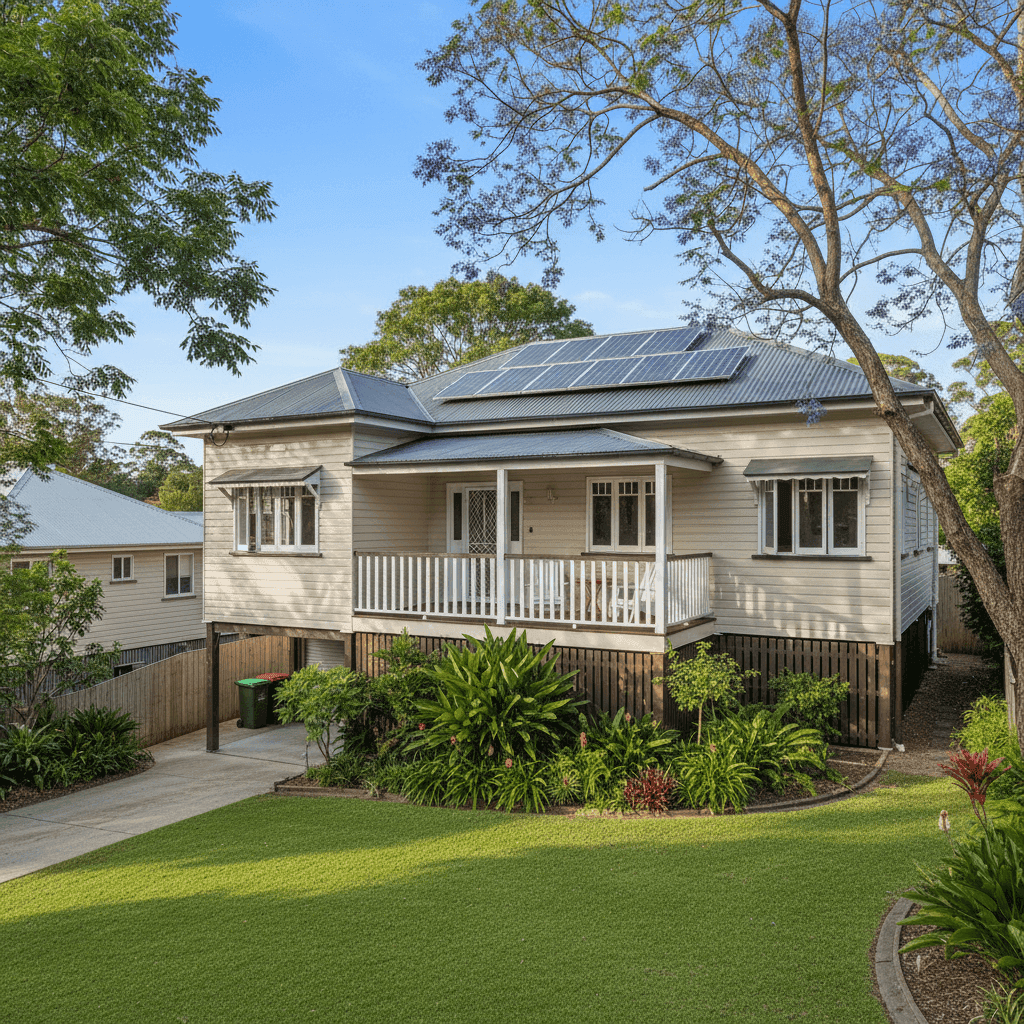
Chapel Hill is one of Brisbane's most leafy and sought-after western suburbs — a family-friendly pocket of Queensland known for its elevated blocks, bushland surrounds, and classic Queenslander-style homes. If you own a free standing home here, understanding what you should be paying for home and contents insurance is an important part of protecting one of your biggest assets.
This article breaks down a real home insurance quote for a four-bedroom, three-bathroom free standing home in Chapel Hill, QLD 4069, examining whether the premium stacks up against local, state, and national benchmarks — and what property features are likely driving the cost.
---
Is This Quote Fair?
The annual premium for this quote comes in at $2,782 per year (or $267/month), covering a building sum insured of $800,000 and contents valued at $225,000, with a $5,000 excess applying to both building and contents claims.
CoverClub's pricing engine has rated this quote as Fair — Around Average, and the numbers back that up. Compared to the suburb median of $3,052/year and the suburb average of $3,463/year, this premium sits comfortably below both benchmarks. In fact, it falls in the lower half of the typical pricing range for Chapel Hill, which runs from roughly $2,060/year at the 25th percentile up to $3,988/year at the 75th percentile.
So while it's not the cheapest quote you could theoretically find in the suburb, it's a solid result — particularly given the relatively high building sum insured of $800,000 and the inclusion of contents cover.
One factor worth noting: the $5,000 excess on both building and contents is on the higher side. Opting for a higher excess is a common way to reduce premiums, so if cost savings were a priority during the quoting process, this may explain part of why the premium sits below the suburb average.
---
How Chapel Hill Compares
To put this quote in broader context, it helps to look at Queensland and national pricing trends.
| Benchmark | Average Premium | Median Premium |
|---|---|---|
| Chapel Hill (suburb) | $3,463/yr | $3,052/yr |
| Brisbane LGA | $16,277/yr | — |
| Queensland (state) | $9,129/yr | $3,903/yr |
| Australia (national) | $5,347/yr | $2,764/yr |
A few things stand out here. The Brisbane LGA average of $16,277/year looks strikingly high — this reflects the enormous variation in risk across the broader Brisbane council area, which includes flood-prone suburbs that attract very steep premiums and pull the average up significantly. Chapel Hill, sitting on elevated terrain in the city's west, is generally less exposed to those extreme flood risks, which helps explain why local premiums are far more moderate.
Queensland's state average of $9,129/year is also heavily skewed by high-risk coastal and cyclone-prone regions in Far North Queensland, where premiums can be eye-watering. Chapel Hill is not a designated cyclone risk area, which is a meaningful advantage for homeowners here.
At the national level, the median of $2,764/year is actually quite close to this quote — suggesting that, on a like-for-like basis, Chapel Hill homeowners are paying roughly in line with the typical Australian household.
---
Property Features That Affect Your Premium
Several characteristics of this property will be influencing the final premium — some favourably, some less so.
Weatherboard timber walls and timber/laminate flooring are common in older Queensland homes and add some complexity from an insurer's perspective. Timber construction can be more susceptible to fire and termite damage compared to brick, which may push premiums slightly higher. However, many insurers are well-versed in pricing these properties, particularly in suburbs like Chapel Hill where this construction style is the norm.
The steel/Colorbond roof is actually a positive. Colorbond is durable, low-maintenance, and performs well in storms — insurers generally view it more favourably than older tile roofs that can crack or lift in high winds.
Stumps foundation (elevated by at least 1 metre) is a classic feature of Queensland homes and carries real insurance benefits. Elevation reduces the risk of inundation during heavy rainfall events, which is a significant consideration in South East Queensland's increasingly unpredictable wet seasons. This is likely one of the factors keeping this premium competitive.
Solar panels are present on this property. While solar adds value and reduces energy costs, it does represent an additional item for insurers to account for — panels can be damaged by hail or storms, and replacement costs are not insignificant. It's worth checking your policy wording to confirm whether solar panels are covered under the building sum insured or require separate consideration.
No pool and no ducted climate control simplify the risk profile and help keep the premium down. These are often overlooked factors, but they do matter at the quoting stage.
The home's 1991 construction year means it's over 30 years old — insurers may factor in the age of key systems like plumbing and electrical wiring when assessing risk, so it's worth ensuring your sum insured reflects the true cost of rebuilding to current standards.
---
Tips for Homeowners in Chapel Hill
1. Review your building sum insured regularly At $800,000, this policy's building sum insured is substantial — but construction costs in South East Queensland have risen sharply in recent years. Make sure your sum insured reflects current rebuild costs, not just the market value of your property. Underinsurance is one of the most common and costly mistakes homeowners make.
2. Understand what your excess means at claim time A $5,000 excess on both building and contents is a meaningful out-of-pocket cost if you need to make a claim. Consider whether a lower excess — even at a slightly higher premium — might give you better peace of mind, particularly for contents claims which tend to be more frequent.
3. Check your solar panel coverage With solar panels on the roof, confirm with your insurer exactly how they're covered. Are they included in your building sum insured? Are they covered for accidental damage, storm, and hail? Getting clarity on this before you need to make a claim is far better than finding out the hard way.
4. Compare quotes at renewal A "Fair" rating is a good result, but the insurance market moves — and so does your risk profile. Use CoverClub to benchmark your renewal quote each year against what others in Chapel Hill are paying. Even a small saving adds up over time, and you may find better value without sacrificing cover quality.
---
Ready to Compare?
Whether you're reviewing an existing policy or shopping for cover on a new purchase, CoverClub makes it easy to see how your premium stacks up. Get a home insurance quote today and compare it against real data from homeowners in Chapel Hill and across Australia — so you can be confident you're getting the right cover at a fair price.