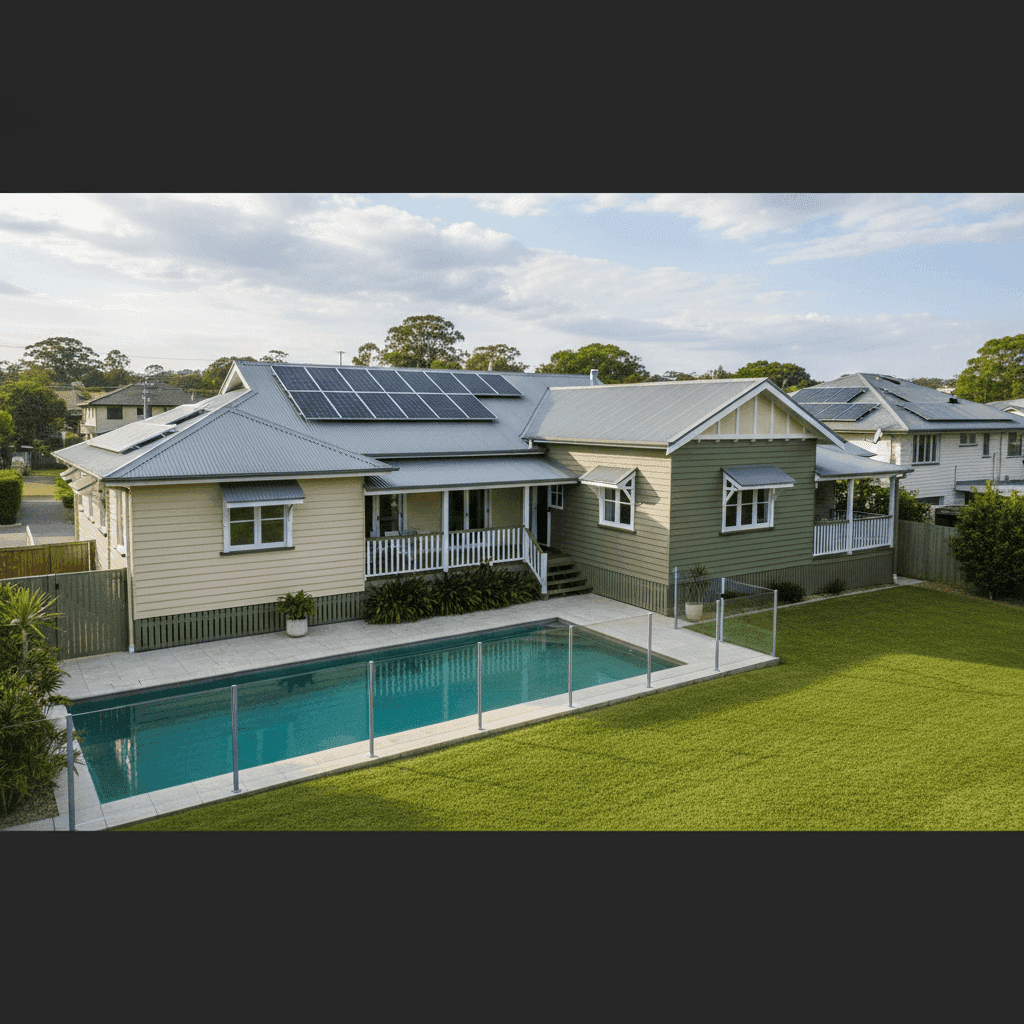
Chapel Hill is a leafy, elevated suburb in Brisbane's western corridor, popular with families drawn to its bushland feel, quality schools, and proximity to the city. For owners of free standing homes in this area, understanding what a fair home insurance premium looks like — and what drives that cost — can make a real difference to your household budget.
This article breaks down a real home and contents insurance quote for a four-bedroom, three-bathroom free standing home in Chapel Hill (QLD 4069), comparing it against local, state, and national benchmarks to help you understand whether you're getting a competitive deal.
---
Is This Quote Fair?
The annual premium for this property came in at $2,426 per year (or $233 per month), covering a building sum insured of $802,000 and contents valued at $99,000. Both the building and contents carry a $5,000 excess.
Our analysis rates this quote as CHEAP — below average for the area. That's a meaningful finding. Based on 102 quotes collected for Chapel Hill, the suburb average sits at $4,444 per year, and the median at $3,359 per year. Even the 25th percentile — meaning only 25% of quotes are cheaper — lands at $2,734 per year. This quote, at $2,426, sits below that bottom quartile, making it genuinely competitive by local standards.
It's worth noting the $5,000 excess on both building and contents is on the higher side. Opting for a higher excess is one way insurers reduce your premium, so if cash flow in the event of a claim is a concern, it may be worth exploring options with a lower excess — even if the annual premium creeps up slightly.
---
How Chapel Hill Compares
To put this quote in proper context, here's how it stacks up across different benchmarks:
| Benchmark | Premium |
|---|---|
| This quote | $2,426/yr |
| Chapel Hill suburb average | $4,444/yr |
| Chapel Hill suburb median | $3,359/yr |
| Chapel Hill 25th percentile | $2,734/yr |
| QLD state average | $4,547/yr |
| QLD state median | $3,931/yr |
| National average | $2,965/yr |
| National median | $2,716/yr |
This quote beats not just the Queensland state average of $4,547, but also the national average of $2,965 — which is notable given that national figures are pulled down by lower-risk states like Victoria and South Australia.
One figure worth flagging is the Brisbane LGA average of $16,277 per year. This unusually high figure is likely skewed by high-value properties and acreage holdings across the broader Brisbane local government area, and isn't a reliable comparison point for a typical Chapel Hill home. The suburb-level data from our Chapel Hill stats page is far more relevant for like-for-like comparison.
The wide spread between Chapel Hill's 25th percentile ($2,734) and 75th percentile ($6,905) also tells an important story: premiums in this suburb vary enormously. That gap reflects differences in property construction, sum insured levels, insurer pricing models, and individual risk factors — which is exactly why comparing quotes matters so much.
---
Property Features That Affect Your Premium
Several characteristics of this particular home will influence how insurers price the risk:
Weatherboard timber walls and timber/laminate flooring Weatherboard construction is common in Brisbane's older suburbs and can attract slightly higher premiums than brick veneer, as timber is more susceptible to fire and pest damage. Similarly, timber and laminate flooring can be more costly to repair or replace after water damage compared to tiles. Insurers factor in both the rebuild cost and the likelihood of a claim when pricing these materials.
Steel/Colorbond roof On the positive side, a Colorbond steel roof is generally viewed favourably by insurers. It's durable, fire-resistant, and performs well in storm conditions — all of which can help moderate your premium.
Stump foundation Homes on stumps (also known as pier or post foundations) are a classic feature of Queensland architecture. While they offer excellent ventilation and are well-suited to the local climate, they can be more expensive to repair if the stumps deteriorate or shift. This is a factor insurers consider, particularly for older homes.
Built in 1991 At around 34 years old, this home sits in a middle age bracket — past the premium years of new construction, but not yet in the higher-risk territory of very old homes. Maintenance history becomes increasingly important as a property ages.
Swimming pool A pool adds both value and liability exposure. Most insurers include pool infrastructure in the building sum insured, and the presence of a pool can contribute modestly to premium costs due to the risk of accidental damage or injury.
Solar panels Solar panels are increasingly common in Queensland and most policies cover them as part of the building. Their replacement value should be factored into your sum insured — something worth double-checking to avoid being underinsured.
---
Tips for Homeowners in Chapel Hill
1. Review your sum insured regularly Building costs have risen significantly in recent years. A sum insured of $802,000 for a 214 sqm home in Chapel Hill is worth stress-testing against current construction cost estimates. Being underinsured — even slightly — can leave you significantly out of pocket after a major claim. Use a building cost calculator or speak with a quantity surveyor if you're unsure.
2. Confirm your solar panels and pool are correctly covered Check your policy wording carefully to confirm solar panels are listed as an insured item and that their replacement value is included in your building sum insured. The same applies to pool equipment such as pumps, filters, and safety fencing.
3. Shop around — the spread is wide The gap between the cheapest and most expensive quotes in Chapel Hill is substantial. With a 75th percentile of $6,905 versus a 25th percentile of $2,734, there's a $4,000+ difference between the top and bottom of the market. Getting multiple quotes takes minutes and can save you thousands.
4. Weigh up your excess carefully A $5,000 excess is high. While it reduces your annual premium, it means you'll need to cover the first $5,000 of any claim yourself. If a lower excess option is available for a modest premium increase, it may offer better financial protection — particularly for contents claims, which tend to be smaller in value.
---
Compare Your Home Insurance with CoverClub
Whether you're buying, renewing, or just curious about whether you're overpaying, CoverClub makes it easy to see how your premium stacks up. We analyse quotes across Australia so you can make a more informed decision. Get a quote today and find out where your home insurance sits in the market.