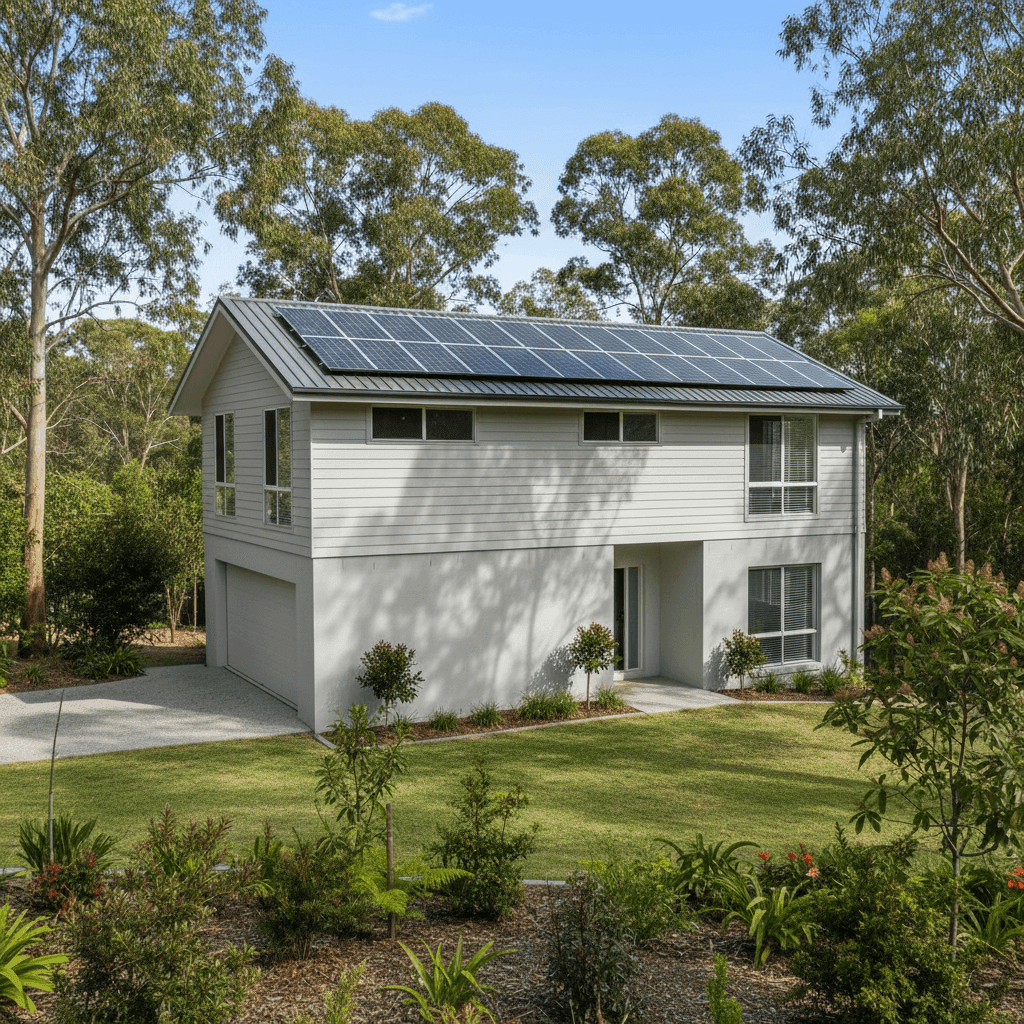
Nestled in Brisbane's leafy western suburbs, Chapel Hill is a well-regarded residential pocket known for its elevated blocks, bushland surrounds, and quality family homes. If you own a free standing home in this suburb, understanding what you should be paying for home and contents insurance — and why — can make a real difference to your household budget. This article breaks down a real insurance quote for a five-bedroom home in Chapel Hill QLD 4069, compares it against local and national benchmarks, and offers practical tips to help you get the best value cover.
---
Is This Quote Fair?
The quote in question comes in at $3,024 per year (or $296 per month) for a combined home and contents policy, covering a building sum insured of $969,000 and contents valued at $174,000. Both the building and contents excesses are set at $1,000.
Our price rating for this quote is FAIR — Around Average, and the data backs that up. At $3,024 per year, this premium sits just below the Chapel Hill suburb median of $3,052 and meaningfully below the suburb average of $3,463. That means roughly half of comparable Chapel Hill properties are quoted at a similar price or higher — a reasonably comfortable position for the homeowner.
It's worth noting the distinction between median and average here. The average is pulled upward by a handful of high-premium outliers (perhaps larger homes, higher sum-insured properties, or those with more risk factors), while the median gives a cleaner picture of what most homeowners in the area are actually paying. Sitting below both figures suggests this quote is competitive without being suspiciously cheap.
---
How Chapel Hill Compares
To put this quote in proper context, it helps to look beyond the suburb and examine how Chapel Hill stacks up against broader benchmarks. You can explore the full data on the QLD state insurance stats page or the national home insurance stats page.
| Benchmark | Average Premium | Median Premium |
|---|---|---|
| Chapel Hill (QLD 4069) | $3,463/yr | $3,052/yr |
| Queensland (State) | $9,129/yr | $3,903/yr |
| Australia (National) | $5,347/yr | $2,764/yr |
| Brisbane (LGA) | $16,277/yr | — |
A few things stand out here. The Queensland state average of $9,129 is dramatically higher than the Chapel Hill average — a reflection of the enormous variability across QLD, where cyclone-prone coastal and far-north Queensland properties attract eye-watering premiums that skew the statewide figure significantly upward. The state median of $3,903 is a more realistic comparison point, and Chapel Hill's median sits comfortably below it.
The Brisbane LGA average of $16,277 may look alarming at first glance, but this figure is heavily influenced by flood-affected suburbs and high-value inner-city properties across the broader Brisbane council area. Chapel Hill's position well above the flood plain and away from high-risk zones helps keep premiums considerably lower than this LGA-wide figure.
Compared to the national median of $2,764, this quote is slightly above — but given Chapel Hill's property values and the relatively high building sum insured of $969,000, that's entirely expected. The quote sits within the suburb's 25th–75th percentile range of $2,060–$3,988, confirming it as a genuinely mid-market result.
---
Property Features That Affect Your Premium
Several characteristics of this particular property influence how insurers price the risk. Understanding these factors can help you have more informed conversations with insurers.
Hardiplank/Hardiflex external walls are a fibre cement cladding product widely used in Australian residential construction. Insurers generally view this material favourably — it's non-combustible, resistant to rot and termites, and performs well in fire-prone environments. This can contribute to more competitive premiums compared to timber weatherboard homes.
Steel/Colorbond roofing is another risk-positive feature. Colorbond is durable, fire-resistant, and low-maintenance, making it a preferred roofing material from an underwriting perspective. It's also well-suited to the Queensland climate, handling heat, UV exposure, and heavy rainfall effectively.
Slab foundation is considered the standard and lowest-risk foundation type in most Australian states. Unlike homes on stumps or piers, slab homes have fewer entry points for moisture and pests, which simplifies the insurer's risk assessment.
Solar panels are an increasingly common feature on Queensland homes, and this property is no exception. While solar panels add value to the property and are generally covered under building insurance, they do represent an additional item to insure and can slightly increase the replacement cost calculation.
Ducted climate control is a high-value fixed inclusion that contributes to the building sum insured. Ducted systems can cost $10,000–$25,000 or more to replace, so ensuring this is adequately reflected in your sum insured is important.
Timber/laminate flooring is a contents or fixtures consideration that can affect claims costs. Timber flooring in particular can be expensive to replace following water damage events — something worth keeping in mind when reviewing your contents cover limits.
No cyclone risk is a significant premium advantage for Chapel Hill. Properties in far north Queensland or coastal cyclone zones can pay multiples of what south-east Queensland homeowners pay, so this is a meaningful factor keeping premiums in check here.
---
Tips for Homeowners in Chapel Hill
1. Review your building sum insured regularly. With a sum insured of $969,000 on a 315 sqm home built in 2016 with quality fittings, this figure appears reasonable — but construction costs have risen sharply in recent years. It's worth using a building cost calculator annually to ensure you're not underinsured. Rebuilding costs in Brisbane's western suburbs have climbed considerably since 2020.
2. Check your solar panel coverage. Not all policies automatically include solar panels under building cover, or they may apply sub-limits. Confirm with your insurer that your solar system is fully covered for replacement, including inverters and mounting hardware.
3. Consider your excess strategy. Both excesses are set at $1,000 in this quote. Opting for a higher voluntary excess (say, $2,000) can reduce your annual premium, but make sure you're comfortable covering that amount out of pocket in the event of a claim. For a property of this value, a slightly higher excess may be a reasonable trade-off.
4. Don't neglect contents coverage. At $174,000, the contents sum insured is substantial — but for a five-bedroom, three-bathroom home with ducted climate control and quality flooring, it's worth doing a proper room-by-room audit. Many homeowners underestimate contents value, particularly when accounting for electronics, white goods, furniture, clothing, and outdoor items.
---
Compare Your Own Quote at CoverClub
Whether you're a Chapel Hill local reviewing your renewal or a new homeowner shopping around for the first time, CoverClub makes it easy to see how your quote stacks up. Get a home insurance quote today and compare your premium against real data from your suburb, your state, and across Australia. Knowledge is your best tool when it comes to getting a fair deal on home insurance.