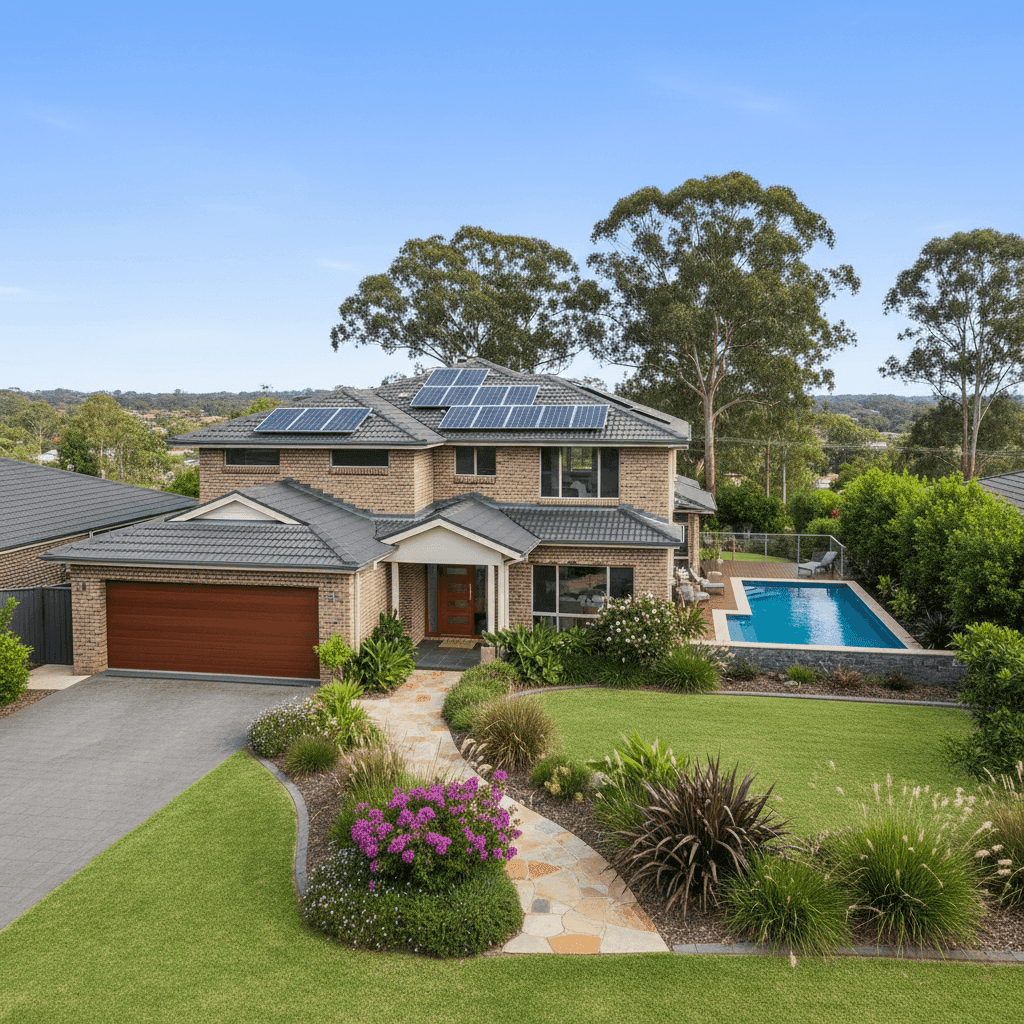
Chapel Hill is one of Brisbane's more sought-after western suburbs — a leafy, hilly pocket of QLD 4069 known for its large family homes, bushland surrounds, and proximity to the University of Queensland. If you own a free standing home here, you're sitting on a significant asset, and making sure it's properly insured is a smart priority. This article breaks down a real home and contents insurance quote for a four-bedroom, three-bathroom brick veneer home in Chapel Hill, compares it against local and national benchmarks, and offers practical tips to help you get better value on your cover.
---
Is This Quote Fair?
The quote in question comes in at $4,758 per year (or $456/month) for combined home and contents insurance, covering a building sum insured of $1,036,000 and contents valued at $110,000. The building excess is $2,000 and the contents excess is $1,000.
Our price rating for this quote is Expensive — above average for the Chapel Hill area.
To put that in context: the suburb average premium in Chapel Hill sits at $3,463/year, with a median of $3,052/year across 42 quotes sampled. This quote lands roughly 37% above the suburb average and about 56% above the suburb median — a meaningful gap that's worth exploring before simply accepting the renewal.
That said, "expensive" doesn't automatically mean "wrong." A higher-than-average premium can be justified by the specifics of the property — and this one has a few features that do push the price up. More on that below.
---
How Chapel Hill Compares
Understanding where Chapel Hill sits in the broader insurance landscape gives you a clearer picture of what's driving your costs.
| Benchmark | Premium |
|---|---|
| This quote | $4,758/yr |
| Chapel Hill suburb average | $3,463/yr |
| Chapel Hill suburb median | $3,052/yr |
| QLD state average | $9,129/yr |
| QLD state median | $3,903/yr |
| National average | $5,347/yr |
| National median | $2,764/yr |
| Brisbane LGA average | $16,277/yr |
A few things stand out here. First, Queensland's average premium is a striking $9,129/year — heavily skewed by high-risk cyclone zones in North Queensland, which push the state average well above the median. Chapel Hill, sitting in Brisbane's western suburbs, is not in a cyclone risk area, which is a meaningful cost advantage.
Second, the national average of $5,347/year is actually higher than this quote, meaning that on a national scale, $4,758 is below average. However, given the suburb context, there's still room to shop around.
The Brisbane LGA average of $16,277/year is an extreme outlier — again, this is heavily influenced by flood-prone and high-value areas across the broader Brisbane council region. Chapel Hill's own suburb figures are far more moderate and represent a better like-for-like comparison for this property.
---
Property Features That Affect Your Premium
Several characteristics of this property have a direct bearing on the premium quoted.
Size and sum insured: At 235 sqm and a building sum insured of $1,036,000, this is a substantial home. Rebuild costs in Brisbane have climbed sharply in recent years due to labour shortages and material price inflation, so a seven-figure sum insured is not unusual for a well-appointed four-bedroom home. A higher sum insured means a higher base premium.
Construction era: Built in 1982, this home is over 40 years old. Older properties can attract higher premiums due to the increased likelihood of wear in plumbing, electrical systems, and roofing — all of which are relevant to claims risk.
Brick veneer walls and tiled roof: These are generally considered favourable construction materials from an insurer's perspective. Brick veneer offers solid fire resistance and structural durability, while tiled roofs are durable and widely used across Brisbane. These factors likely help keep the premium from being even higher.
Swimming pool: A pool adds both asset value and liability exposure. Insurers factor in the cost of pool repair or replacement, as well as the increased risk of property damage from pool-related incidents. Expect this to contribute a few hundred dollars to your annual premium.
Solar panels: Solar systems are now a standard inclusion on many Brisbane homes, but they do add to the insured value of the property. Panels on a tiled roof also introduce some risk around roof penetration and storm damage, which insurers account for in their pricing.
Ducted climate control: A ducted air conditioning system is a high-value fixed asset that increases the cost to rebuild or replace. This is captured in the building sum insured but is worth noting as a contributor to premium.
Slab foundation: A concrete slab is a neutral-to-positive factor for insurers. It's less susceptible to subsidence and termite damage than timber stumps, which is a common concern in older Queensland homes.
No cyclone risk: Chapel Hill falls outside Queensland's designated cyclone risk zones, which is a significant cost saving compared to properties in Cairns, Townsville, or the Whitsundays.
---
Tips for Homeowners in Chapel Hill
1. Shop around — seriously. The gap between this quote and the suburb median ($3,052/year) represents over $1,700 in potential annual savings. Even allowing for differences in cover, it's well worth getting a fresh quote to see what competing insurers will offer for the same property.
2. Review your sum insured carefully. At $1,036,000, the building sum insured is substantial. Make sure it reflects the actual cost to rebuild — not the market value of the property. Overcooking the sum insured is a common reason premiums run high. Tools like Cordell's Sum Sure calculator can help you arrive at a more accurate figure.
3. Consider a higher excess. The current building excess of $2,000 is moderate. If you're comfortable self-insuring smaller claims, opting for a higher excess (say, $3,000–$5,000) can reduce your annual premium meaningfully without materially changing your protection for major events.
4. Bundle strategically, but compare separately. Home and contents bundling often attracts a discount, which this policy already takes advantage of. However, it's still worth comparing bundled and separate quotes — some insurers price contents cover very competitively as a standalone product, and the combined discount may not always be the best deal.
---
Compare Your Options with CoverClub
Whether you're renewing or taking out cover for the first time, you deserve to know if you're getting a fair deal. CoverClub makes it easy to benchmark your premium against real quotes from Chapel Hill and across Australia. Start comparing today at CoverClub and see what the market looks like for your home — it only takes a few minutes and could save you a significant amount each year.
For more suburb-level data, visit the Chapel Hill insurance stats page or explore Queensland-wide premium trends.