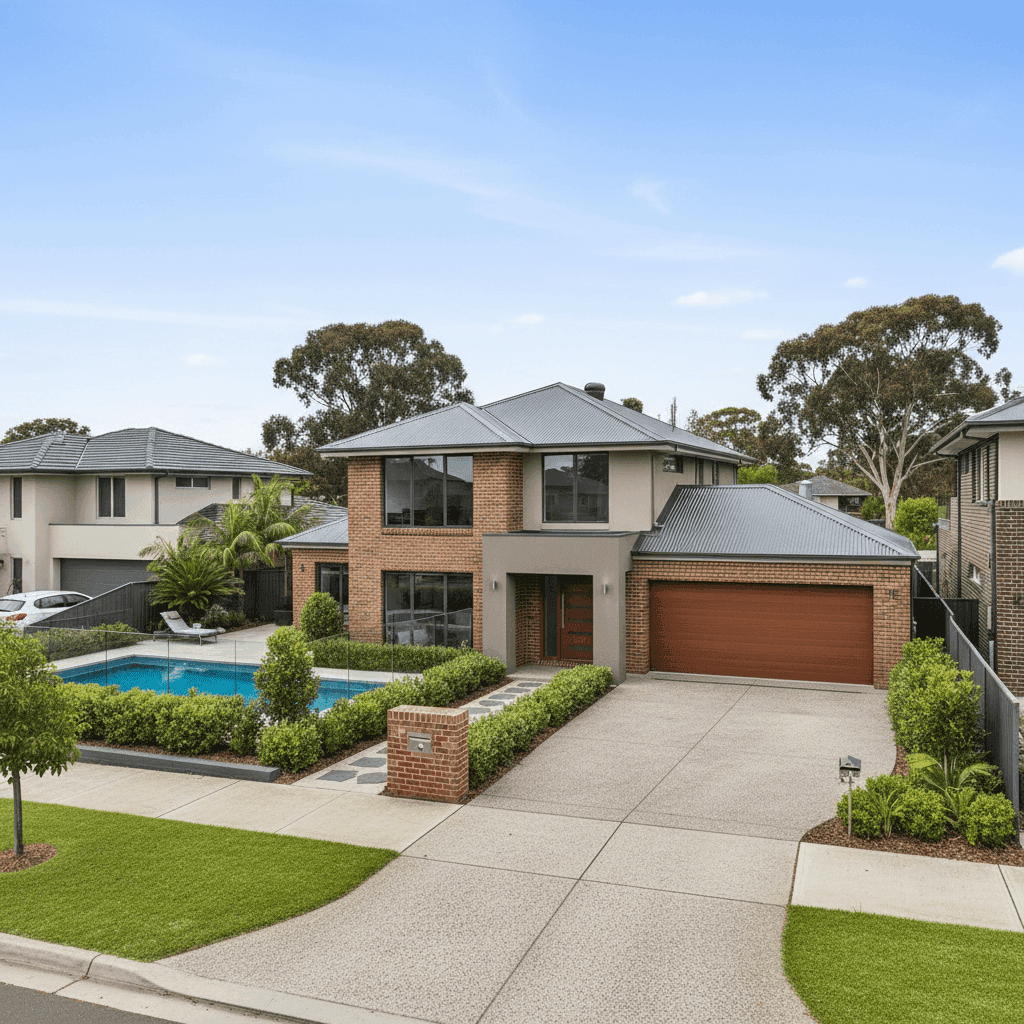
If you own a free standing home in Cheltenham, VIC 3192, you've probably noticed that home insurance premiums can vary wildly depending on who you ask. This article breaks down a real home and contents insurance quote for a six-bedroom property in the suburb, benchmarks it against local, state, and national data, and offers practical tips to help you get better value on your cover.
---
Is This Quote Fair?
The quote in question comes in at $2,856 per year (or $267/month) for combined home and contents cover, with a building sum insured of $1,106,000 and contents valued at $120,000. Both the building and contents excess are set at $1,000.
Based on our pricing data, this quote is rated Expensive — above average for the Cheltenham area.
To put that in perspective, the suburb average premium sits at just $1,721 per year, and the median is $1,704. That means this quote is roughly 66% higher than what a typical Cheltenham homeowner is paying. Even the 75th percentile — meaning three-quarters of quotes in the area are cheaper — sits at $1,970/yr, still well below this figure.
That said, context matters. This is a large, six-bedroom home with 354 sqm of living space, three bathrooms, a swimming pool, and ducted climate control — all features that push the replacement cost and risk profile higher than an average Cheltenham property. The $1,106,000 building sum insured reflects a substantial dwelling, and that alone will drive the premium upward compared to smaller homes in the same postcode.
---
How Cheltenham Compares
To understand whether this quote is reasonable in a broader sense, it helps to look at the numbers across different geographies.
| Benchmark | Average Premium | Median Premium |
|---|---|---|
| Cheltenham (3192) | $1,721/yr | $1,704/yr |
| LGA — Bayside (Vic.) | $2,625/yr | — |
| Victoria | $3,000/yr | $2,718/yr |
| National | $5,347/yr | $2,764/yr |
A few things stand out here. Cheltenham sits noticeably below the Victorian state average, suggesting it's a relatively affordable suburb to insure — likely because it's not in a cyclone, flood, or bushfire high-risk zone, and it benefits from established infrastructure and low natural hazard exposure.
Interestingly, the quote of $2,856 actually falls below the Victorian state average of $3,000/yr and is very close to the state median of $2,718/yr. So while it looks expensive when compared purely to the Cheltenham suburb average, it's actually fairly typical at the state level — especially for a larger-than-average property.
The national average of $5,347/yr is heavily skewed by high-risk regions (think Far North Queensland or cyclone-prone coastal areas), making the national median of $2,764/yr a more useful comparison point. This quote sits just slightly above that national median, which is a much more reassuring picture.
---
Property Features That Affect Your Premium
Several characteristics of this property will have a direct bearing on what insurers charge. Here's how they stack up:
Size and bedrooms: At 354 sqm with six bedrooms and three bathrooms, this is a large home by any measure. Larger homes cost more to rebuild, and that's reflected in the $1,106,000 building sum insured. Insurers price premiums proportionally to replacement cost, so this is one of the biggest drivers of the higher premium.
Brick veneer construction: Brick veneer walls are generally viewed favourably by insurers. They're durable, fire-resistant, and less susceptible to storm damage than weatherboard or lightweight cladding. This likely has a moderating effect on the premium.
Steel/Colorbond roof: Colorbond roofing is another positive from an insurance standpoint. It's resilient, low-maintenance, and performs well in storms. Compared to older terracotta tiles (which can crack or dislodge), a Colorbond roof is a lower-risk material for insurers.
Slab foundation: A concrete slab is a stable, well-regarded foundation type. It reduces the risk of subsidence and pest-related structural damage, which can be a factor in some older homes.
Swimming pool: Pools add to the insured value of the property and introduce additional liability considerations. They also increase the overall replacement cost, which contributes to a higher premium.
Ducted climate control: Ducted HVAC systems are expensive to replace and add to the overall sum insured for building contents and fixed fittings. This is another factor pushing the premium above the suburb average.
Construction year (1995): A home built in 1995 is relatively modern and would have been constructed under more rigorous building codes than pre-1980s homes. This generally works in the homeowner's favour when it comes to risk assessment.
No cyclone risk: Cheltenham is not classified as a cyclone risk area, which keeps premiums lower than comparable homes in northern Australia.
---
Tips for Homeowners in Cheltenham
1. Review your building sum insured regularly With a sum insured of over $1.1 million, it's worth ensuring this figure accurately reflects current rebuilding costs — not just the market value of the property. Construction costs have risen significantly in recent years, and being underinsured can leave you exposed. Use a building cost calculator or speak to a quantity surveyor to validate your figure.
2. Compare multiple quotes before renewing The suburb data is drawn from 38 quotes in the 3192 postcode, and the spread between the 25th percentile ($1,358/yr) and 75th percentile ($1,970/yr) shows there's meaningful variation in what insurers charge for similar properties. Running a comparison at CoverClub takes minutes and could reveal significantly cheaper options.
3. Consider your excess level Both the building and contents excess on this policy are set at $1,000. Opting for a higher excess (say, $2,000 or $2,500) can meaningfully reduce your annual premium. If you have a good claims history and financial capacity to cover a larger out-of-pocket cost in the event of a claim, this is worth exploring.
4. Bundle smartly, but don't assume it's always cheaper Many insurers offer discounts for combining home and contents cover under a single policy, which this quote already does. However, it's still worth pricing them separately with different providers — sometimes two separate policies from different insurers can be cheaper than a bundled product from one.
---
Ready to Find a Better Deal?
Whether this quote feels right for your situation or you're convinced there's a better option out there, the smartest move is to compare. CoverClub makes it easy to benchmark your premium against real data from your suburb and get quotes from multiple insurers in one place. Start your comparison at CoverClub and see what Cheltenham homeowners are actually paying.