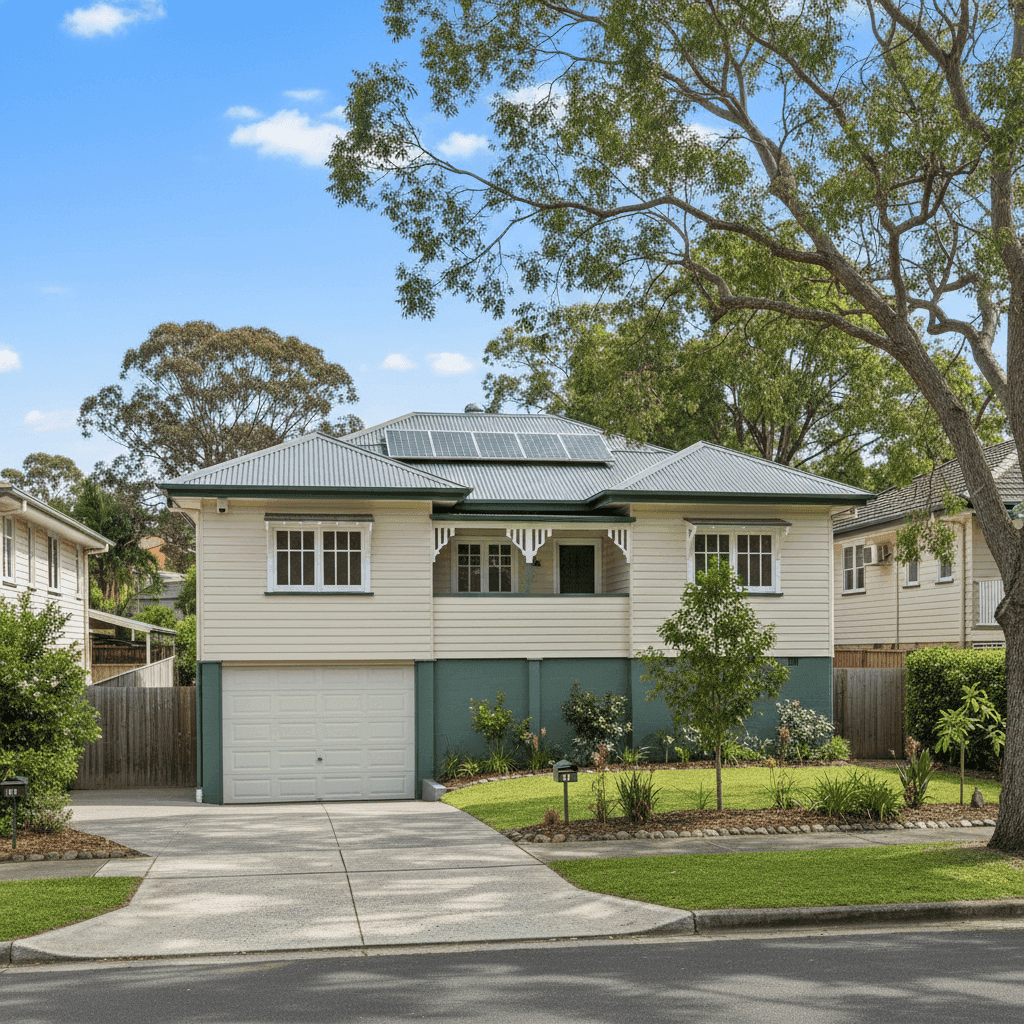
If you own a free standing home in Chermside West, QLD 4032, you're probably curious about what a fair home insurance premium looks like — and whether the quote sitting in your inbox is actually competitive. This article breaks down a real home and contents insurance quote for a four-bedroom, two-bathroom weatherboard home in Chermside West, comparing it against suburb, state, and national benchmarks so you can make a more informed decision.
---
Is This Quote Fair?
The quote in question comes in at $2,015 per year (or $193/month) for combined home and contents cover, with a building sum insured of $500,000 and contents valued at $101,000. Both the building and contents excess are set at $1,000.
Our price rating for this quote is FAIR — Around Average.
That rating reflects where this premium sits within the broader market. It's not the cheapest option available, but it's also well within a reasonable range for the suburb. For context, quotes across Chermside West span a wide band — from as low as $887/year at the 25th percentile all the way up to $2,366/year at the 75th percentile. At $2,015, this quote lands in the upper-middle portion of that range, which is consistent with a larger-than-average home with some additional features like solar panels and ducted climate control.
The "fair" rating means you're unlikely to be significantly overpaying, but there may still be room to sharpen the price with the right insurer.
---
How Chermside West Compares
One of the most striking things about this quote is how favourably Chermside West compares to the broader Queensland and national picture.
| Benchmark | Average Premium | Median Premium |
|---|---|---|
| Chermside West (suburb) | $1,727/yr | $1,611/yr |
| Brisbane LGA | $16,277/yr | — |
| Queensland (state) | $9,129/yr | $3,903/yr |
| National | $5,347/yr | $2,764/yr |
At first glance, the Brisbane LGA average of $16,277/year looks alarming — but this figure is heavily skewed by high-risk flood and storm-prone areas across the broader Brisbane region. Chermside West itself benefits from a more favourable risk profile, which is reflected in its much lower suburb average of $1,727/year.
The Queensland state average of $9,129/year is similarly elevated by coastal and cyclone-prone regions in Far North Queensland, where premiums can be extraordinarily high. Chermside West is not classified as a cyclone risk area, which makes a significant difference.
Compared to the national average of $5,347/year, this quote at $2,015 is considerably more affordable — a reassuring sign for homeowners in this suburb.
It's worth noting that the suburb sample size here is 16 quotes, so while the data is directionally useful, individual results can vary based on insurer, cover level, and property specifics.
---
Property Features That Affect Your Premium
Several characteristics of this property influence where the premium lands. Here's how each one plays a role:
Weatherboard Timber Walls
Weatherboard homes are a classic feature of Queensland residential architecture, but from an insurance perspective, timber external walls carry a slightly higher risk profile than brick or rendered concrete. Timber is more susceptible to fire spread and can be more costly to repair or replace, which typically pushes premiums modestly higher.
Steel / Colorbond Roof
Colorbond steel roofing is generally viewed positively by insurers. It's durable, resistant to ember attack, and performs well in high-wind conditions. This is a neutral-to-positive factor for your premium.
Slab Foundation
A concrete slab foundation is considered one of the more stable and low-risk foundation types. Unlike homes on stumps or suspended floors, slab homes have less exposure to certain subsidence and pest-related risks, which can work in your favour at renewal time.
Timber / Laminate Flooring
Timber and laminate floors are common in Queensland homes and don't significantly impact building premiums on their own. However, they can be costly to replace if water damage occurs — something worth keeping in mind when setting your contents and building sum insured.
Solar Panels
This property has solar panels, which adds a small but real cost to your sum insured. Solar systems can be expensive to repair or replace after storm or hail damage, and some insurers include them under building cover while others may treat them differently. It's worth confirming exactly how your policy handles solar panel damage.
Ducted Climate Control
Ducted air conditioning systems are a significant fixed asset and are typically covered under building insurance. Like solar panels, they add to the overall replacement cost of the home, which is reflected in the $500,000 building sum insured.
Building Size: 235 sqm
At 235 square metres, this is a comfortably sized family home. Larger floor areas mean higher rebuild costs, and the $500,000 sum insured appears appropriate for a four-bedroom home of this size and construction type in Brisbane's northern suburbs.
---
Tips for Homeowners in Chermside West
1. Review Your Building Sum Insured Annually
Construction costs in Queensland have risen significantly in recent years due to labour shortages and material price increases. A sum insured that was accurate two or three years ago may no longer reflect the true cost to rebuild. Use a building cost calculator or speak with a quantity surveyor to make sure $500,000 still covers you adequately.
2. Clarify Solar Panel Coverage
Ask your insurer explicitly whether your solar panels are included under the building policy and what events are covered (e.g., hail, storm, electrical fault). Some policies have sub-limits or exclusions for solar systems, so it's better to know now than at claim time.
3. Compare Quotes Before Renewal
Even if your current quote is rated "fair," that doesn't mean you can't do better. Insurers price risk differently, and the same property can attract meaningfully different premiums across providers. Getting a fresh quote through CoverClub takes only a few minutes and could save you hundreds of dollars annually.
4. Consider Your Excess Carefully
Both the building and contents excess on this policy are set at $1,000. Opting for a higher excess — say, $2,000 — can reduce your annual premium, but make sure you're comfortable covering that amount out of pocket in the event of a claim. For smaller claims, a high excess may mean the policy effectively doesn't pay out, so weigh this trade-off carefully.
---
Ready to Compare?
Whether you're reviewing an existing policy or shopping for cover on a new property, comparing quotes is the smartest way to make sure you're getting value. CoverClub makes it easy to see how your premium stacks up and explore alternatives — all in one place. Start your comparison at CoverClub and find out if there's a better deal waiting for your Chermside West home.