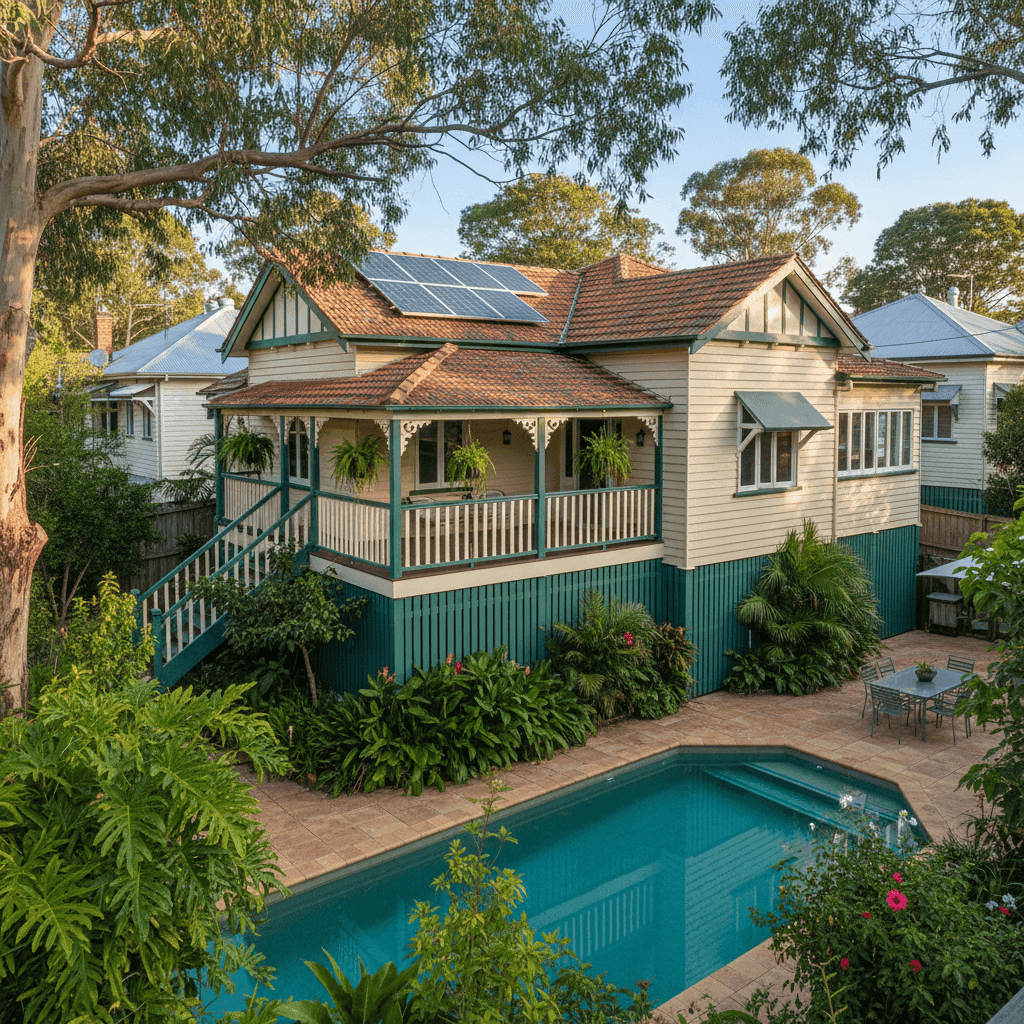
If you own a free standing home in Chermside West, QLD 4032, you've probably noticed that home insurance premiums can vary wildly — and it's not always obvious whether the quote sitting in your inbox is a bargain or a rip-off. This article breaks down a real home and contents insurance quote for a four-bedroom, two-bathroom weatherboard property in the suburb, comparing it against local, state, and national benchmarks so you can make a more informed decision.
---
Is This Quote Fair?
The quote in question comes in at $2,249 per year (or $216/month) for combined home and contents cover, with a building sum insured of $650,000 and contents valued at $50,000. Both the building and contents excess are set at $1,000.
Our price rating for this quote is FAIR — Around Average, which is a reasonable outcome for a property of this age and construction type. It's not the cheapest cover on the market, but it's not an outlier either. Given the property's characteristics — a 1972-built weatherboard home on stumps with a tiled roof, a pool, solar panels, and ducted climate control — a mid-range premium is broadly what you'd expect.
The "fair" rating reflects that while the premium sits above the suburb median, it remains within a normal and competitive range when weighed against the level of cover provided and the features of the property.
---
How Chermside West Compares
Understanding where your premium sits relative to your neighbours — and the broader market — is one of the most useful tools for evaluating a quote. Here's how this one stacks up:
| Benchmark | Premium |
|---|---|
| This Quote | $2,249/yr |
| Suburb Average (Chermside West) | $1,727/yr |
| Suburb Median | $1,611/yr |
| Suburb 25th Percentile | $887/yr |
| Suburb 75th Percentile | $2,366/yr |
| QLD State Average | $9,129/yr |
| QLD State Median | $3,903/yr |
| National Average | $5,347/yr |
| National Median | $2,764/yr |
| LGA Average (Brisbane) | $16,277/yr |
Based on [suburb quote data for Chermside West](https://coverclub.com.au/stats/QLD/4032/chermside-west) (16 quotes), [QLD state data](https://coverclub.com.au/stats/QLD), and [national benchmarks](https://coverclub.com.au/stats/national).
A few things stand out here. First, this quote is above the suburb median of $1,611 but comfortably below the 75th percentile of $2,366 — meaning roughly three-quarters of comparable quotes in the area cost more. That's a reassuring position to be in.
Second, the contrast with broader Queensland figures is striking. The state average of $9,129 is dramatically higher than what's being quoted here, largely because QLD premiums are heavily skewed by cyclone-prone regions in Far North Queensland and coastal areas. Chermside West is not in a cyclone risk area, which is a significant factor in keeping premiums more manageable.
Similarly, the national average of $5,347 is more than double this quote, again reflecting how much cyclone and flood exposure drives up premiums elsewhere in the country. For a Brisbane metro suburb like Chermside West, this quote is genuinely competitive in the broader context.
---
Property Features That Affect Your Premium
Several characteristics of this property directly influence how insurers calculate risk — and therefore, what they charge.
Weatherboard timber construction is one of the more significant factors. Older timber homes are generally considered higher risk than brick veneer or double-brick properties due to their susceptibility to fire and the cost of like-for-like repair or replacement. Insurers often apply a loading for weatherboard homes, particularly those built before modern building codes came into effect.
Construction year (1972) adds another layer of consideration. A home built over 50 years ago may have older electrical wiring, plumbing, and structural elements that increase the likelihood of a claim. Some insurers will scrutinise older homes more carefully or apply age-related loadings.
Stumped foundations are common in Queensland and generally well-understood by local insurers, but they do add complexity compared to slab-on-ground construction. Stumps can deteriorate over time, and any movement can cause structural issues — something worth keeping on top of with regular inspections.
The swimming pool adds a modest premium loading due to liability risks and the cost of repair or replacement following an insured event such as storm damage.
Solar panels are increasingly common on Brisbane rooftops, but they do add to the replacement cost of the building. A $650,000 sum insured should account for the panels, but it's worth confirming with your insurer that they're explicitly covered.
Ducted climate control is a high-value fixed installation that contributes to the overall building replacement cost, which is reflected in the sum insured.
Above-average fittings quality means the internal finishes — think quality cabinetry, stone benchtops, premium fixtures — would cost more to replace, which is appropriately factored into the $650,000 building sum insured.
---
Tips for Homeowners in Chermside West
1. Review your sum insured annually Building costs in South East Queensland have risen considerably over the past few years. A sum insured of $650,000 for a 130 sqm home with above-average fittings may be appropriate today, but it's worth rechecking each year at renewal. Underinsurance is one of the most common and costly mistakes homeowners make.
2. Maintain your weatherboard cladding Timber homes require more upkeep than brick, and insurers may scrutinise maintenance standards when assessing claims. Keep paint and cladding in good condition, address any rot promptly, and document any maintenance work you carry out. Some policies include conditions around property upkeep.
3. Check your pool and solar panel coverage Ask your insurer directly whether your pool (including the pump, filtration system, and fencing) and solar panels are covered under your building policy, and to what limit. These are often covered but can sometimes be subject to sublimits or specific conditions.
4. Compare quotes at renewal — not just at purchase The insurance market moves constantly, and the best deal at last year's renewal may not be the best deal today. Even if your current premium feels reasonable, it's worth running a comparison before you auto-renew. A few minutes can save you hundreds of dollars.
---
Ready to Compare?
Whether you're reviewing an existing policy or shopping for cover for the first time, comparing quotes is the single most effective way to make sure you're getting good value. Get a home insurance quote at CoverClub and see how your premium stacks up against the market in seconds — no obligation, no jargon.