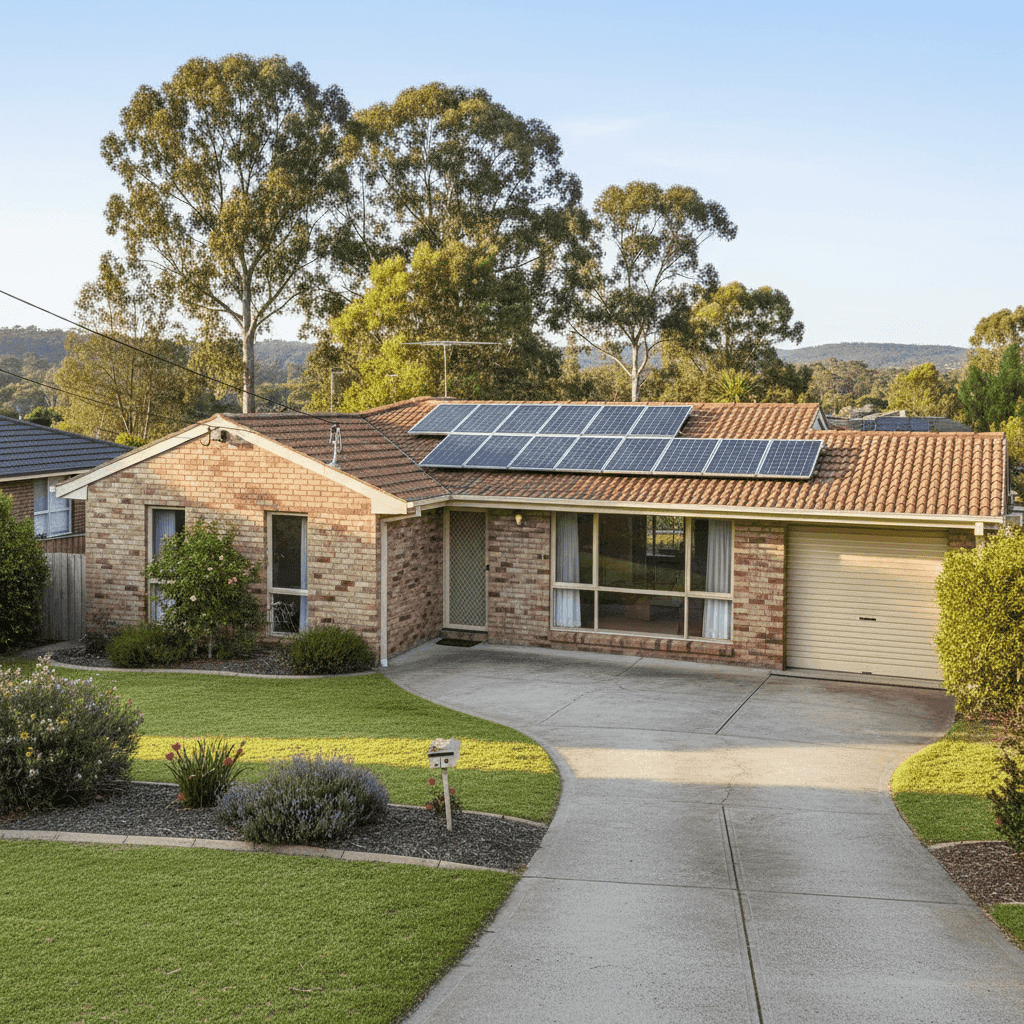
Chirnside Park is a well-established suburb in Melbourne's outer east, sitting within the Yarra Ranges local government area. It's a popular choice for families drawn to its leafy streets, good schools, and relative affordability compared to inner-city alternatives. But when it comes to home insurance, how much should owners of a free standing home here expect to pay — and is a quote of $1,274 per year genuinely competitive? Let's break it down.
---
Is This Quote Fair?
The short answer: yes, and then some. This quote comes in with a CHEAP price rating, meaning it sits well below the average for the area. At $1,274 annually (or around $128 per month), this premium covers both building and contents — $500,000 in building sum insured and $100,000 in contents — which is a solid level of protection for a three-bedroom home.
To put it in perspective, the suburb average premium in Chirnside Park sits at $2,168 per year, with a median of $2,108. This quote lands comfortably below even the 25th percentile of $1,446 — meaning it's cheaper than at least 75% of comparable quotes gathered in the area. That's a meaningful saving of nearly $900 per year compared to what many local homeowners are paying.
It's worth noting that the building excess here is $3,000, which is on the higher side, and the contents excess is $1,000. Higher excesses are one of the key levers insurers use to reduce premiums, so homeowners should weigh up whether the upfront savings justify the larger out-of-pocket cost if a claim arises.
---
How Chirnside Park Compares
Zooming out beyond the suburb level reveals just how favourably this property is positioned from an insurance pricing standpoint.
| Benchmark | Average Premium |
|---|---|
| Chirnside Park (suburb) | $2,168/yr |
| Victoria (state) | $2,921/yr |
| Australia (national) | $2,965/yr |
| This quote | $1,274/yr |
Across Victoria, the average home insurance premium sits at $2,921 per year, while the national average is $2,965 — both significantly higher than what's on offer here. Even the suburb median of $2,108 is nearly 65% more expensive than this quote.
One figure that stands out is the Yarra Ranges LGA average of $5,600 per year. This dramatically elevated figure reflects the broader bushfire and weather risk exposure across the local government area, which encompasses everything from suburban Chirnside Park through to heavily forested townships further up into the ranges. Chirnside Park itself benefits from a more suburban risk profile compared to those higher-risk hinterland areas, which likely contributes to the more manageable premium seen here.
You can explore more Chirnside Park home insurance data and suburb statistics here.
---
Property Features That Affect Your Premium
Several characteristics of this particular property work in its favour when it comes to insurance pricing.
Brick veneer construction is viewed favourably by most Australian insurers. It offers good fire resistance and structural durability compared to weatherboard or lightweight cladding, which can translate into lower premiums. Combined with a tiled roof, the home presents a relatively low-risk profile from a materials standpoint — tiles are durable and less susceptible to ember attack than Colorbond or corrugated iron in certain contexts.
The home was built in 1977, which places it in a generation of construction that is generally well understood by insurers. Homes of this era can sometimes attract scrutiny around older electrical wiring or plumbing, but brick veneer construction from this period tends to hold up well structurally.
The stump foundation is worth keeping an eye on. Homes on stumps can be more susceptible to movement over time, particularly in areas with reactive soils or moisture variation. While this doesn't necessarily push premiums up significantly, it's something to disclose accurately and maintain regularly to avoid complications at claim time.
Solar panels are present on this property. These add replacement value to the home and some insurers treat them as part of the building sum insured, while others may require separate consideration. It's worth confirming with your insurer exactly how your solar system is covered under the policy.
Ducted climate control is another feature that adds to the overall replacement value of the home. At a building sum insured of $500,000 for a 139 sqm home, the coverage level appears appropriate — though homeowners should periodically review their sum insured to account for rising construction costs, which have climbed considerably across Victoria in recent years.
The absence of a pool simplifies the risk profile slightly, removing one of the more common sources of liability and equipment claims.
---
Tips for Homeowners in Chirnside Park
1. Review your sum insured annually Construction costs in Victoria have risen sharply over the past few years. A sum insured that was accurate two or three years ago may now fall short of what it would actually cost to rebuild your home. Use a building cost calculator or speak with a quantity surveyor to make sure you're not underinsured.
2. Understand your excess structure This policy carries a $3,000 building excess. Before committing to a policy with a high excess, think through your financial position — could you comfortably cover that amount out of pocket in the event of a claim? If not, it may be worth comparing policies with lower excesses, even if the annual premium is slightly higher.
3. Confirm solar panel coverage With solar panels on the roof, check the policy wording carefully. Some insurers include solar systems as part of the building, others treat them as a separate item. Knowing exactly what's covered — and for how much — avoids nasty surprises if panels are damaged in a storm or hailstorm.
4. Keep an eye on bushfire preparedness While Chirnside Park itself isn't classified as a cyclone risk area, its location on the fringe of the Yarra Ranges means bushfire risk is a genuine consideration. Maintaining a clear perimeter around the property, keeping gutters clean, and following local council guidelines during fire season can all help protect both your home and your insurability over time.
---
Compare Quotes and Find the Right Cover
Whether you're renewing your existing policy or shopping around for the first time, it pays to compare. A quote that looks competitive on price may differ significantly in what it actually covers — and vice versa. CoverClub makes it easy to see how your home insurance stacks up against real quotes from across your suburb and state.
Get a home insurance quote today at CoverClub and find out whether you're getting a fair deal — or leaving money on the table.