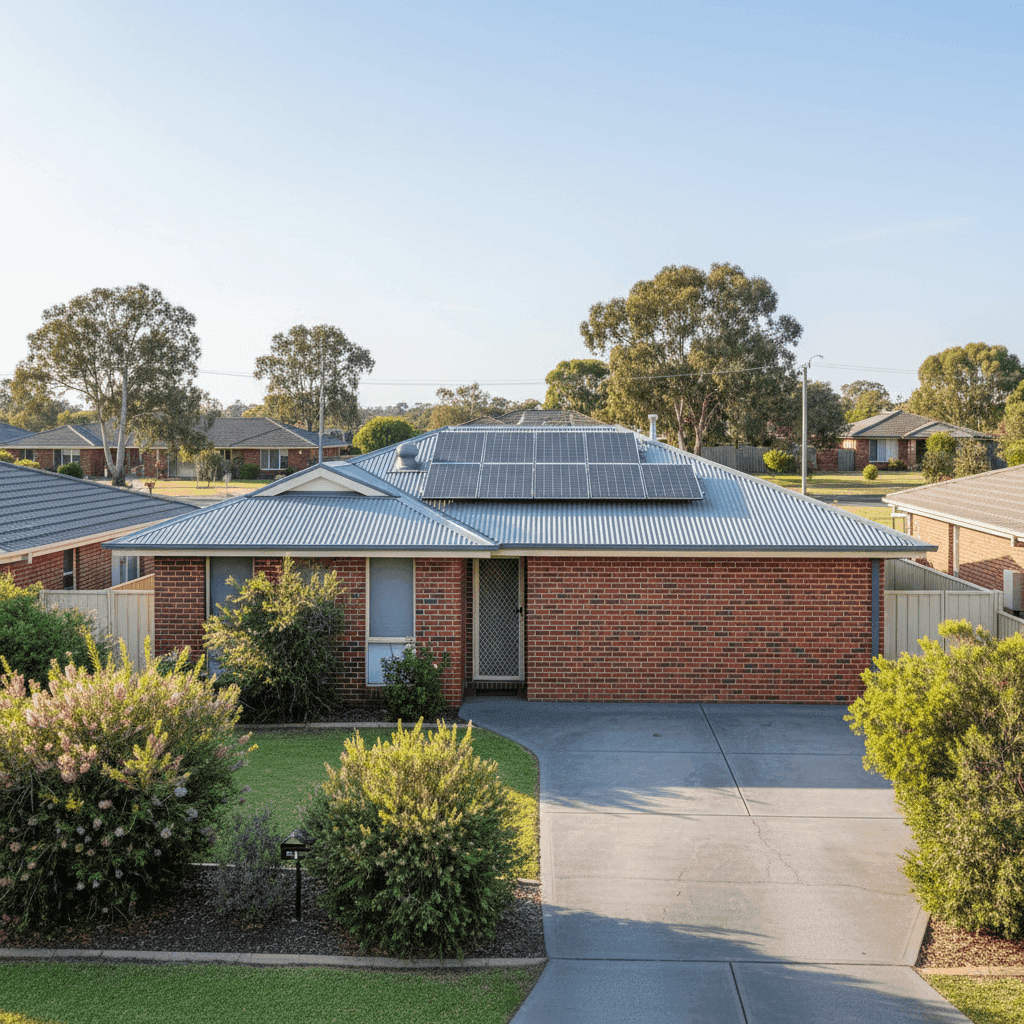
If you own a free standing home in Chisholm, ACT 2905, you've probably wondered whether you're paying a fair price for home insurance — or whether there's a better deal out there. This article breaks down a real home and contents insurance quote for a three-bedroom, brick veneer property in Chisholm, comparing it against suburb, territory, and national benchmarks so you can make a more informed decision.
---
Is This Quote Fair?
The short answer? Yes — and then some. This quote comes in at $1,406 per year (or roughly $134 per month), covering both building (insured for $509,000) and contents (insured for $50,000). Our price rating for this quote is CHEAP, meaning it sits well below the average for the area.
To put that in perspective, the suburb average for Chisholm is $2,441 per year, and even the 25th percentile — meaning the cheapest quarter of quotes in the suburb — sits at $2,024 per year. This quote undercuts even that lower benchmark by more than $600 annually. For a homeowner looking to keep costs down without sacrificing meaningful cover, that's a genuinely strong result.
It's worth noting that the building excess and contents excess are both set at $2,000, which is on the higher end. Insurers often offer lower premiums in exchange for a higher excess, so part of the savings here may reflect that trade-off. If you'd prefer a lower out-of-pocket cost in the event of a claim, it may be worth exploring options with a reduced excess — though that will likely push the premium up somewhat.
---
How Chisholm Compares
Understanding your quote in isolation only tells half the story. Here's how the numbers stack up across different geographic levels:
| Benchmark | Annual Premium |
|---|---|
| This Quote | $1,406 |
| Chisholm Suburb Average | $2,441 |
| Chisholm Suburb Median | $2,419 |
| Chisholm 25th Percentile | $2,024 |
| ACT Average | $2,288 |
| ACT Median | $2,186 |
| Unincorporated ACT LGA Average | $2,172 |
| National Average | $5,347 |
| National Median | $2,764 |
A few things stand out here. First, Chisholm's average premium of $2,441 is actually slightly above the ACT-wide average of $2,288 — suggesting the suburb carries a modest premium relative to the broader territory. Despite that, this quote sits dramatically below both figures.
Second, the national average of $5,347 is a stark reminder of just how expensive home insurance has become in many parts of Australia — particularly in regions exposed to cyclones, floods, and bushfires. Canberra's relative geographic stability helps keep ACT premiums more grounded than, say, Far North Queensland or parts of coastal NSW.
You can explore more detailed pricing data for the suburb at the Chisholm insurance stats page, or zoom out to the ACT state overview and national insurance statistics for broader context.
---
Property Features That Affect Your Premium
Every home is different, and insurers weigh up a range of property characteristics when calculating your premium. Here's how the features of this particular Chisholm home likely influence its pricing:
Brick veneer construction is generally viewed favourably by insurers. While not as robust as full brick, brick veneer offers solid fire resistance and structural durability, which tends to translate into more competitive premiums compared to timber-framed or clad homes.
Steel/Colorbond roofing is another positive factor. Colorbond is lightweight, resistant to corrosion, and performs well in high-wind conditions. It's a common and well-regarded roofing material across the ACT, and insurers tend to price it competitively.
Slab foundation is the standard for homes of this era and construction type. It's considered low-risk from an insurer's perspective, particularly in the ACT where soil conditions are generally stable.
Built in 1989, this home is now in its mid-30s. Homes of this vintage are generally past the point of major structural surprises but may be approaching the age where some systems — like plumbing, electrical wiring, and roofing — could warrant inspection or updating. Keeping on top of maintenance can help avoid claim complications down the track.
Solar panels are present on this property. While solar adds value and can complicate replacement cost calculations, most insurers now accommodate solar panels under standard building policies. It's worth confirming with your insurer that your panels are explicitly covered, including for storm damage or inverter failure.
Ducted climate control is a significant inclusion. Ducted systems are expensive to repair or replace, and having them covered under your building policy is important. Make sure your sum insured accounts for the full replacement cost of the system.
The 160 sqm building size and standard fittings quality suggest a modest, well-maintained home — the kind that insurers tend to price without significant loading for luxury finishes or unusual construction features.
---
Tips for Homeowners in Chisholm
Whether you're reviewing your current policy or shopping around for the first time, here are a few practical steps worth considering:
- Review your sum insured annually. Construction costs have risen sharply in recent years. A building insured for $509,000 today may not be sufficient to cover a full rebuild in two or three years' time. Use a building cost calculator or speak with a local builder to sense-check your coverage.
- Confirm solar panel coverage explicitly. Don't assume your panels are covered — ask your insurer directly. Some policies cover panels as part of the building, others treat them as optional extras, and some exclude inverter damage altogether. Get it in writing.
- Consider the excess trade-off carefully. A $2,000 excess on both building and contents is manageable for larger claims, but could sting for mid-range incidents. If you have a solid emergency fund, a higher excess makes sense. If you'd prefer peace of mind for smaller claims, a lower excess policy may suit you better — even at a slightly higher premium.
- Don't set and forget your contents sum. $50,000 in contents cover is a reasonable starting point for a three-bedroom home, but it's easy to underestimate the cumulative value of furniture, appliances, clothing, and electronics. Take a quick inventory every year or two to make sure you're not underinsured.
---
Ready to Compare?
A below-average premium is a great start, but it's always worth making sure you're getting the right cover — not just the cheapest price. At CoverClub, we make it easy to compare home and contents insurance quotes from multiple providers so you can find a policy that fits both your budget and your needs.