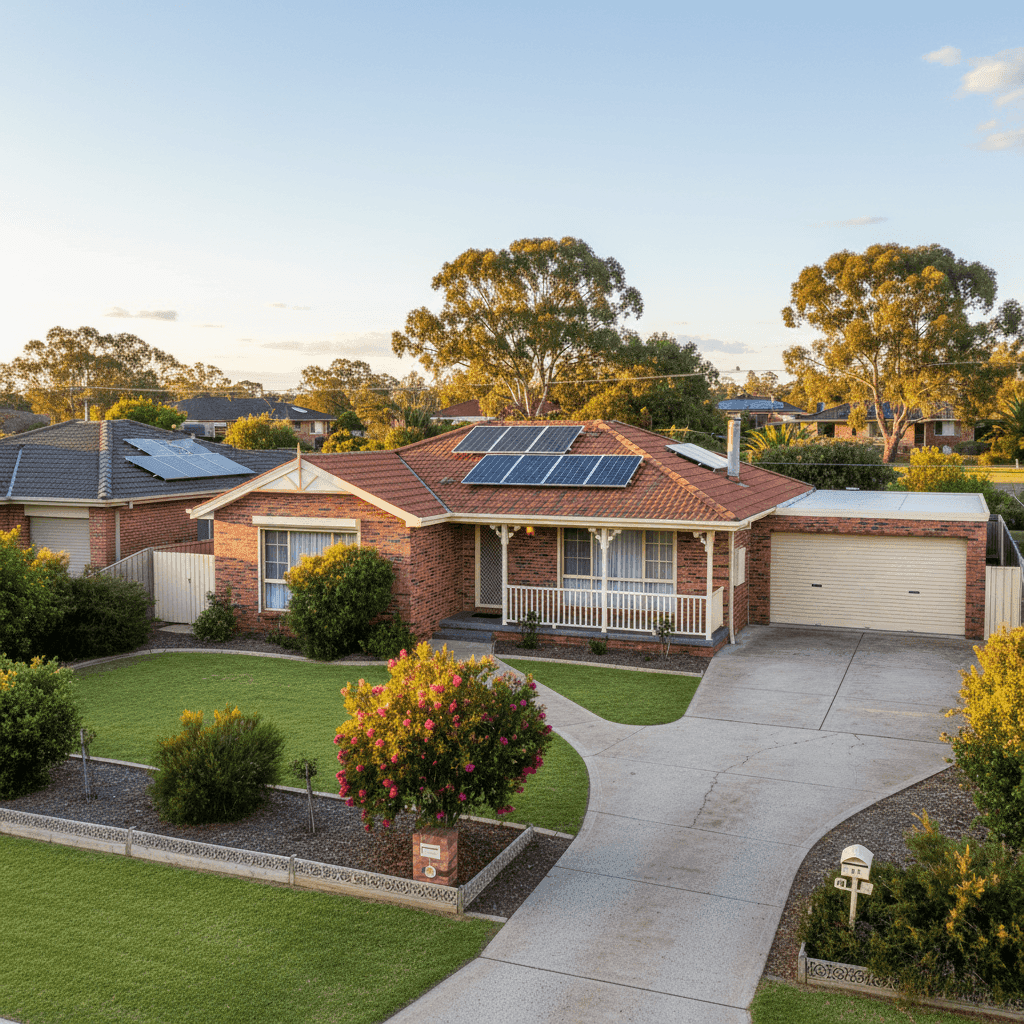
If you own a free standing home in Churchill, VIC 3842, you're probably curious about what a fair home insurance premium actually looks like. Churchill is a quiet regional town in the Latrobe Valley, home to Federation University and a mix of established residential properties — many of them brick veneer homes built in the 1970s through to the 1990s. This article breaks down a real home and contents insurance quote for a 3-bedroom property in the suburb, compares it against local, state, and national benchmarks, and offers practical guidance for Churchill homeowners looking to get the best value cover.
---
Is This Quote Fair?
The quote in question comes in at $1,340 per year (or $137/month) for combined home and contents cover, with a building sum insured of $375,000 and contents valued at $50,000. The building excess is $3,000 and the contents excess is $1,000.
Our price rating for this quote is CHEAP — below average — and the numbers back that up convincingly.
Against a suburb average of $2,609/year across 45 quotes collected in Churchill, this premium is roughly 49% below the local average. It also sits well beneath the suburb's 25th percentile of $1,677/year, meaning it's cheaper than at least 75% of quotes gathered in the area. That's a genuinely strong result.
It's worth noting that the higher excess on the building ($3,000) does play a role in keeping the premium lower — insurers typically reward policyholders who are willing to absorb more of the initial cost of a claim. If a lower excess is important to you, expect the annual premium to rise accordingly.
---
How Churchill Compares
To put this quote in proper context, here's how Churchill stacks up against broader benchmarks:
| Benchmark | Average Premium |
|---|---|
| Churchill (suburb avg.) | $2,609/yr |
| Churchill (suburb median) | $2,545/yr |
| Latrobe LGA average | $3,607/yr |
| Victoria state average | $3,000/yr |
| Victoria state median | $2,718/yr |
| National average | $5,347/yr |
| National median | $2,764/yr |
A few things stand out here. Churchill's suburb average of $2,609 is actually below the Victorian state average of $3,000, which suggests the area carries a relatively moderate risk profile compared to many other parts of the state. Interestingly, the Latrobe LGA average of $3,607 is noticeably higher than the Churchill suburb figure — indicating that other parts of the Latrobe Valley may attract higher premiums, possibly due to bushfire exposure or flood-prone pockets.
On a national scale, Churchill looks very affordable. The national average premium of $5,347/year is driven up significantly by high-risk regions in Queensland and Western Australia — cyclone zones, flood plains, and coastal areas — so Churchill homeowners are in a comparatively favourable position.
You can explore the full Victoria state insurance data or dive into the Churchill-specific stats to see how quotes in your area are trending.
---
Property Features That Affect Your Premium
Several characteristics of this particular property influence how insurers assess and price the risk.
Brick veneer construction is generally viewed favourably by insurers. While it's not as robust as full-brick double-brick construction, brick veneer offers good fire resistance and durability, which tends to keep premiums more competitive than timber-clad or weatherboard homes.
Tiled roof is another positive signal. Tiles are considered a lower-risk roofing material compared to Colorbond or corrugated iron in some contexts, and they tend to perform well in hail events — though they can be more costly to repair if cracked.
Stump foundations are common in older Victorian homes and are worth flagging. Properties on stumps can be more vulnerable to movement and subsidence over time, and some insurers factor this into their underwriting. It's worth confirming your policy covers gradual deterioration risks or structural movement caused by subsoil conditions.
Solar panels are an increasingly common feature and one that can affect your sum insured. Panels add replacement value to the building, and it's important to ensure your $375,000 building sum insured accounts for the cost of replacing them. Most modern policies cover solar panels as part of the building, but always verify this in your Product Disclosure Statement (PDS).
The home was built in 1985, which places it in a generation of properties that may have older wiring, plumbing, and roofing materials. Insurers sometimes apply loading to homes of this era, particularly if there's no evidence of electrical or plumbing upgrades. Keeping documentation of any renovations or upgrades can help you negotiate a better rate.
At 130 sqm, this is a modest-sized home, which keeps the replacement cost — and therefore the building sum insured — at a manageable level compared to larger properties.
---
Tips for Homeowners in Churchill
1. Review your building sum insured regularly Construction costs have risen sharply across regional Victoria in recent years. A sum insured of $375,000 for a 130 sqm brick veneer home may be appropriate today, but it's worth recalculating annually using a building cost estimator. Being underinsured at claim time can leave you significantly out of pocket.
2. Factor in your solar panels Confirm with your insurer that your solar panel system is included in the building sum insured — and that the replacement value is accurately reflected. A typical residential solar system can cost $8,000–$15,000 to replace, which is a meaningful addition to your rebuild cost.
3. Consider the trade-off on excess The $3,000 building excess on this policy is on the higher side. While it's clearly helping to keep the annual premium down, think carefully about whether you could comfortably cover that amount in the event of a claim. If not, it may be worth requesting quotes with a lower excess to find the right balance.
4. Shop around at renewal time Even if your current premium is competitive — and this one certainly is — insurers frequently adjust their pricing models. What's cheap today may not be next year. Running a comparison at renewal through a platform like CoverClub takes minutes and could save you hundreds.
---
Ready to Compare?
Whether you're a first-time buyer or a long-time Churchill resident, it pays to know where your premium sits relative to the market. CoverClub makes it easy to compare home and contents insurance quotes from multiple insurers in one place — so you can see exactly what you're getting and what you're paying for.
Get a home insurance quote for your Churchill property today and find out if you're getting the deal you deserve.