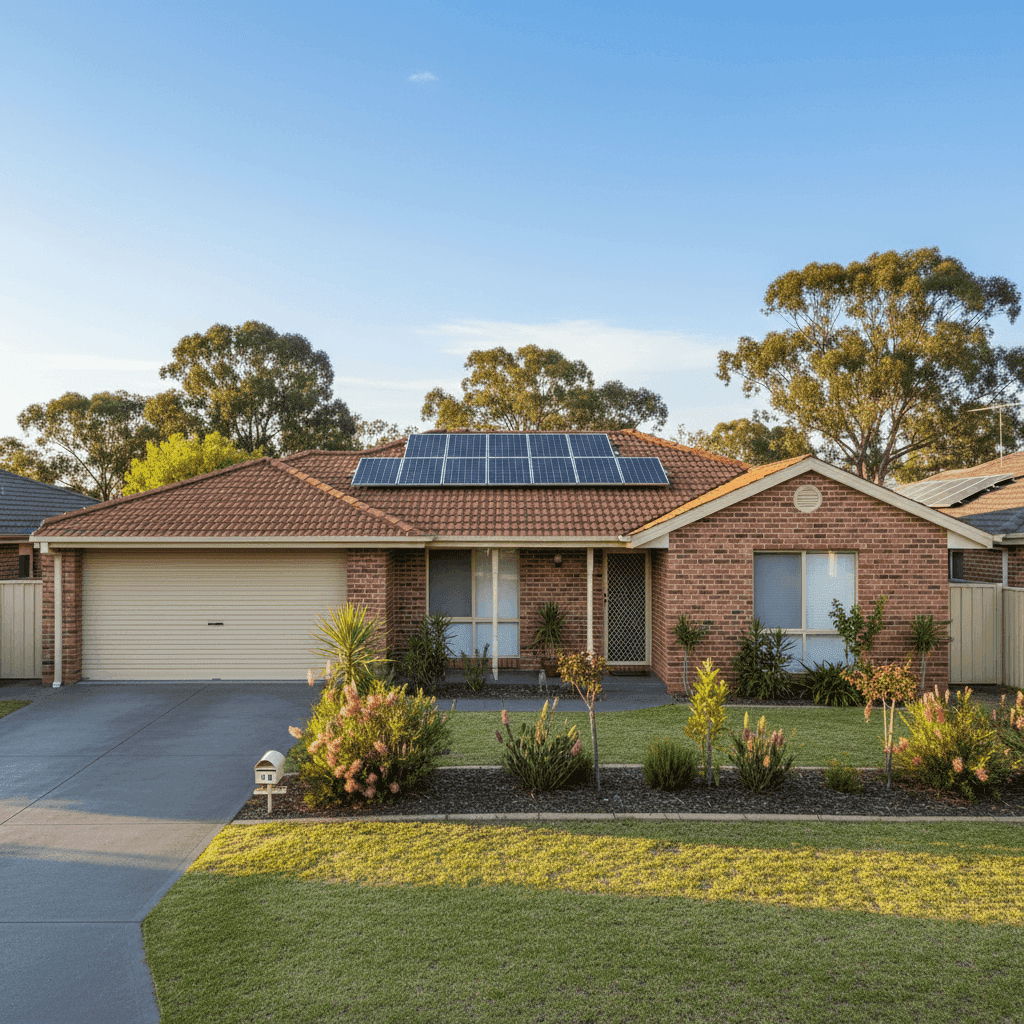
If you own a free standing home in Clarence Town, NSW 2321, you're probably wondering whether you're paying a fair price for your home and contents insurance — or whether there's a better deal out there. We recently analysed a quote for a four-bedroom, two-bathroom double brick home in this Hunter Valley township, and the results are worth unpacking. Here's everything you need to know about what drives premiums in this area and how this particular quote stacks up.
---
Is This Quote Fair?
The annual premium for this property came in at $3,463 per year (or $325/month), covering both building (sum insured: $624,000) and contents ($60,000), each with a $1,000 excess.
Our rating for this quote is FAIR — Around Average.
To put that in context: the 25th percentile for comparable quotes in the Clarence Town suburb sits at $3,462/yr — meaning this quote lands almost exactly at the lower boundary of the middle range. In practical terms, roughly three-quarters of similar properties in the area are paying more than this. That's a reasonably competitive result, even if it isn't the cheapest on the market.
It's not a bargain-basement price, but it's not an outlier either. For a well-built, four-bedroom double brick home with solar panels and ducted climate control, a premium in this range reflects what insurers consider a balanced risk profile.
---
How Clarence Town Compares
Understanding your premium in isolation only tells part of the story. Here's how this quote measures up across different geographic benchmarks:
| Benchmark | Average Premium | Median Premium |
|---|---|---|
| Clarence Town (2321) | $4,546/yr | $4,522/yr |
| Port Stephens LGA | $3,116/yr | — |
| NSW | $9,528/yr | $3,770/yr |
| National | $5,347/yr | $2,764/yr |
A few things stand out here. First, the suburb average of $4,546/yr is notably higher than this quote — suggesting the property has characteristics that insurers view favourably relative to other homes in the postcode. Second, the NSW state average of $9,528/yr looks alarming at first glance, but the median of $3,770/yr tells a more realistic story; that average is likely skewed upward by high-value or high-risk properties elsewhere in the state.
Interestingly, this quote also sits above the Port Stephens LGA average of $3,116/yr, which suggests that Clarence Town itself carries slightly higher risk characteristics than the broader local government area — possibly due to flood risk, bushfire proximity, or the age and mix of housing stock in the township.
You can explore the full breakdown of premiums for this postcode at our Clarence Town insurance stats page, or compare across the state on our NSW stats page. For a broader view, the national stats page gives you a sense of where NSW sits relative to the rest of Australia.
---
Property Features That Affect Your Premium
Every property is different, and insurers price risk based on a combination of location factors and physical characteristics. Here's how the features of this particular home influence its premium:
Double Brick Construction
Double brick is widely regarded as one of the most resilient building materials in Australian residential construction. It offers strong resistance to fire, wind, and general wear — all of which insurers factor into their risk models. Compared to timber-framed or clad homes, double brick properties often attract more competitive premiums.
Tiled Roof
A tiled roof is considered a durable, low-maintenance roofing option. Tiles are less susceptible to storm damage than corrugated iron in many conditions, and they're a preferred material from an underwriting perspective. This likely contributes positively to the premium outcome here.
Slab Foundation
A concrete slab foundation is standard in this era of construction (the home was built in 1991) and is generally well-regarded by insurers. It reduces the risk of subfloor damage from moisture or pests compared to older raised timber stumps.
Solar Panels
This property has solar panels, which do add a small layer of complexity for insurers — panels need to be covered under the building policy, and there's some additional risk associated with electrical systems and potential storm damage. However, the impact on premium is typically modest.
Ducted Climate Control
Ducted air conditioning systems are a significant fixed asset. They're expensive to repair or replace, and their inclusion can marginally increase the building sum insured — which in turn affects the overall premium. At $624,000 building cover, this property is well-insured for its 130 sqm footprint.
No Pool
The absence of a swimming pool removes one common source of liability risk, which can be a minor but positive factor in premium calculations.
---
Tips for Homeowners in Clarence Town
Whether you're reviewing your existing policy or shopping around for the first time, here are four practical steps to make sure you're getting the right cover at the right price.
- Check your building sum insured regularly. Construction costs have risen significantly across regional NSW in recent years. A sum insured that was accurate two or three years ago may no longer reflect what it would actually cost to rebuild your home today. Underinsurance is one of the most common — and costly — mistakes homeowners make. Use a building cost calculator or speak with a quantity surveyor if you're unsure.
- Understand your local flood and bushfire risk. Clarence Town sits in the Hunter Valley, an area that has experienced both flood events and bushfire risk in recent years. Check whether your policy explicitly covers flood (not just storm damage), and review your bushfire risk rating. Some insurers apply significant loadings for these perils, so it pays to compare.
- Consider your excess carefully. Both the building and contents excess on this policy are set at $1,000. Opting for a higher excess can reduce your annual premium, but make sure it's an amount you could comfortably pay out of pocket in the event of a claim. A lower excess offers more protection but typically comes at a higher premium.
- Compare quotes before renewal. Loyalty doesn't always pay in insurance. Insurers regularly offer better rates to new customers than they extend to existing ones. Using a comparison platform like CoverClub makes it easy to see what the market looks like without committing to anything — and based on the suburb data, there's meaningful variation in what different insurers charge for the same property.
---
Ready to Compare?
Whether this quote is your current policy or one you're considering, it's always worth seeing what else is available. At CoverClub, we make it easy to compare home and contents insurance quotes for properties across NSW and Australia. Enter your address to get started and find out if you could be paying less — or getting more cover for the same price.
---