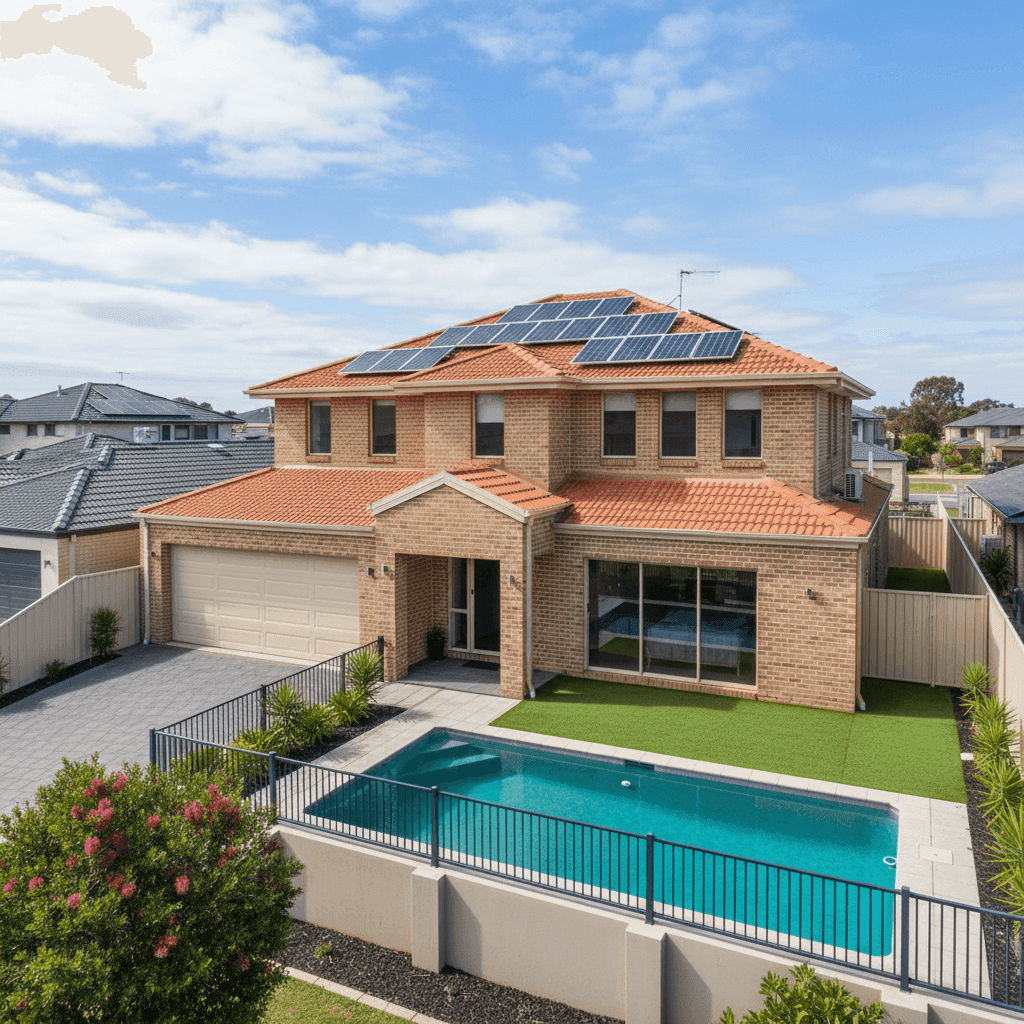
Clarkson is one of Perth's northern growth corridors — a well-established suburb in the City of Wanneroo that blends family-friendly streets with easy freeway and rail access. For owners of a free standing home in this area, understanding what drives your home insurance premium can mean the difference between overpaying and getting genuine value. This article breaks down a real home and contents insurance quote for a four-bedroom, double brick home in Clarkson, compares it against local, state, and national benchmarks, and offers practical advice for keeping your cover competitive.
---
Is This Quote Fair?
The quote in question comes in at $1,914 per year (or $183 per month) for combined home and contents cover, with a $780,000 sum insured on the building and $177,000 on contents. Both the building and contents excess are set at $2,000.
Our price rating for this quote is Expensive — Above Average.
To put that in context: the suburb average for Clarkson sits at $1,393 per year, with a median of $1,375. This quote lands roughly $521 above the suburb average — a meaningful gap that warrants a closer look.
That said, "expensive" is relative. This property has several features that legitimately push premiums upward: a swimming pool, solar panels, ducted climate control, and above-average fittings quality. Insurers price these features into their risk calculations because they increase both the replacement cost of the home and the likelihood of certain types of claims. A pool, for instance, introduces liability exposure, while solar panels add to the cost of a full rebuild.
The $780,000 building sum insured is also on the higher end for the suburb, which directly influences the premium. If that figure accurately reflects the cost to rebuild the home (including demolition, professional fees, and current construction costs), then it may be entirely appropriate — even if it results in a higher-than-average premium.
---
How Clarkson Compares
Here's how this quote stacks up across different benchmarks:
| Benchmark | Annual Premium |
|---|---|
| This Quote | $1,914 |
| Clarkson Suburb Average | $1,393 |
| Clarkson Suburb Median | $1,375 |
| Clarkson 25th Percentile | $977 |
| Clarkson 75th Percentile | $1,769 |
| LGA (Wanneroo) Average | $1,550 |
| WA State Average | $2,811 |
| WA State Median | $2,127 |
| National Average | $5,347 |
| National Median | $2,764 |
A few things stand out here. First, this quote sits above the suburb's 75th percentile of $1,769 — meaning it's pricier than roughly three-quarters of quotes seen in the area. That's a signal worth paying attention to.
However, zooming out tells a more reassuring story. Compared to the WA state average of $2,811, this quote is actually quite reasonable — sitting well below what many Western Australians pay. And against the national average of $5,347, it looks positively affordable. The national figures are heavily influenced by high-risk regions in Queensland and northern Australia, where cyclone, flood, and storm exposure drives premiums into the thousands.
Clarkson's relatively contained suburb average reflects its low natural hazard profile — no cyclone risk, manageable bushfire exposure, and limited flood history in most pockets of the suburb.
---
Property Features That Affect Your Premium
Several characteristics of this property have a direct bearing on what insurers charge:
Double Brick Construction Double brick is generally viewed favourably by insurers. It's durable, fire-resistant, and holds up well in storms. Homes with double brick walls typically attract lower premiums than those built with lightweight cladding or timber frames, all else being equal.
Tiled Roof Terracotta or concrete tile roofs are considered a solid, low-risk roofing material. They're long-lasting and less susceptible to wind damage than Colorbond or corrugated iron in most conditions — another modest positive from an underwriting perspective.
Slab Foundation A concrete slab foundation is standard for Perth homes of this era and is generally considered low-risk by insurers. It avoids the subsidence and pest-related concerns sometimes associated with older suspended timber floors.
Swimming Pool A pool increases both the replacement value of the property and the insurer's liability exposure. It's one of the more meaningful premium drivers on this property profile.
Solar Panels Solar systems — particularly larger modern arrays — add to the insured value of the home and can complicate repairs after storm or hail events. Insurers factor this into their pricing, especially as solar uptake has grown significantly across Perth's northern suburbs.
Ducted Climate Control A fully ducted air conditioning system is a significant fixed asset. Its inclusion in the building sum insured is appropriate, but it does contribute to a higher replacement cost and, consequently, a higher premium.
Above-Average Fittings Quality Stone benchtops, quality cabinetry, premium appliances, and upscale bathroom fixtures all increase the cost to rebuild or repair. Insurers assess fittings quality as part of their sum insured calculation, and above-average fittings will push that figure — and your premium — higher.
---
Tips for Homeowners in Clarkson
1. Review Your Sum Insured Carefully The building sum insured of $780,000 is a key driver of this premium. Make sure it reflects the actual cost to rebuild — not the market value of the property. Overinsuring is a common mistake that costs homeowners money every year. Tools like the Cordell Sum Sure calculator can help you arrive at a more accurate figure.
2. Compare Quotes Annually The home insurance market is competitive, and loyalty doesn't always pay. Insurers regularly adjust their pricing models, and a quote that was competitive two years ago may no longer be the best on the market. Shopping around at renewal time is one of the simplest ways to save.
3. Consider a Higher Excess This policy carries a $2,000 excess on both building and contents. In some cases, opting for a higher voluntary excess (say, $2,500 or $3,000) can meaningfully reduce your annual premium. This approach works best if you have the financial buffer to cover a larger out-of-pocket cost in the event of a claim.
4. Bundle Thoughtfully — But Verify the Value Many insurers offer discounts for combining home and contents cover under a single policy, which this quote already does. However, it's still worth checking whether separate policies from specialist providers might offer better value for your contents coverage specifically, particularly given the $177,000 contents sum insured.
---
Compare Your Options at CoverClub
Whether you're renewing your existing policy or shopping for cover on a new home, it pays to see the full picture. At CoverClub, you can enter your property details and instantly see how your quote compares to others in your suburb, your LGA, and across Western Australia. It's free, fast, and gives you the context you need to make a confident decision.