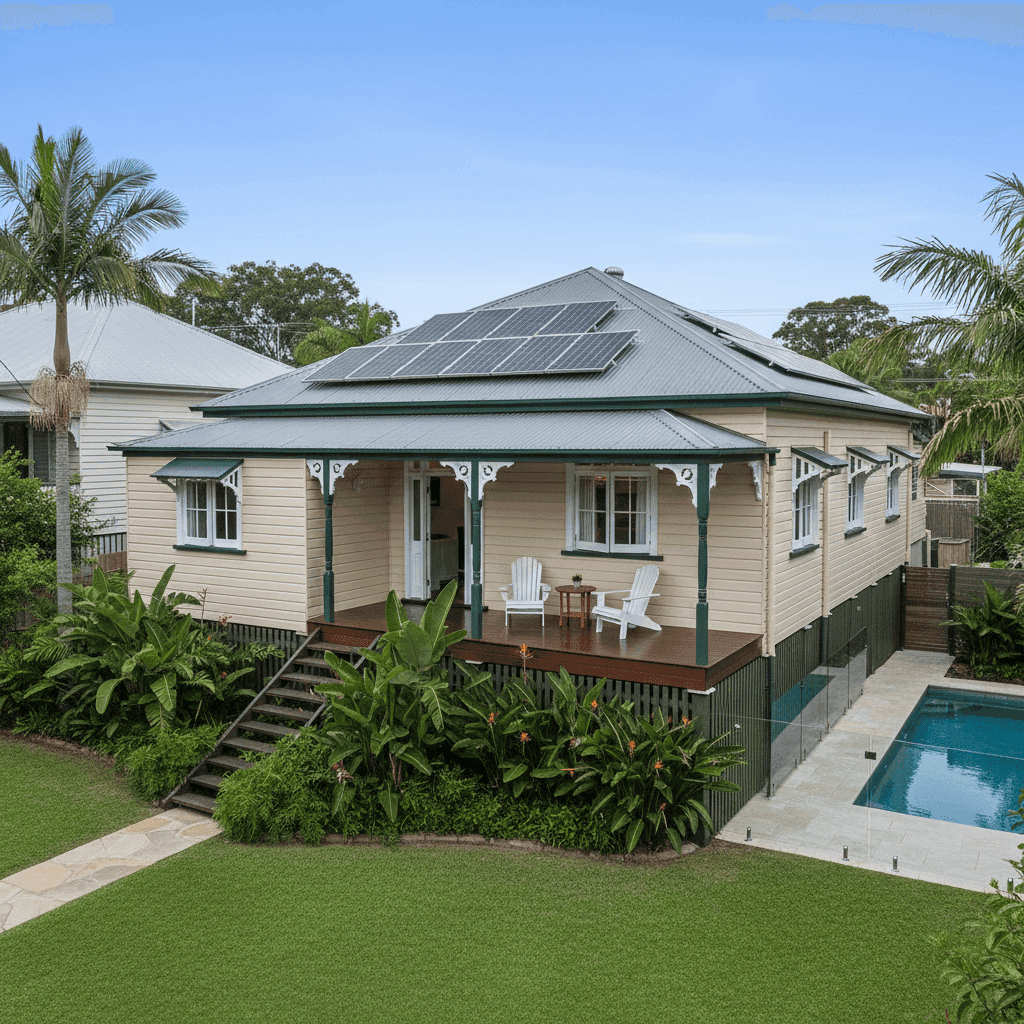
Clayfield is one of Brisbane's most sought-after inner-northern suburbs — a leafy, character-rich pocket of Queensland known for its grand Queenslander and Federation-era homes. If you own a free standing home here, you already know that insuring a heritage-style property comes with its own set of considerations. This article breaks down a real building insurance quote for a five-bedroom, three-bathroom free standing home in Clayfield (QLD 4011), and helps you understand whether the premium stacks up against what others are paying locally, across Queensland, and nationally.
---
Is This Quote Fair?
The quote in question sits at $4,631 per year (or $453/month) for building-only cover, with a $1,000 building excess and a sum insured of $1,899,000.
Our price rating for this quote is Expensive (Above Average) — and the data backs that up. The suburb average for Clayfield is $3,294/yr, meaning this quote comes in roughly 41% above the local average. Even compared to the suburb's 75th percentile of $3,543/yr, this premium is notably higher, placing it well outside the typical range for the area.
That said, context matters. This isn't a cookie-cutter modern brick home — it's a large, heritage-era property built in 1891, sitting on stumps, clad in weatherboard timber, and spanning an impressive 367 square metres. The sum insured of nearly $1.9 million reflects the genuine cost of rebuilding a home of this size, age, and quality. Insurers price these characteristics carefully, and for good reason.
So while the premium is on the higher end, it's not without explanation. The real question is whether you could get comparable cover at a better price — which is exactly where comparison tools like CoverClub come in.
---
How Clayfield Compares
To put this quote in proper perspective, here's how it sits across different benchmarks:
| Benchmark | Premium |
|---|---|
| This Quote | $4,631/yr |
| Clayfield Suburb Average | $3,294/yr |
| Clayfield Suburb Median | $3,224/yr |
| Clayfield 25th Percentile | $3,032/yr |
| Clayfield 75th Percentile | $3,543/yr |
| QLD State Average | $4,547/yr |
| QLD State Median | $3,931/yr |
| National Average | $2,965/yr |
| National Median | $2,716/yr |
| Brisbane LGA Average | $4,485/yr |
Interestingly, while this quote looks expensive relative to the Clayfield suburb average, it's actually quite close to the Queensland state average of $4,547/yr — a difference of less than $100. This tells an important story: Queensland as a whole carries elevated insurance costs driven by the state's exposure to extreme weather events, including floods, storms, and hail. Brisbane's LGA average of $4,485/yr also closely mirrors this quote.
The national average of $2,965/yr is dramatically lower, but that figure is pulled down by lower-risk states like Victoria, South Australia, and Tasmania, where homes are smaller, newer, and face fewer weather-related perils.
You can explore suburb-level data for Clayfield at coverclub.com.au/stats/QLD/4011/clayfield, compare Queensland-wide figures at coverclub.com.au/stats/QLD, or view national benchmarks at coverclub.com.au/stats/national.
---
Property Features That Affect Your Premium
Several characteristics of this property have a meaningful impact on the insurance premium. Understanding them helps you have more informed conversations with insurers.
Age and Construction (Built 1891)
At over 130 years old, this home is a genuine piece of Queensland history. Heritage and pre-Federation homes are significantly more expensive to rebuild than modern construction — specialist tradespeople, period-appropriate materials, and heritage compliance requirements all add to reinstatement costs. Insurers factor this in heavily when pricing premiums.
Weatherboard Timber Walls
Timber weatherboard is a classic Queensland building material, but it carries a higher fire risk than brick or rendered masonry. It's also more susceptible to moisture damage and pest ingress over time. Insurers typically apply a loading to timber-clad homes compared to brick equivalents.
Stump Foundation
Homes on stumps (also known as stumped or raised foundations) are common in Queensland and offer excellent ventilation in the subtropical climate. However, they can be vulnerable to subfloor moisture, termite activity, and stump deterioration — all of which can become costly claims. This construction type can influence premiums.
Large Building Footprint (367 sqm)
At 367 square metres, this is a substantial home. Rebuild costs scale directly with size, and a sum insured of $1,899,000 is appropriate for a property of this calibre with above-average fittings. Under-insuring a home of this size would be a costly mistake.
Pool, Solar Panels, and Ducted Climate Control
These features add real value to the property — and to the sum insured. Swimming pools require their own structural cover, solar panel systems can be damaged by storms or hail, and ducted climate control systems are expensive to repair or replace. All three are legitimate contributors to a higher premium.
Above-Average Fittings Quality
Premium fixtures, high-end joinery, and quality finishes cost more to replace like-for-like. Insurers assess fittings quality when determining rebuild costs, and above-average fittings will push the sum insured — and therefore the premium — higher.
---
Tips for Homeowners in Clayfield
1. Make sure your sum insured reflects true rebuild costs With a heritage home of this age and size, the risk of being under-insured is real. The $1,899,000 sum insured here appears well-considered, but rebuild costs change over time. Use a quantity surveyor or your insurer's rebuild cost calculator to review this figure annually — especially given recent construction cost inflation in Queensland.
2. Compare quotes before renewal Loyalty doesn't always pay in insurance. Insurers frequently offer better rates to new customers, and the market for heritage homes varies significantly between providers. Running a comparison at CoverClub takes minutes and could reveal meaningful savings.
3. Ask about heritage or specialist home policies Not all standard home insurers are well-equipped to cover pre-Federation homes. Some specialist insurers offer policies tailored to heritage properties that may provide better cover for period-appropriate reinstatement — not just a like-for-like rebuild with modern materials.
4. Review your excess to manage your premium A $1,000 excess is fairly standard, but increasing it to $2,000 or more can reduce your annual premium. If you have the financial buffer to absorb a higher out-of-pocket cost in the event of a claim, this can be a practical way to bring premiums down on an otherwise expensive policy.
---
Ready to Compare?
Whether you're renewing your policy or shopping for the first time, comparing quotes is the single most effective way to ensure you're not overpaying. CoverClub makes it easy to see what multiple insurers would charge for your specific property — so you can make a genuinely informed decision.