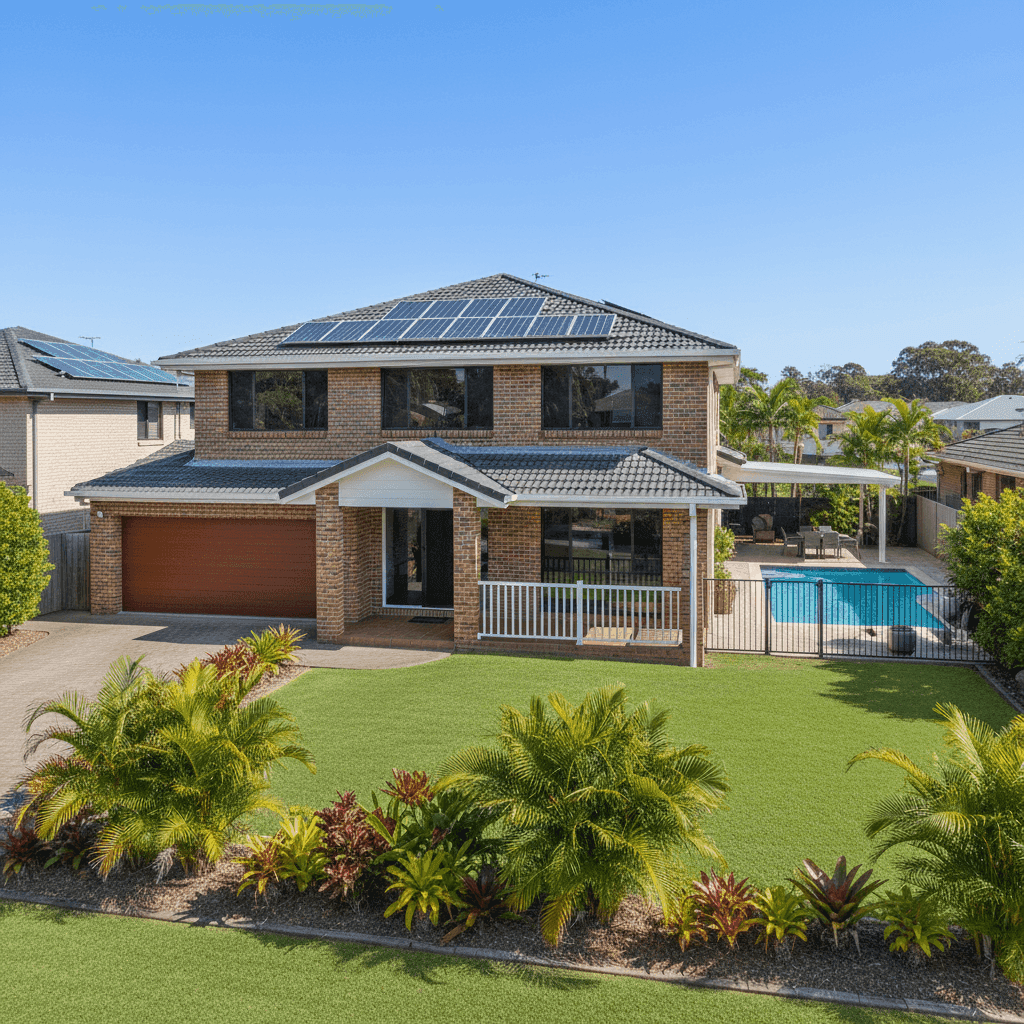
If you own a free standing home in Clear Island Waters, QLD 4226, you already know you're living in one of the Gold Coast's most desirable pockets — a leafy, canal-laced suburb where well-appointed family homes are the norm. But desirable suburbs don't always mean affordable insurance, and in Queensland, premiums can vary dramatically from one street to the next. This article breaks down a real home and contents insurance quote for a four-bedroom property in Clear Island Waters, compares it against local, state, and national benchmarks, and offers practical tips to help you get the best value cover.
---
Is This Quote Fair?
The quote in question comes in at $3,084 per year (or roughly $296 per month) for combined home and contents cover, with a building sum insured of $805,000 and contents valued at $50,000. Both the building and contents excess sit at $1,000 — a standard arrangement for a policy of this type.
Our pricing engine rates this quote as CHEAP — below average for the area, and the numbers back that up convincingly. The suburb average premium in Clear Island Waters is $10,317 per year, meaning this quote is roughly 70% below what other homeowners in the same postcode are typically paying. Even against the suburb's 25th percentile — the cheapest quarter of quotes — this policy at $3,084 still undercuts the $4,758 benchmark.
Put simply, if you received a quote in this range for a property of this calibre, you'd be doing very well indeed. That said, it's always worth scrutinising what's included in the policy — a low premium only represents genuine value if the cover itself is comprehensive.
---
How Clear Island Waters Compares
To put this quote in proper context, here's how Clear Island Waters stacks up against broader insurance markets:
| Benchmark | Average Premium | Median Premium |
|---|---|---|
| Clear Island Waters (4226) | $10,317/yr | $10,015/yr |
| Gold Coast LGA | $8,161/yr | — |
| Queensland | $9,129/yr | $3,903/yr |
| National | $5,347/yr | $2,764/yr |
A few things stand out here. First, the suburb average of $10,317 is notably high — well above both the Queensland average ($9,129) and the national average ($5,347). This reflects the elevated rebuild costs, higher property values, and flood or storm risk that can affect parts of the Gold Coast canal network.
Second, there's a striking gap between Queensland's average ($9,129) and its median ($3,903). This tells us the Queensland market is heavily skewed by a subset of very expensive policies — likely properties in high-risk flood zones or cyclone-affected coastal areas — which pull the average up significantly. The median is a more representative figure for most Queensland homeowners.
You can explore the full data for this postcode at our Clear Island Waters insurance stats page, compare it against all Queensland suburbs, or see how it sits within the national picture.
---
Property Features That Affect Your Premium
Every insurer prices a policy based on the specific characteristics of the property. Here's how the features of this home are likely influencing the quote:
Brick Veneer Walls & Tiled Roof Brick veneer is generally viewed favourably by insurers. It's durable, fire-resistant, and holds up well in storms — all of which reduce the likelihood of a major claim. Combined with a tiled roof, this construction profile is considered lower risk than, say, weatherboard or Colorbond, which can translate into more competitive premiums.
Slab Foundation A concrete slab foundation is structurally sound and doesn't carry the same risk of subfloor damage or termite ingress that stumped or suspended floors can. Insurers tend to price slab homes more favourably, particularly in Queensland's humid climate.
Timber & Laminate Flooring Above-average fittings quality, including timber and laminate floors, does increase the cost to rebuild or repair — which is reflected in the $805,000 building sum insured. Getting the sum insured right is critical; underinsurance is one of the most common and costly mistakes homeowners make.
Swimming Pool A pool adds complexity to a home insurance policy. It increases the replacement value of the property and may also introduce liability considerations depending on the policy. Homeowners should confirm that pool surrounds, equipment, and fencing are explicitly covered.
Solar Panels Solar panels are increasingly common on Queensland homes, but they're not always covered as standard under a building policy. It's worth checking whether the system — including inverters and mounting hardware — is included in your building sum insured or requires a separate endorsement.
Ducted Climate Control Ducted air conditioning is a significant fixed asset and adds meaningfully to a home's rebuild cost. Ensure it's captured in your building sum insured rather than treated as contents, as it's typically considered part of the structure.
No Cyclone Risk Clear Island Waters falls outside the designated cyclone risk zone, which is a meaningful factor in keeping premiums lower than many other Queensland coastal locations. Properties further north — particularly above Bundaberg — attract substantial cyclone loading on premiums.
---
Tips for Homeowners in Clear Island Waters
1. Review Your Building Sum Insured Annually Construction costs have risen sharply across Queensland in recent years. A sum insured that was accurate two years ago may no longer reflect what it would actually cost to rebuild your home today. Use a building cost calculator or speak to a local builder to sense-check your figure each year.
2. Check Your Pool and Solar Are Properly Covered Don't assume these are automatically included. Ask your insurer specifically whether pool equipment and solar panel systems (including inverters) are covered under the building section, and to what limit. Gaps in cover for these items can be expensive surprises at claim time.
3. Consider Your Excess Level A $1,000 excess is fairly standard, but increasing your excess — say, to $2,000 or $2,500 — can meaningfully reduce your annual premium. If you have a healthy emergency fund and are unlikely to make small claims, a higher excess can be a smart trade-off.
4. Compare Quotes Before Renewing Loyalty doesn't always pay in the insurance market. Many insurers quietly increase premiums at renewal, banking on inertia. Even if your current quote looks competitive, it's worth running a comparison every year to make sure you're still getting a fair deal.
---
Ready to Compare?
Whether you're reviewing your current policy or shopping for cover on a new property, CoverClub makes it easy to see what you should be paying. Get a home insurance quote now and find out how your premium stacks up against real data from your suburb, your state, and across Australia. No fluff, no pressure — just transparent pricing information to help you make a smarter decision.