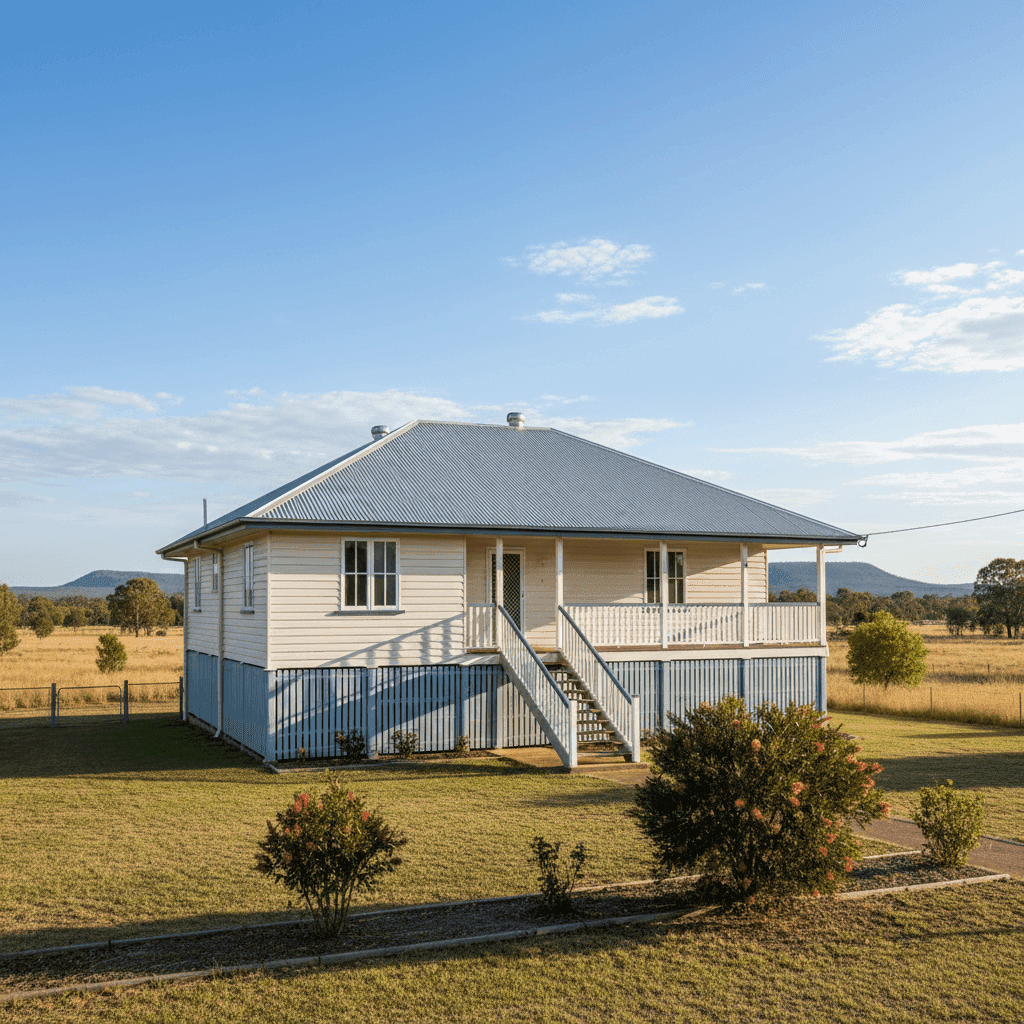
Getting a handle on what you should be paying for home insurance in regional Queensland can feel like guesswork — premiums vary enormously depending on your location, property type, and the features of your home. This article breaks down a real home and contents insurance quote for a four-bedroom free standing home in Clermont, QLD 4721, comparing it against suburb, state, and national benchmarks so you can see exactly where it sits in the market.
---
Is This Quote Fair?
The short answer: yes — and then some. This quote came in at $1,988 per year (or around $190 per month), covering both building and contents for a sum insured of $777,000 on the building and $50,000 on contents. Our price rating for this quote is CHEAP, meaning it sits well below the average for the Clermont area.
To put that in perspective, the suburb average premium in Clermont is $3,994 per year, and the median sits at $3,906. That means this quote is roughly 50% below the local average — a substantial saving of around $2,000 annually. Even compared to the 25th percentile of local quotes (meaning the cheapest quarter of the market), which sits at $2,767, this premium still undercuts the competition by nearly $800 a year.
For a homeowner in Clermont, landing a quote like this represents genuine value. The excess is set at $1,000 for both building and contents, which is a standard and reasonable figure for this level of cover.
---
How Clermont Compares
Clermont is a small but resilient outback Queensland town, and its insurance market reflects the complexities of regional property risk. Based on 28 quotes collected for the Clermont area, premiums range widely — from the 25th percentile of $2,767 up to the 75th percentile of $4,951. That's a spread of over $2,000, which tells you that insurer pricing in this postcode is far from consistent. Shopping around here genuinely pays off.
Zooming out to the state level, the picture becomes even more striking. The Queensland average premium is a hefty $9,129 per year, though the state median is considerably lower at $3,903 — a sign that a relatively small number of very high-risk properties (think flood-prone or cyclone-exposed areas) are pulling the average upward. At the LGA level, the Central Highlands (Qld) average is a remarkable $14,474 per year, which reflects the diverse and often challenging risk profile across this large inland region.
Nationally, the average home insurance premium across Australia is $5,347 per year, with a median of $2,764. This quote of $1,988 sits comfortably below the national median as well, making it competitive not just locally but across the country.
| Benchmark | Premium |
|---|---|
| This Quote | $1,988/yr |
| Clermont Suburb Average | $3,994/yr |
| Clermont Suburb Median | $3,906/yr |
| QLD State Average | $9,129/yr |
| QLD State Median | $3,903/yr |
| National Average | $5,347/yr |
| National Median | $2,764/yr |
| Central Highlands LGA Average | $14,474/yr |
---
Property Features That Affect Your Premium
Several characteristics of this property play a meaningful role in how insurers assess and price the risk. Here's what stands out:
Weatherboard Timber Walls
Weatherboard wood construction is common in older Queensland homes and carries a higher replacement cost and fire risk compared to brick or rendered masonry. Insurers generally price timber-clad homes slightly higher to account for the increased vulnerability to fire and the cost of sourcing and fitting timber cladding during a claim. That said, well-maintained weatherboard homes are still very insurable — the key is ensuring your sum insured accurately reflects the true cost to rebuild.
Steel/Colorbond Roof
A Colorbond steel roof is actually viewed favourably by many insurers. It's durable, low-maintenance, and performs well in high-wind and hail events. Compared to terracotta tiles or older corrugated iron, Colorbond is generally associated with lower claim frequency and severity, which can contribute to a more competitive premium.
Stump Foundation
Homes on stumps (or piers) are a hallmark of Queensland's building heritage — they allow airflow beneath the floor, reduce termite risk from direct ground contact, and can be more resilient in minor flood events. However, stumped homes do carry some additional risk around subfloor maintenance and structural movement. Insurers factor this into their assessment, though it's rarely a significant premium driver on its own.
Construction Year: 1960
A home built in 1960 is now over 60 years old. Older homes can attract higher premiums due to the age of electrical wiring, plumbing, and roofing materials — all of which are more likely to cause a claim as they age. It's worth having older systems inspected regularly, not only for safety but because some insurers may ask about the condition of wiring or plumbing when assessing cover.
Building Size and Sum Insured
At 205 square metres and a building sum insured of $777,000, this property is insured at roughly $3,790 per square metre — a figure that reflects current construction costs in regional Queensland, where labour and materials can be more expensive to source than in metropolitan areas. Getting your sum insured right is critical: underinsurance is one of the most common and costly mistakes homeowners make.
---
Tips for Homeowners in Clermont
1. Don't set and forget your sum insured. Construction costs have risen sharply in regional Queensland over the past few years. Review your building sum insured annually to make sure it reflects what it would actually cost to rebuild your home today — not what it cost five years ago. Many insurers offer online calculators to help with this.
2. Maintain your home's older systems. With a 1960s build, the electrical wiring and plumbing may be approaching the end of their serviceable life. Regular inspections not only reduce your risk of a claim but can also demonstrate to insurers that the property is well-maintained — which can support more favourable underwriting decisions at renewal.
3. Shop around at every renewal. The wide spread of premiums in Clermont (from $2,767 to $4,951 across the middle 50% of quotes) shows that insurers price this postcode very differently. Never assume your renewal quote is competitive — use a comparison service like CoverClub to benchmark it before you pay.
4. Keep your contents valuation accurate. With $50,000 in contents cover, it's worth doing a periodic home inventory to make sure that figure still reflects the true replacement value of your belongings. Underinsuring contents is just as risky as underinsuring your building — if you need to make a claim, a shortfall can be financially painful.
---
Ready to Compare Your Own Quote?
Whether you're a Clermont local or researching home insurance across regional Queensland, CoverClub makes it easy to see what the market looks like for your specific property. Get a quote today and find out whether you're paying a fair price — or leaving money on the table at renewal.