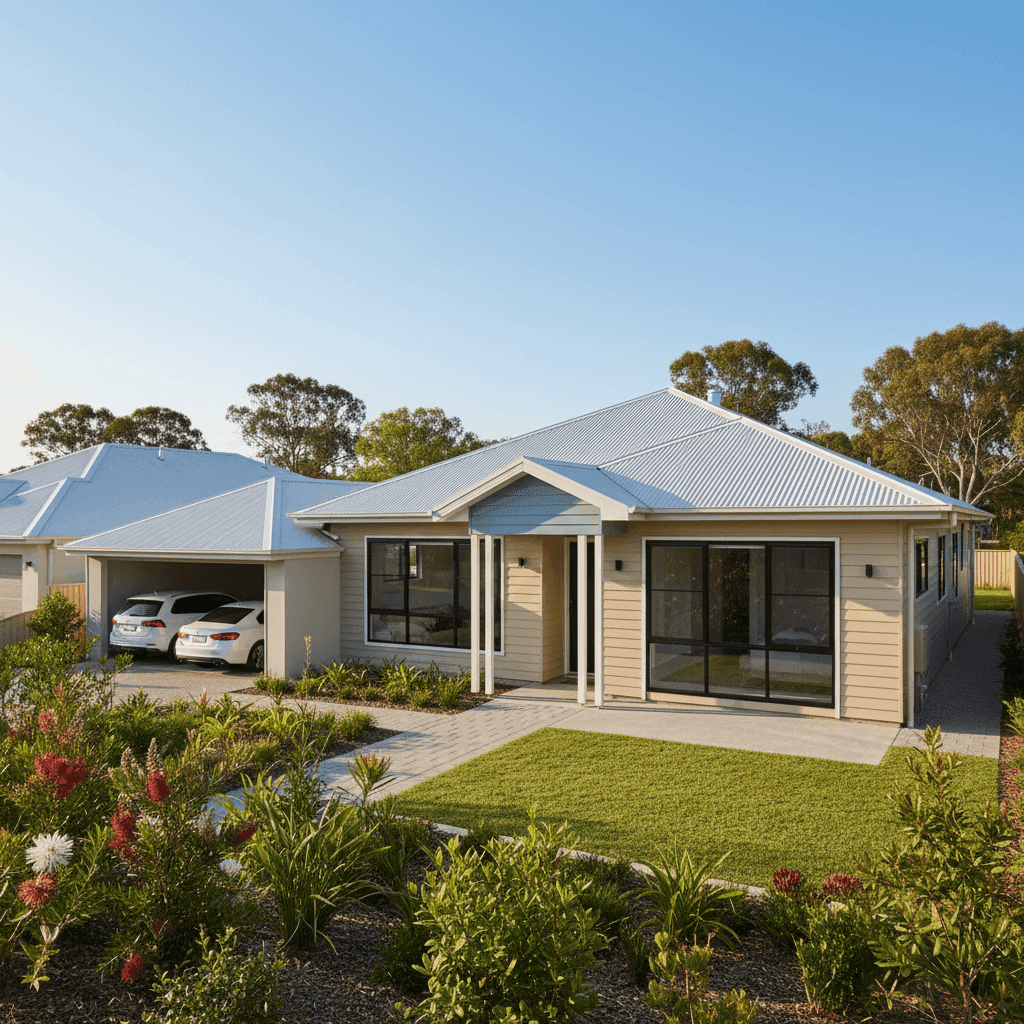
Home insurance costs in Queensland can vary enormously from one suburb to the next — and even between properties on the same street. This article takes a close look at a real home and contents insurance quote for a four-bedroom, two-bathroom free standing home in Cleveland, QLD 4163, and puts that figure under the microscope against suburb, state, and national benchmarks.
Whether you're a homeowner in Cleveland shopping for a better deal, or simply curious about what drives premiums in South East Queensland, read on for a thorough breakdown.
---
Is This Quote Fair?
The quote in question came in at $906 per year (or $89/month) for combined home and contents cover. The building is insured for $682,000 and contents for $61,000 — a solid level of protection for a modern family home.
Our price rating for this quote? Cheap — well below average.
To put that in perspective, the suburb average for Cleveland sits at $3,985 per year, with a median of $2,843. This quote comes in at roughly 77% below the suburb average — a remarkable result by any measure. Even against the suburb's 25th percentile (the cheapest quarter of quotes), which sits at $1,891, this premium is less than half.
It's worth noting that a single quote doesn't tell the whole story — excess levels, inclusions, and policy limits all affect the final figure. This policy carries a $2,000 building excess and a $600 contents excess, which are on the higher end and do contribute to keeping the premium down. Still, even accounting for that, this is an exceptionally competitive result.
---
How Cleveland Compares
Cleveland is a bayside suburb in the Redland City Council area, roughly 30 kilometres south-east of Brisbane's CBD. It's a popular spot for families and sea-change seekers alike — but like much of Queensland, home insurance costs here reflect the state's elevated risk profile.
Here's how the numbers stack up:
| Benchmark | Annual Premium |
|---|---|
| This quote | $906 |
| Cleveland suburb average | $3,985 |
| Cleveland suburb median | $2,843 |
| Redland LGA average | $3,312 |
| QLD state average | $4,547 |
| QLD state median | $3,931 |
| National average | $2,965 |
| National median | $2,716 |
Queensland consistently records some of the highest home insurance premiums in the country, driven by flood risk, storm surge, severe weather events, and the legacy of cyclone-related claims — even in areas not directly in cyclone zones. The QLD state average of $4,547 is nearly 54% higher than the national average of $2,965, which gives you a sense of just how much geography matters when insurers price risk.
Cleveland itself, based on 97 quotes in our dataset, shows a wide spread — from $1,891 at the 25th percentile all the way to $4,998 at the 75th. That kind of range underscores how much individual property characteristics, insurer appetite, and coverage choices can move the needle.
---
Property Features That Affect Your Premium
Several characteristics of this particular home work in its favour from an underwriting perspective:
Built in 2020 — a significant advantage. Newer homes are built to modern Australian Standards, including updated wind and storm resistance requirements. Insurers typically reward this with lower premiums, as the likelihood of structural claims is reduced compared to older builds.
Slab foundation. Concrete slab foundations are generally considered lower risk than raised or timber stumped foundations, particularly in areas prone to moisture, termites, or flooding. This is a tick in the insurer's box.
Steel/Colorbond roof. Colorbond roofing is a popular choice in Queensland for good reason — it's durable, lightweight, and performs well in high-wind and storm conditions. Compared to terracotta tiles or older iron roofing, Colorbond tends to attract more favourable premiums.
Weatherboard timber exterior walls. This is worth watching. Timber weatherboard can be a double-edged sword — it's a traditional and attractive cladding choice, but some insurers price it slightly higher due to fire risk compared to brick or fibre cement. That said, a 2020 build will use treated, compliant materials, which mitigates some concern.
No pool, no solar panels. Both of these features can add complexity (and cost) to a home insurance policy. The absence of a pool removes liability considerations, and no solar panels means no additional coverage for panels, inverters, or potential roof penetration issues.
Ducted climate control. This is a higher-value fixture that's included in the building sum insured. It's worth ensuring your sum insured adequately accounts for the cost of replacing ducted systems, which can run into the tens of thousands of dollars.
Standard fittings quality. A standard fittings rating keeps the rebuild cost estimate — and therefore the sum insured — more predictable and moderate compared to premium or luxury fittings.
---
Tips for Homeowners in Cleveland
1. Don't set and forget your sum insured. Construction costs have risen sharply across Australia in recent years. The $682,000 building sum insured on this policy should be reviewed annually to ensure it reflects current rebuild costs — not the figure set when the policy was first taken out. Underinsurance is one of the most common — and costly — mistakes homeowners make.
2. Understand your excess trade-off. This policy carries a $2,000 building excess. While a higher excess lowers your premium, it also means you'll need to cover more out of pocket before your insurer steps in. Make sure the excess is genuinely affordable in the event of a claim — not just a figure chosen to reduce the annual bill.
3. Review your contents coverage. At $61,000, the contents sum insured is relatively modest for a four-bedroom home. It's easy to underestimate the cumulative value of furniture, appliances, clothing, electronics, and personal items. A home inventory — even a rough one — can help you arrive at a more accurate figure.
4. Compare quotes every year. This quote is a standout result, but that doesn't mean it will stay competitive at renewal. Insurers regularly reprice based on claims history, updated risk models, and portfolio strategy. Running a fresh comparison at renewal through CoverClub takes minutes and could save you hundreds.
---
Find Your Best Rate with CoverClub
Whether you're insuring a home in Cleveland or anywhere else across Australia, comparing quotes is the single most effective way to make sure you're not overpaying. CoverClub makes it easy to see how your premium stacks up against your neighbours and the broader market — and to find a policy that genuinely fits your property and budget.
Get a home insurance quote today and see how your current cover compares.