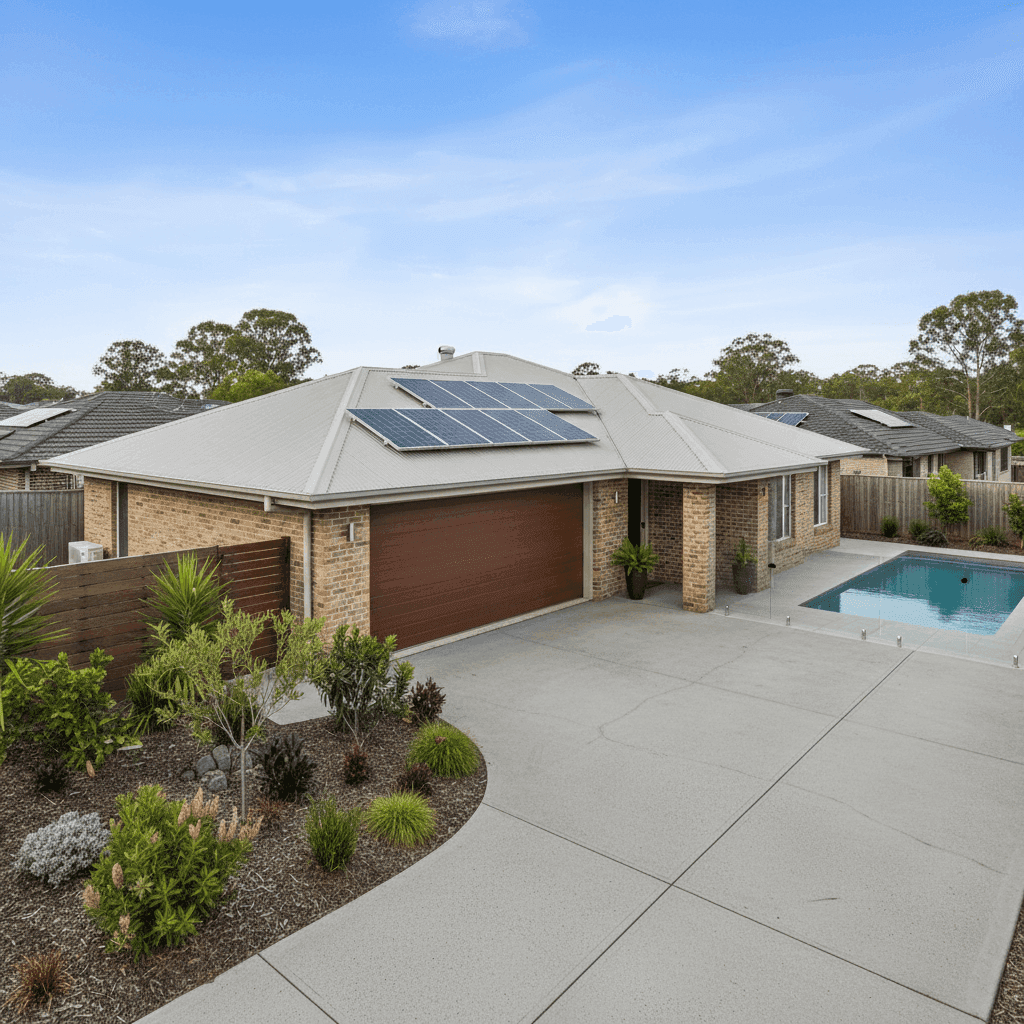
Cleveland, QLD is a well-established bayside suburb on the Redland Coast — known for its relaxed lifestyle, proximity to Moreton Bay, and a strong mix of family homes. If you own a free standing home in the 4163 postcode, understanding what you should be paying for home and contents insurance is one of the smartest financial checks you can do. This article breaks down a real insurance quote for a 4-bedroom, 2-bathroom brick veneer home in Cleveland, and puts the numbers into context against suburb, state, and national benchmarks.
---
Is This Quote Fair?
The quote in question sits at $2,706 per year (or $259/month) for combined home and contents cover, with a building sum insured of $704,000 and contents valued at $70,000. Both the building and contents excess are set at $1,000.
Our price rating for this quote is FAIR — Around Average, which is a solid result for a property of this size and specification. Here's why:
- The quote comes in below the suburb average of $4,686/yr and also below the suburb median of $3,540/yr for Cleveland.
- It sits just above the 25th percentile for the suburb ($2,383/yr), meaning roughly 75% of comparable quotes in the area are more expensive.
- Compared to the broader Queensland average of $9,129/yr, this quote looks very competitive — though it's worth noting that QLD's state average is heavily skewed by high-risk cyclone and flood zones in regional and far north Queensland.
- Against the national average of $5,347/yr, the quote again performs well, coming in nearly half the cost.
In short, while there may be room to push the price slightly lower, this quote represents solid value for a well-featured home in Cleveland. The "Fair" rating reflects that it's competitive without being an outlier in either direction.
---
How Cleveland Compares
Cleveland's insurance market is notably active, with our dataset drawing on 60 quotes from the 4163 postcode — enough to give a reliable picture of local pricing. Here's how the numbers stack up:
| Benchmark | Premium |
|---|---|
| This Quote | $2,706/yr |
| Cleveland 25th Percentile | $2,383/yr |
| Cleveland Median | $3,540/yr |
| Cleveland Average | $4,686/yr |
| Cleveland 75th Percentile | $6,498/yr |
| LGA (Redland) Average | $3,178/yr |
| QLD State Median | $3,903/yr |
| QLD State Average | $9,129/yr |
| National Average | $5,347/yr |
| National Median | $2,764/yr |
You can explore the full breakdown of Cleveland suburb insurance stats, Queensland state data, and national home insurance figures on CoverClub.
One standout figure is the wide spread between Cleveland's 25th percentile ($2,383) and 75th percentile ($6,498) — a gap of over $4,100. This tells us that the same suburb can produce dramatically different premiums depending on the insurer, the property's features, and the level of cover selected. Shopping around in Cleveland genuinely pays off.
The Redland LGA average of $3,178/yr also provides useful context — this quote sits comfortably below that benchmark, suggesting the property's characteristics are working in the homeowner's favour.
---
Property Features That Affect Your Premium
Several features of this property have a meaningful impact on what insurers charge. Let's unpack the key ones:
Brick Veneer Walls & Colorbond Roof Brick veneer is generally viewed favourably by insurers — it's durable, fire-resistant, and widely understood. Combined with a steel Colorbond roof, this construction profile is considered low-to-moderate risk. Colorbond roofing is particularly well-regarded in Queensland for its resistance to hail and its longevity in coastal conditions.
Slab Foundation A concrete slab foundation is standard for homes of this era in South East Queensland and doesn't attract any notable loading from insurers. It does, however, mean the home has no underfloor space, which can simplify claims assessments for water damage.
Built in 1985 Homes from the mid-1980s are mature but not ancient. At 40 years old, this property may have some ageing infrastructure (plumbing, wiring) that insurers factor into their risk assessment. Ensuring your electrical and plumbing systems are well-maintained can help avoid complications at claim time.
Swimming Pool A pool adds complexity to a home insurance policy. It increases the overall sum insured and can introduce liability considerations. Some policies cover pool equipment under building cover — it's worth confirming this is included at $704,000.
Solar Panels Solar panels are increasingly common in Queensland and most insurers now include them under building cover. However, coverage limits and conditions vary, so it's important to verify that your panel system's replacement value is adequately captured in your building sum insured.
Ducted Climate Control Ducted air conditioning is a significant fixed asset and is typically covered under building insurance. Given the Queensland heat, this is a meaningful inclusion — and one worth confirming is reflected in your sum insured.
214 sqm Building Size At 214 square metres, this is a substantial family home. Rebuild costs in South East Queensland can vary significantly, and with a sum insured of $704,000, the per-square-metre rebuild cost works out to approximately $3,290/sqm — broadly in line with current construction costs in the region, though it's always worth getting a professional rebuild cost assessment.
---
Tips for Homeowners in Cleveland
1. Review Your Building Sum Insured Annually Construction costs in Queensland have risen sharply in recent years. A sum insured that was adequate two years ago may no longer cover a full rebuild today. Use a professional estimator or your insurer's calculator to check your figure each year — being underinsured at claim time can be financially devastating.
2. Check Your Pool and Solar Panel Coverage Both features add value to your property but can be overlooked in policy fine print. Confirm that your pool shell, filtration equipment, and solar panel system are explicitly covered — and to what limit — under your current policy.
3. Consider a Higher Excess to Lower Your Premium With both building and contents excesses set at $1,000, there may be room to increase these in exchange for a lower annual premium. If you have a solid emergency fund, a $2,500 or $5,000 excess can meaningfully reduce your yearly costs.
4. Shop Around — Cleveland Premiums Vary Widely The $4,000+ gap between the 25th and 75th percentile in Cleveland's postcode makes it one of the more price-variable suburbs in the region. Even if your current quote is fair, running a comparison every 12 months ensures you're not drifting into the expensive end of the market without realising it.
---
Compare Home Insurance Quotes in Cleveland
Whether you're reviewing an existing policy or shopping for the first time, CoverClub makes it easy to see how your premium stacks up. Get a home insurance quote for your Cleveland property and compare it against real data from your suburb, your LGA, and across Australia. A few minutes of comparison could save you hundreds of dollars a year.