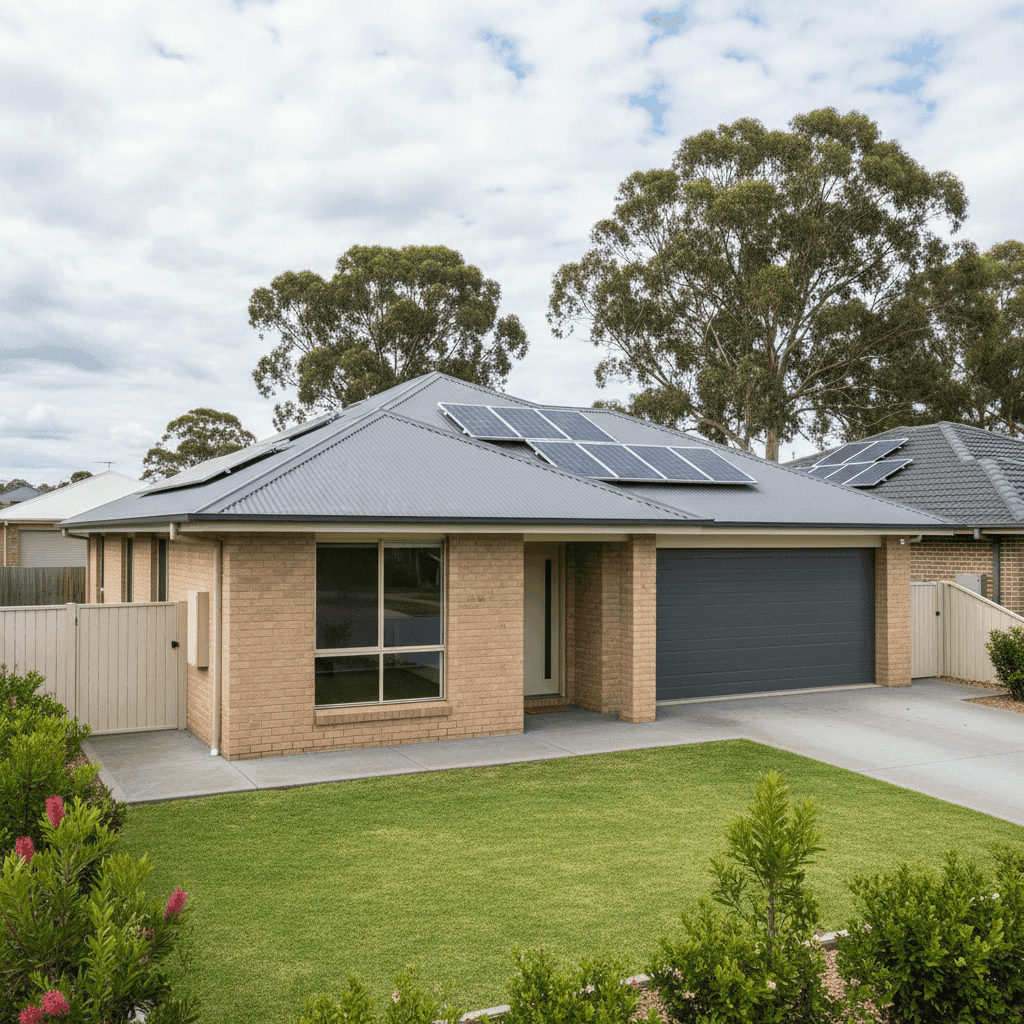
Home insurance costs in regional Queensland can vary enormously depending on where you live, what your home is made of, and how much cover you need. This article breaks down a real home and contents insurance quote for a four-bedroom, free-standing home in Clinton, QLD 4680 — a suburb of Gladstone on the central Queensland coast — and puts the numbers in context so you can judge whether you're getting a fair deal.
---
Is This Quote Fair?
The quote in question comes in at $2,657 per year (or $259 per month) for combined home and contents cover, with a building sum insured of $550,000 and contents valued at $105,000. Both the building and contents excesses are set at $1,000.
Our price rating for this quote is FAIR — Around Average, and the data backs that up. Within the Clinton suburb, the average annual premium sits at $3,097 and the median at $3,153, meaning this quote lands comfortably below both benchmarks. In fact, it falls between the 25th percentile ($2,322) and the median ($3,153), which puts it in a solid position — better than roughly half of comparable quotes in the area, without being an outlier.
That said, "fair" doesn't necessarily mean "the best available." There's meaningful spread in the local market, with the 75th percentile reaching $3,744 per year. That's a $1,087 gap between this quote and the more expensive end of the suburb range — a reminder that shopping around can make a real difference.
---
How Clinton Compares
To properly appreciate this quote, it helps to zoom out and look at the broader picture. You can explore the full data on the Clinton suburb stats page, the Queensland state stats page, and national home insurance statistics.
Here's how the numbers stack up:
| Benchmark | Annual Premium |
|---|---|
| This Quote | $2,657 |
| Clinton Suburb Average | $3,097 |
| Clinton Suburb Median | $3,153 |
| QLD State Average | $4,547 |
| QLD State Median | $3,931 |
| National Average | $2,965 |
| National Median | $2,716 |
A few things stand out here. Queensland as a whole is a notably expensive state for home insurance — the state average of $4,547 is well above the national average of $2,965, largely driven by the elevated risk of cyclones, flooding, and severe storms across much of the state. Clinton, sitting in the Gladstone region, benefits from not being classified as a cyclone risk area, which helps keep premiums more manageable.
Interestingly, this quote also comes in below the national average of $2,965 — a strong result for a four-bedroom home with a $550,000 building sum insured. It's worth noting that the suburb sample size is 17 quotes, so the local averages are indicative rather than exhaustive, but they still provide a useful reference point.
---
Property Features That Affect Your Premium
Every property is different, and insurers weigh up a range of characteristics when calculating your premium. Here's how the features of this particular home are likely influencing the cost:
Brick Veneer Walls Brick veneer is generally viewed favourably by insurers. It offers solid fire resistance and durability compared to timber or lightweight cladding, which can translate to lower rebuild risk and, in turn, more competitive premiums.
Steel/Colorbond Roof Colorbond roofing is widely regarded as one of the better roofing materials for Australian conditions. It's lightweight, resistant to corrosion, and performs well in high-wind events. Insurers typically treat it as a lower-risk material than older tile or corrugated iron roofs.
Concrete Slab Foundation A slab foundation is the standard in modern Queensland construction and is generally considered stable and low-risk. It removes some of the vulnerabilities associated with elevated stumped foundations, such as subfloor pest damage or storm-related underfloor flooding.
Tile Flooring Tiles are durable and relatively inexpensive to replace compared to hardwood or engineered timber floors. This can have a modest positive effect on contents and building replacement cost estimates.
Built in 2006 A home built in 2006 is modern enough to comply with updated building codes introduced after the significant weather events of the late 1990s and early 2000s, but old enough that some wear and maintenance considerations may apply. Insurers generally view homes from this era positively.
Solar Panels The property has solar panels installed. It's important to ensure your policy explicitly covers solar panels — both as a fixed part of the building and for any damage caused by panels during a storm. Some policies cover them automatically; others require a specific declaration.
Slightly Elevated (Less Than 1m) The home is slightly elevated, which can offer a degree of protection against minor surface water ingress. This modest elevation is unlikely to dramatically shift the premium but may provide marginal flood resilience.
No Pool, No Ducted Climate Control The absence of a swimming pool removes a common source of liability and maintenance claims. No ducted air conditioning also simplifies the building's mechanical systems, reducing potential claim exposure.
---
Tips for Homeowners in Clinton
1. Confirm Your Solar Panels Are Covered Solar panel coverage varies significantly between insurers. Check whether your policy covers panels for storm damage, theft, and accidental breakage — and whether the inverter and mounting hardware are included. If you've added panels since taking out the policy, notify your insurer to ensure they're declared.
2. Review Your Building Sum Insured Annually Construction costs in Queensland have risen sharply in recent years. A $550,000 sum insured may have been accurate at policy inception, but it's worth recalculating your rebuild cost each year — particularly factoring in labour shortages and material price increases in regional areas like Gladstone. Underinsurance is one of the most common and costly mistakes homeowners make.
3. Understand Your Flood Cover Even though Clinton is not classified as a cyclone risk area, the Gladstone region can still experience significant rainfall events and localised flooding. Check whether your policy includes flood cover as standard or as an optional add-on, and review any exclusions relating to storm surge or riverine flooding.
4. Compare at Renewal, Not Just at Inception Insurance premiums can shift meaningfully from year to year, even if nothing changes about your property. Set a reminder to compare quotes before your renewal date rather than simply accepting the rollover price. A quick comparison can easily save hundreds of dollars annually.
---
Ready to Compare Your Options?
Whether you're a first-time buyer in Clinton or a long-term homeowner reviewing your cover, it pays to see what the market has to offer. CoverClub makes it easy to compare home and contents insurance quotes tailored to your property. Get a quote today and find out if you could be paying less — or getting more for what you already spend.