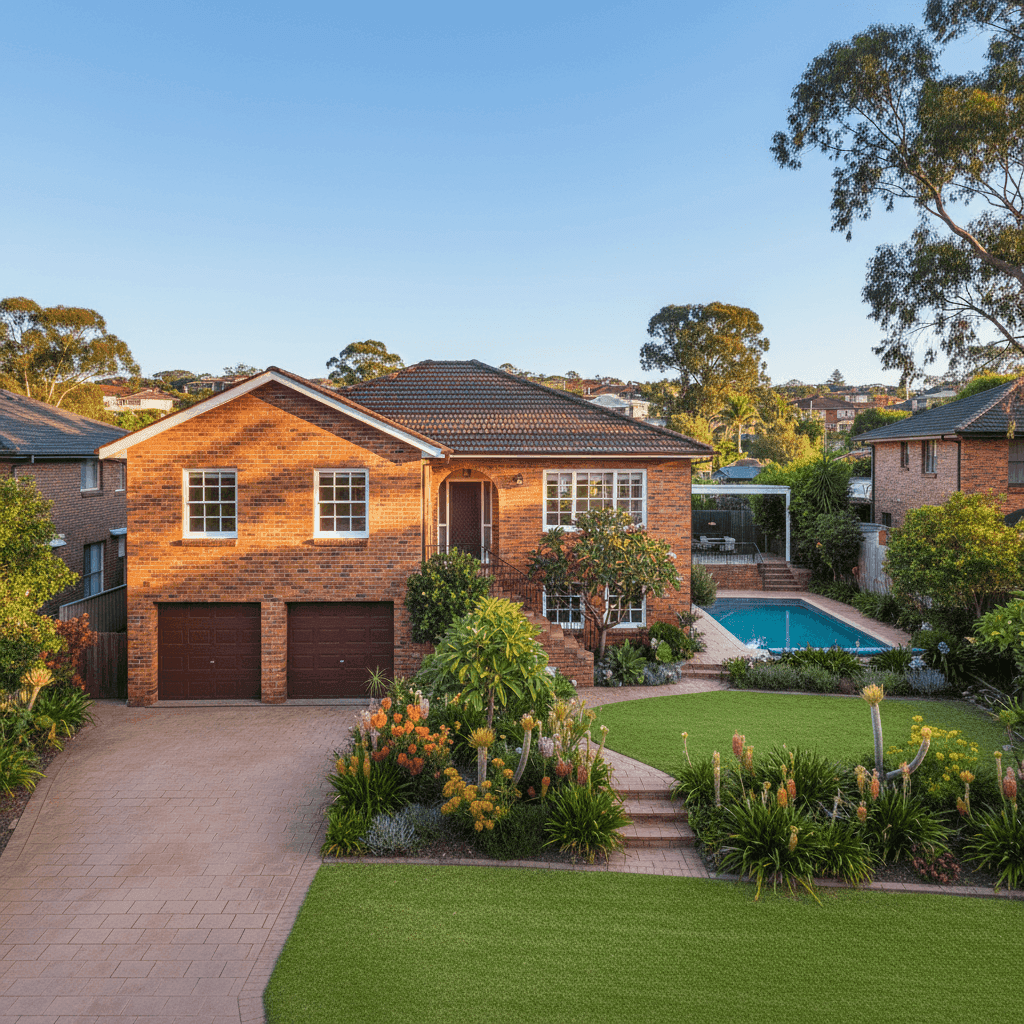
Clontarf is one of Sydney's most coveted harbourside suburbs — a leafy pocket of the Northern Beaches where double brick homes, established gardens, and stunning water views command serious real estate prices. With that prestige, however, comes a premium insurance bill. This article breaks down a real home and contents insurance quote for a four-bedroom, three-bathroom free standing home in Clontarf (NSW 2093), and helps you understand whether the price stacks up.
---
Is This Quote Fair?
The quote in question sits at $5,324 per year (or $510 per month), covering both building and contents for a property with a building sum insured of $1,952,000 and contents valued at $50,000. Both the building and contents carry a $1,000 excess.
Our price rating for this quote is Expensive — Above Average.
To put that in context, the suburb average premium in Clontarf is $3,814 per year, with a median of $3,701. This quote lands well above the suburb's 75th percentile of $4,305 — meaning it's higher than roughly three-quarters of comparable quotes in the area. That's a meaningful gap, and one worth investigating before renewing or accepting a policy at this price.
That said, "expensive" doesn't automatically mean "wrong." A high sum insured of nearly $2 million for the building alone is a significant driver of premium cost, and in a suburb where construction and rebuild costs are elevated, that figure may be entirely justified. The key question is whether the insurer's pricing is competitive for this level of cover — and that's exactly where comparison shopping pays off.
---
How Clontarf Compares
Understanding where your premium sits relative to broader benchmarks is essential context. Here's how the numbers line up:
| Benchmark | Premium |
|---|---|
| This Quote | $5,324/yr |
| Clontarf Suburb Average | $3,814/yr |
| Clontarf Suburb Median | $3,701/yr |
| Clontarf 25th Percentile | $3,126/yr |
| Clontarf 75th Percentile | $4,305/yr |
| Northern Beaches LGA Average | $3,266/yr |
| NSW State Average | $9,528/yr |
| NSW State Median | $3,770/yr |
| National Average | $5,347/yr |
| National Median | $2,764/yr |
A few things stand out here. First, the NSW state average of $9,528 is dramatically higher than the median of $3,770 — a classic sign that a small number of very high-risk or high-value properties are pulling the average upward. The median is generally the more reliable benchmark for typical homeowners.
Against the national average of $5,347, this quote is actually very close — almost exactly in line. Against the national median of $2,764, however, it's nearly double. This reflects the reality that Clontarf is a high-value suburb with above-average rebuild costs, which naturally pushes premiums higher than what a typical Australian homeowner pays.
Compared to the Northern Beaches LGA average of $3,266, this quote is around 63% more expensive — though again, the high building sum insured is doing a lot of heavy lifting here.
You can explore Clontarf suburb insurance statistics, NSW state-wide data, and national benchmarks on CoverClub to dig deeper into these comparisons.
---
Property Features That Affect Your Premium
Several characteristics of this property have a direct influence on what insurers charge. Here's what matters most:
Double Brick Construction Double brick is generally viewed favourably by insurers. It's durable, fire-resistant, and less susceptible to storm damage than timber-framed homes. This construction type can contribute to more competitive premiums compared to lightweight or weatherboard alternatives.
Tiled Roof Terracotta or concrete tiles are a standard and well-regarded roofing material in Australia. They're durable and generally attract standard premium rates. Insurers typically view tiled roofs more favourably than older materials like asbestos sheeting or corrugated iron in poor condition.
Built in 1985 At around 40 years old, this home is well into middle age by Australian standards. Insurers may apply modest loadings for older properties, particularly around electrical wiring, plumbing, and roofing integrity. That said, a 1985 double brick build is generally considered solid and well-constructed.
Swimming Pool The presence of a pool adds to your insurable risk — both in terms of liability (especially if you have visitors or neighbours with children) and the cost of the pool structure itself. Most home insurance policies include the pool as part of the building sum insured, so it's worth confirming it's adequately covered.
Ducted Climate Control Ducted air conditioning is a significant fixed asset and is typically included in the building sum insured. It can also be a source of claims (e.g., storm or electrical damage), so its presence may factor into premium calculations.
Slab Foundation & Timber/Laminate Flooring Concrete slab foundations are common in NSW and generally don't attract premium loadings. Timber and laminate flooring, however, can be more susceptible to water damage than tiles — something to keep in mind when reviewing your policy's water damage provisions.
High Building Sum Insured ($1,952,000) This is arguably the single biggest driver of the premium. Rebuilding a 235 sqm double brick home in a premium Northern Beaches suburb — factoring in demolition, materials, labour, and council compliance — is genuinely expensive. It's critical that this figure is accurate: underinsurance is a major risk, but overinsurance means you're paying more than necessary.
---
Tips for Homeowners in Clontarf
1. Get at least three competing quotes The gap between the cheapest and most expensive quotes in Clontarf can be substantial. With a suburb 25th percentile of $3,126 and a 75th percentile of $4,305, there's over $1,100 in annual variation among comparable properties. Run a comparison at CoverClub to see what multiple insurers would charge for your specific property.
2. Validate your building sum insured A sum insured of $1,952,000 is significant. If it's too high, you're overpaying on premiums. If it's too low, you could face a devastating shortfall in the event of a total loss. Use a professional building cost estimator or ask your insurer how they calculated the figure — and revisit it annually as construction costs change.
3. Review your contents cover separately At $50,000, the contents value in this quote is relatively modest for a four-bedroom, three-bathroom home. Consider whether this accurately reflects your furniture, appliances, clothing, electronics, and valuables. Underinsuring contents is a common mistake that only becomes apparent at claim time.
4. Ask about discounts and bundling Many insurers offer discounts for security systems, smoke alarms, and claims-free histories. If you hold other policies (car, landlord, life) with the same insurer, a multi-policy discount may apply. It's always worth asking — these savings rarely appear automatically.
---
Compare Your Options with CoverClub
Whether this quote is the right one for you depends on your specific circumstances, risk appetite, and what the policy actually covers. Price is important, but so is the quality of the cover, the insurer's claims reputation, and the fine print around exclusions.
CoverClub makes it easy to compare home and contents insurance quotes side by side, with real data from properties across Australia. Get a quote today and find out if you could be paying less — or getting more for your money.