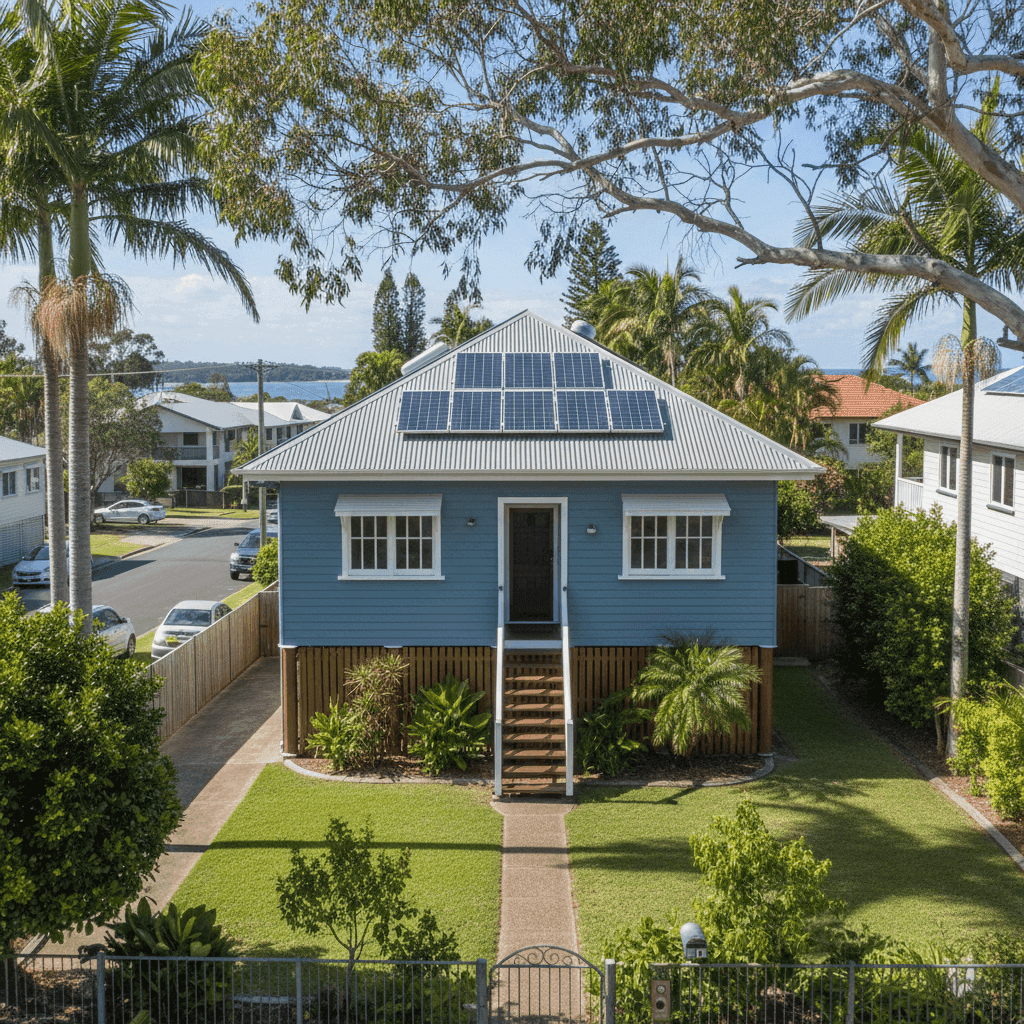
Clontarf is a relaxed bayside suburb on the Redcliffe Peninsula in Moreton Bay, known for its coastal lifestyle, established streetscapes, and a healthy mix of older character homes. If you own a free standing home here — particularly one of the classic weatherboard properties that define the area — understanding what you should be paying for home insurance is an important part of protecting your investment.
This article breaks down a real home and contents insurance quote for a 3-bedroom, 2-bathroom free standing home in Clontarf (postcode 4019), and puts the numbers into context against local, state, and national benchmarks.
---
Is This Quote Fair?
The quote in question comes in at $2,358 per year (or $231/month), covering both building (sum insured: $417,000) and contents ($40,000). The building excess is set at $2,500, with a lower contents excess of $500.
Our price rating for this quote is FAIR — Around Average, and the data backs that up. Based on 27 quotes collected for Clontarf (QLD 4019), the suburb average sits at $2,302/yr and the median at $2,273/yr. At $2,358, this quote lands just above the midpoint — not a bargain, but certainly not an outlier either.
To put it another way: 25% of comparable properties in Clontarf are being quoted below $1,665/yr, while the top quarter are paying above $2,867/yr. This quote falls comfortably in the middle band, which is exactly what "around average" means in practice.
---
How Clontarf Compares
One of the more striking takeaways from this data is just how reasonable Clontarf's premiums look when held up against broader benchmarks.
| Benchmark | Average Premium | Median Premium |
|---|---|---|
| Clontarf (4019) | $2,302/yr | $2,273/yr |
| Moreton Bay LGA | $3,435/yr | — |
| Queensland (State) | $9,129/yr | $3,903/yr |
| National | $5,347/yr | $2,764/yr |
The Queensland state average of $9,129/yr is heavily skewed by high-risk regions — think cyclone-prone Far North Queensland and flood-affected inland areas — which pulls the mean well above what most Southeast Queensland homeowners actually pay. The state median of $3,903/yr is a more useful reference point, and even then, Clontarf's median comes in roughly 42% below it.
Compared to the national median of $2,764/yr, Clontarf also performs well, sitting around $500 cheaper per year at the median. For a coastal suburb in Queensland, that's a genuinely competitive result.
The Moreton Bay LGA average of $3,435/yr is worth noting too — Clontarf tracks meaningfully below its broader council area average, likely reflecting its relatively benign risk profile compared to more flood- or storm-exposed parts of the region.
---
Property Features That Affect Your Premium
Several characteristics of this particular property have a direct bearing on how insurers price the risk.
Weatherboard timber construction is one of the most significant factors. Homes built with timber external walls are generally considered higher risk than brick veneer or full brick, primarily due to fire susceptibility and the cost of repair or replacement. Insurers price this in, and it's a key reason older character homes in suburbs like Clontarf can attract higher premiums than newer builds.
Construction year (1959) adds another layer of consideration. A home approaching 70 years old may have aging plumbing, wiring, and structural elements that increase the likelihood of a claim. Insurers factor this into their risk models, though a well-maintained older home can still attract competitive premiums.
Stump foundations are common in this era of Queensland home building and are generally well understood by insurers. However, they do introduce some exposure to subsidence and pest damage (particularly termites), which is worth keeping in mind when reviewing your policy's exclusions.
Steel/Colorbond roofing is a positive from an insurer's perspective — it's durable, fire-resistant, and low maintenance compared to older tile or fibrous cement options.
Solar panels add modest replacement value to the property. Most home and contents policies cover rooftop solar as part of the building sum insured, but it's worth confirming this with your insurer, particularly given the panels represent a meaningful asset.
Timber and laminate flooring is relatively straightforward to price for contents and building purposes, though water damage to timber floors can be costly to remediate — something to keep in mind when assessing your excess levels.
---
Tips for Homeowners in Clontarf
1. Review your building sum insured regularly A sum insured of $417,000 for a 130 sqm weatherboard home in Clontarf is worth revisiting annually. Construction costs have risen significantly in recent years, and being underinsured — even by 10–15% — can leave you seriously out of pocket after a major claim. Use a building cost calculator or ask your insurer to review the figure.
2. Consider whether your excess settings are right for you This quote carries a $2,500 building excess. A higher excess typically lowers your premium, but it means more out-of-pocket cost at claim time. Given the age and construction type of the property, consider whether you'd be comfortable covering that amount if something went wrong unexpectedly.
3. Confirm solar panel coverage With solar panels on the roof, make sure your policy explicitly covers them — both for damage and for theft. Some policies include them automatically under the building definition; others require a specific endorsement. Don't assume.
4. Shop around at renewal Even a "fair" quote has room for improvement. Insurers use different rating models, and the same property can attract meaningfully different premiums across providers. Comparing quotes at renewal — rather than simply auto-renewing — is one of the easiest ways to save on a policy that hasn't changed.
---
Find a Better Deal on Home Insurance in Clontarf
Whether you're reviewing an existing policy or insuring a property for the first time, it pays to compare. CoverClub makes it easy to see real quotes side by side, so you can make a confident, informed decision rather than just accepting the first number that lands in your inbox.
Get a home insurance quote for your Clontarf property →
You can also explore detailed premium data and trends for Clontarf (QLD 4019), the broader Queensland market, and national benchmarks on the CoverClub stats pages.