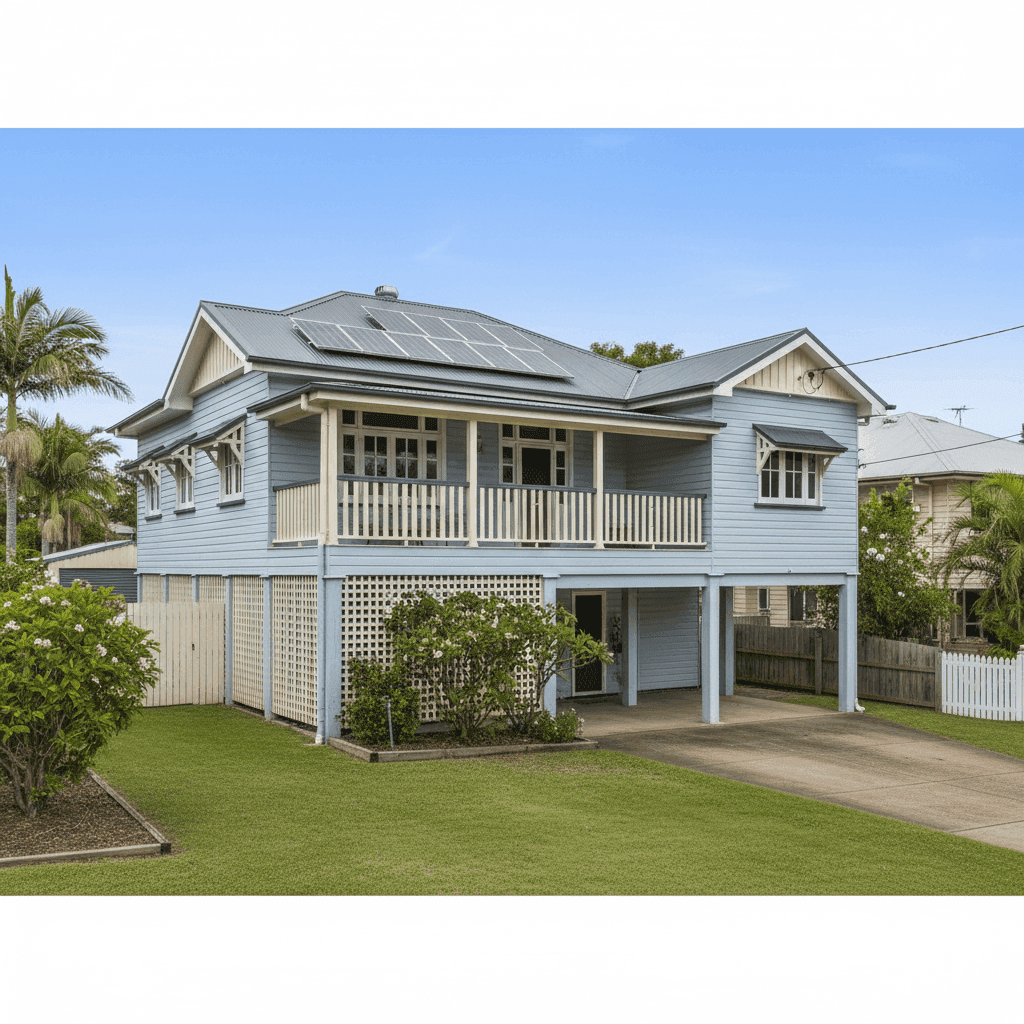
Clontarf is a relaxed bayside suburb on the Redcliffe Peninsula in Moreton Bay, popular with families and retirees alike who are drawn to its coastal lifestyle and relatively affordable housing. If you own a free standing home here — particularly an older weatherboard property on stumps — understanding what you should be paying for home and contents insurance is genuinely useful. This article breaks down a real quote obtained for a 3-bedroom, 2-bathroom home in Clontarf (postcode 4019), comparing it against local, state, and national benchmarks so you can make a more informed decision.
---
Is This Quote Fair?
The annual premium for this property came in at $2,121 per year (or roughly $197 per month), covering both building (sum insured: $454,000) and contents ($44,000). The price rating for this quote is FAIR — Around Average, which is a reasonable outcome for this type of property in this location.
To put that in context: the suburb average premium in Clontarf sits at $2,302 per year, with a median of $2,273. This quote lands comfortably below both figures, which is a positive sign. It's also worth noting that premiums in the suburb range quite broadly — from around $1,665 at the 25th percentile up to $2,867 at the 75th percentile — so there is meaningful variation depending on the insurer, the level of cover, and the specific property characteristics.
At $2,121, this quote sits in the lower half of the typical range for Clontarf, suggesting the policyholder is getting reasonable value without being at the rock-bottom end (which can sometimes signal underinsurance or stripped-back cover). The building excess of $3,000 and contents excess of $1,000 are on the higher side, which likely contributes to keeping the premium down — a common trade-off worth considering carefully.
---
How Clontarf Compares
One of the most striking things about Queensland home insurance is just how wide the gap is between different parts of the state. Zooming out from Clontarf reveals some significant contrasts:
| Benchmark | Average Premium | Median Premium |
|---|---|---|
| Clontarf (4019) | $2,302/yr | $2,273/yr |
| Moreton Bay LGA | $3,435/yr | — |
| Queensland | $9,129/yr | $3,903/yr |
| National | $5,347/yr | $2,764/yr |
You can explore the full Clontarf suburb insurance stats, Queensland state data, and national benchmarks on CoverClub.
The Queensland state average of $9,129 is dramatically skewed by high-risk areas in Far North Queensland — cyclone-prone regions like Cairns and Townsville — which push the mean well above what most south-east Queensland homeowners actually pay. The median of $3,903 is a more grounded figure, and even that sits well above what Clontarf residents typically pay.
Compared to the national median of $2,764, the Clontarf median of $2,273 is actually lower, which reflects the suburb's relatively benign risk profile. It's not a cyclone zone, it's not flood-prone in the same way as many inland or river-adjacent suburbs, and it benefits from the general stability of the Moreton Bay region. For homeowners in Clontarf, this is reassuring context.
---
Property Features That Affect Your Premium
Several characteristics of this particular property have a meaningful influence on what insurers charge:
Weatherboard timber walls are one of the most significant rating factors. Timber-framed and clad homes are generally considered higher risk than brick veneer or double-brick construction due to their susceptibility to fire, rot, and pest damage. Insurers typically apply a loading for weatherboard homes, so it's worth shopping around — some insurers are more competitive than others for this construction type.
Stumps foundation is very common in older Queensland homes, particularly those built in the post-war era. This 1959-built home is a classic example of the elevated Queenslander style. While stumps can be a concern if they're timber and deteriorating, they also provide excellent airflow and flood resilience in many scenarios. Insurers assess this differently, so it pays to disclose the foundation type accurately.
Steel/Colorbond roof is generally viewed favourably by insurers. It's durable, fire-resistant, and holds up well in storms compared to older tile or fibrous cement roofing. This is a genuine positive for the premium.
Solar panels add value to the property and should be accounted for in the sum insured. Most home insurance policies cover solar panels as part of the building, but it's worth confirming this with your insurer — particularly for damage caused by storms or hail.
Timber and laminate flooring can be costly to replace, especially in an older home where matching heritage-style timber boards may be difficult to source. Make sure your sum insured reflects realistic replacement costs, not just the market value of the home.
At 130 sqm, this is a modestly sized home, which helps keep the building sum insured — and therefore the premium — at a manageable level.
---
Tips for Homeowners in Clontarf
1. Review your sum insured annually Building costs have risen significantly in recent years, and 130 sqm of weatherboard construction can be expensive to rebuild. The $454,000 sum insured should reflect full replacement cost — not market value — including demolition, site clearance, and professional fees. Use a building cost calculator or ask your insurer to confirm the figure is adequate.
2. Consider your excess trade-off carefully The $3,000 building excess on this policy is relatively high. While it reduces your annual premium, it means you'd be out of pocket for $3,000 before your insurer contributes to any building claim. If you'd struggle to cover that in an emergency, it may be worth paying a slightly higher premium for a lower excess.
3. Shop around — especially for weatherboard homes Insurers price timber construction very differently. Some apply significant loadings; others are more competitive. Given the "fair" rating on this quote, there's a reasonable chance a comparable policy could be found for less. Use a comparison tool like CoverClub to get multiple quotes side by side.
4. Check your contents cover is realistic $44,000 in contents cover is a starting point, but it's easy to underestimate how much your belongings are actually worth. Do a room-by-room assessment — electronics, furniture, whitegoods, clothing, and tools all add up quickly. Underinsuring your contents can leave you significantly short after a major event.
---
Compare Your Own Quote
Whether you're renewing your existing policy or shopping around for the first time, it's worth knowing where your premium sits relative to your neighbours'. CoverClub makes it easy to get a home insurance quote and see how it stacks up against real data from your suburb and beyond. A few minutes of comparison could save you hundreds of dollars a year — or simply give you the confidence that what you're already paying is fair.