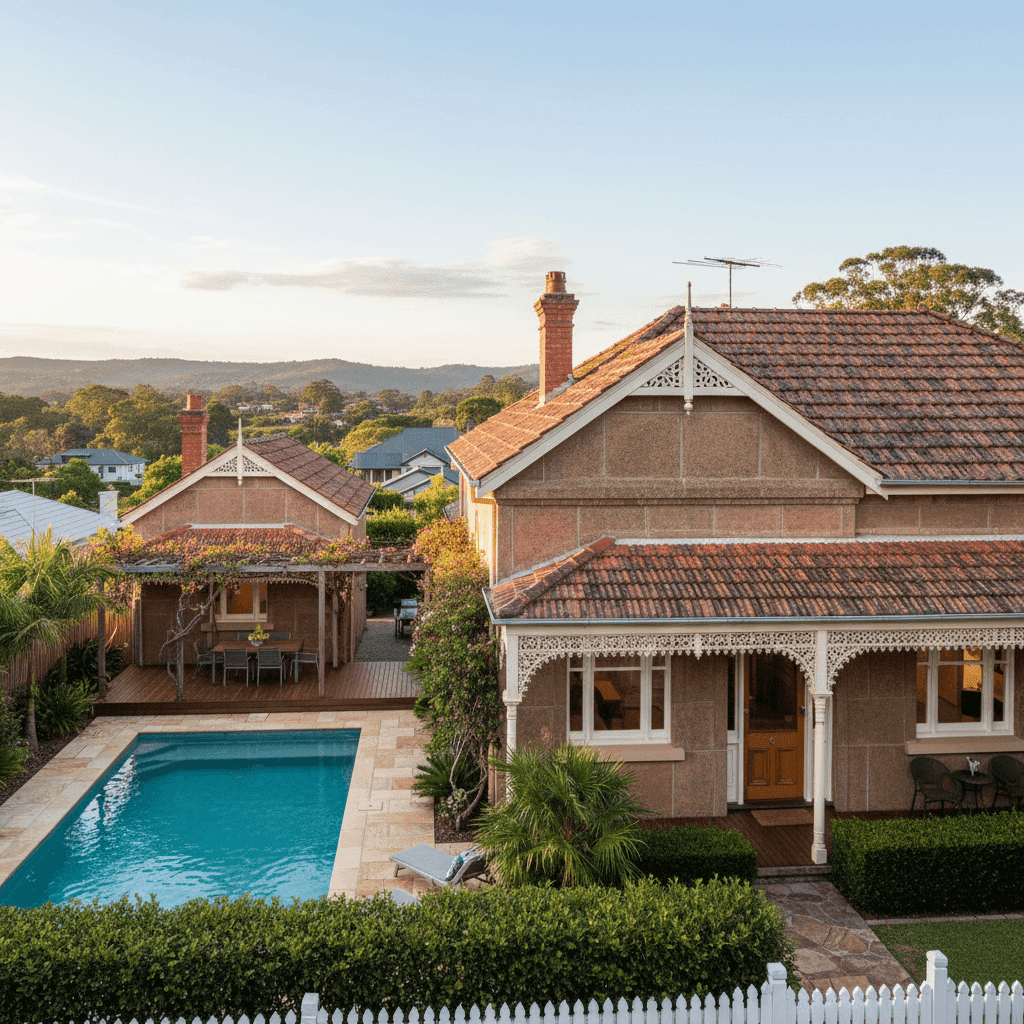
Clunes is a quiet village in the Northern Rivers region of New South Wales, sitting just inland from Ballina and Byron Bay. It's a sought-after pocket of the region — semi-rural, relaxed, and increasingly popular with families and sea-changers. But like anywhere in NSW, insuring your home here comes with its own set of considerations. This article breaks down a recent home and contents insurance quote for a four-bedroom terrace in Clunes, examining whether the premium is reasonable and what factors are likely driving the cost.
---
Is This Quote Fair?
The quote in question comes in at $2,812 per year (or $275 per month) for combined home and contents cover, with a $550,000 building sum insured and $50,000 in contents cover. Both the building and contents excess are set at $500 each.
Our price rating for this quote is Expensive — above average for the area.
To put that in perspective: the suburb average premium in Clunes sits at $2,379 per year, with a median of $2,108. This quote lands $433 above the local average and more than $700 above the suburb median. It also sits above the 75th percentile for the suburb ($2,687), meaning it's pricier than roughly three-quarters of comparable quotes we've seen in the area.
That said, "expensive" doesn't necessarily mean "wrong." Several features of this property — which we'll explore below — justify a higher-than-average premium. The key question is whether there's room to shop around and find equivalent cover at a lower price point.
---
How Clunes Compares
To understand what's happening with this quote, it helps to zoom out and look at the broader pricing landscape. You can explore the full data on our Clunes suburb stats page, the NSW state overview, and our national insurance stats hub.
| Benchmark | Average Premium | Median Premium |
|---|---|---|
| Clunes (NSW 2480) | $2,379/yr | $2,108/yr |
| New South Wales | $9,528/yr | $3,770/yr |
| Australia (National) | $5,347/yr | $2,764/yr |
| Ballina LGA | $23,241/yr | — |
A few things stand out here. The NSW state average of $9,528 is dramatically higher than the median of $3,770 — a sign that a relatively small number of very high-risk or high-value properties (think coastal flood zones, cyclone-prone areas, and prestige properties) are pulling the average up significantly. The same dynamic plays out at the national level.
The Ballina LGA average of $23,241 is particularly striking. This reflects the flood and storm risk that affects much of the Ballina local government area — especially properties closer to the coast and river systems. Clunes, being further inland and at higher elevation, tends to attract more moderate premiums than many of its LGA neighbours, which is reflected in the suburb-level data.
At $2,812, this quote is well below both the state and national averages, and comfortably below the Ballina LGA average. Compared to the broader region, it's actually quite competitive — even if it sits above the local suburb benchmark.
---
Property Features That Affect Your Premium
Several characteristics of this property are likely influencing the premium, both upward and downward.
Heritage Listing
This property carries a heritage listing, which is one of the more significant premium drivers. Heritage-listed homes often cost more to repair or rebuild because they must use period-appropriate materials and construction methods. Insurers factor in this added complexity, and it typically results in a higher premium and sometimes more restrictive policy conditions.
Pole Foundation
The home is built on pole (stump) foundations, which is common in the Northern Rivers region — particularly for homes designed to manage moisture, flooding, or sloping terrain. While poles can offer some resilience in minor flood events, they can also be more expensive to repair if damaged, and some insurers view them as a higher-risk foundation type.
Swimming Pool
A pool on the property adds to the insured value and increases liability exposure, both of which can push premiums higher. Pools also require specific inclusions in your policy, so it's worth checking that your cover explicitly addresses pool-related damage and liability.
Granny Flat
The presence of a granny flat is another factor. Whether it's used for family, rented out, or simply part of the property, it adds to the total rebuild cost and may affect your contents and liability cover. Make sure your policy clearly covers the granny flat structure — some standard policies exclude secondary dwellings unless specifically noted.
Construction Materials
Concrete external walls and a tiled roof are generally viewed favourably by insurers. Concrete is fire-resistant and durable, while tiles are considered a lower-risk roofing material compared to timber or older iron. These features likely help moderate the premium somewhat.
Ducted Climate Control
Ducted air conditioning adds to the replacement value of the home's fixtures and fittings, which is reflected in the building sum insured. It's a relatively minor premium factor, but worth noting.
---
Tips for Homeowners in Clunes
1. Review your heritage listing obligations before choosing a policy Not all insurers are equally experienced with heritage properties. Look for a policy that explicitly covers heritage-compliant repairs and reinstatement — not just standard rebuild costs. If your policy only covers "like-for-like" in a generic sense, you may find yourself underinsured after a claim.
2. Confirm your granny flat is covered Ask your insurer directly whether the granny flat is included in the building sum insured. If it's rented out, you may also need landlord liability cover. Don't assume it's automatically included — get it in writing.
3. Check your pool and liability cover Swimming pools create genuine liability exposure, particularly if guests or neighbours are injured. Ensure your policy includes adequate public liability cover (at least $10–$20 million is standard) and that the pool structure itself is covered for accidental damage.
4. Shop around — especially given the above-average rating With this quote sitting above the suburb's 75th percentile, there's a reasonable chance you could find equivalent cover at a lower price. Use a comparison service to get multiple quotes side by side, paying close attention to the inclusions rather than just the headline price.
---
Compare Your Options at CoverClub
Whether you're insuring a heritage terrace, a coastal cottage, or a rural acreage, finding the right cover at the right price starts with comparing your options. At CoverClub, we make it easy to see how your quote stacks up against real data from your suburb and beyond. Get a quote today and find out if you're paying a fair price — or if there's a better deal waiting for you.