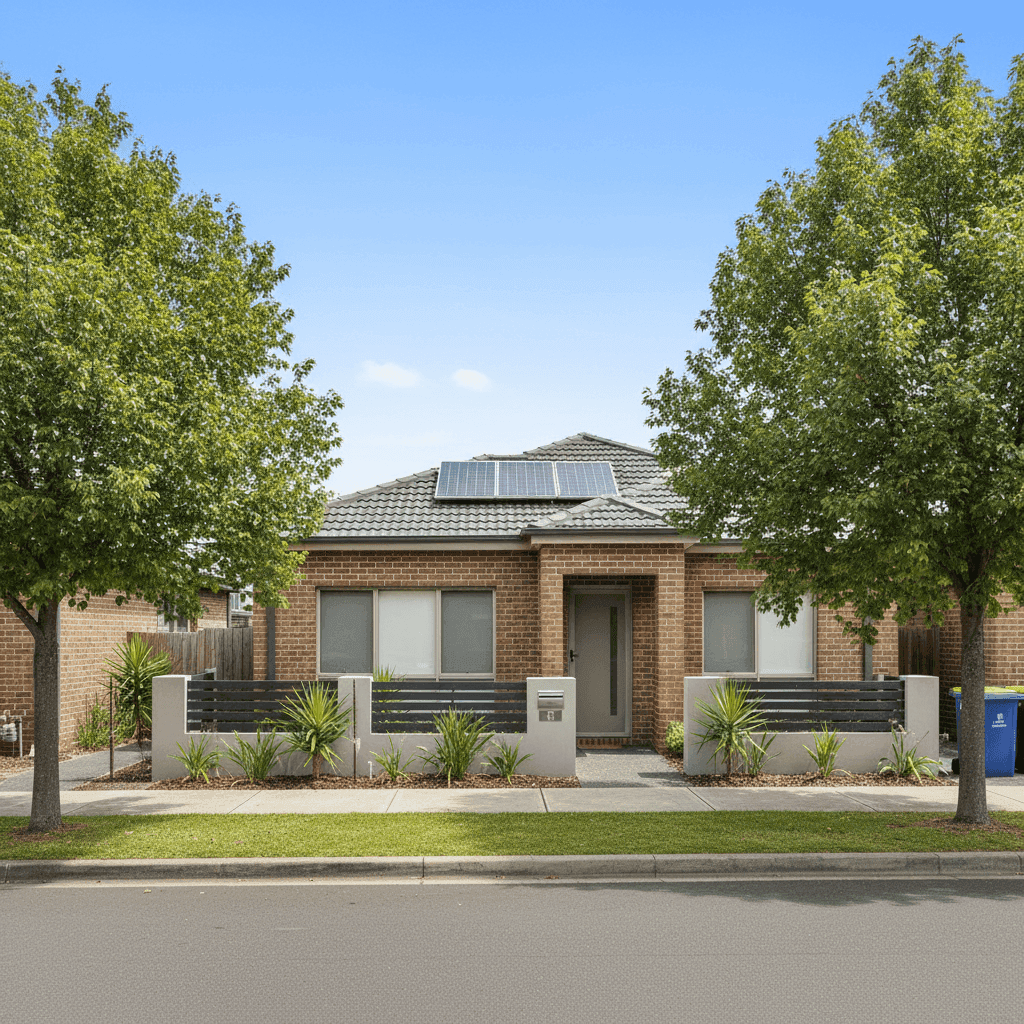
Coburg is one of Melbourne's most characterful inner-northern suburbs — a lively mix of period architecture, newer infill developments, and a tight-knit community that keeps drawing buyers and renters alike. For owners of a two-bedroom townhouse in this postcode, understanding what you should be paying for building insurance is just as important as knowing the market value of the property itself. This article breaks down a real building-only insurance quote for a 2-bedroom, 1-bathroom townhouse in Coburg (VIC 3058), and puts the numbers in context so you can judge whether your own premium stacks up.
---
Is This Quote Fair?
The short answer: yes — and then some.
This quote came in at $1,008 per year (or around $100 per month), covering the building only with a sum insured of $407,000 and a building excess of $3,000. CoverClub's pricing engine rates this as CHEAP — below average for the area, and the data backs that up convincingly.
The suburb average for Coburg (3058) sits at $1,541 per year, meaning this quote is roughly 35% below what most Coburg homeowners are paying. Even compared to the suburb's 25th percentile — the cheapest quarter of quotes — this premium of $1,008 still comes in below the $1,117 mark. In other words, this is genuinely competitive pricing, not just marginally better than average.
When you zoom out to the state level, the gap becomes even more pronounced. The Victorian state average for home building insurance is $2,921 per year, making this quote roughly 65% cheaper than what the typical Victorian homeowner pays. That's a substantial difference — and one worth paying attention to if you're shopping around.
---
How Coburg Compares
To put this quote in full perspective, here's how Coburg stacks up against broader benchmarks:
| Benchmark | Average Premium | Median Premium |
|---|---|---|
| Coburg (3058) | $1,541/yr | $1,367/yr |
| LGA – Darebin | $1,622/yr | — |
| Victoria | $2,921/yr | $2,694/yr |
| Australia | $2,965/yr | $2,716/yr |
(Based on 59 quotes sampled in the Coburg 3058 postcode.)
A few things stand out here. First, Coburg's premiums are materially lower than both the Victorian and national averages — by roughly 47% and 48% respectively. This reflects Coburg's relatively benign risk profile: it's not exposed to cyclones, bushfire risk is lower than many regional and outer-suburban areas, and it doesn't sit in a flood-prone corridor. Inner-Melbourne suburbs like Coburg tend to attract more competitive pricing from insurers for exactly these reasons.
Second, the Darebin LGA average of $1,622 per year is slightly higher than Coburg's own suburb average, suggesting that some neighbouring postcodes within the same local government area carry a bit more risk — or simply attract higher-value properties with larger sums insured.
For a broader picture of how premiums vary across the country, the national insurance statistics page is a useful reference point.
---
Property Features That Affect Your Premium
Every property has a unique combination of characteristics that insurers weigh up when calculating a premium. Here's how the features of this particular townhouse are likely influencing the cost:
Brick veneer construction is generally viewed favourably by insurers. It offers solid fire resistance and structural durability compared to weatherboard or lightweight cladding, which can translate to lower premiums. The tiled roof reinforces this — tiles are durable, non-combustible, and low-maintenance, making them a preferred roofing material from an underwriting perspective.
Stump foundations are common in older Melbourne properties and can introduce some risk around subsidence and movement — particularly in areas with reactive clay soils, which are prevalent across much of inner Melbourne. Insurers may factor this in, though for a well-maintained property it's rarely a significant premium driver.
Construction year of 1985 places this townhouse in a period where building standards were solid but pre-date some modern codes. Properties of this era are generally considered stable risks, though insurers may apply slightly higher rebuild cost estimates to account for the cost of bringing older structures up to current standards.
Above-average fittings quality has a direct bearing on the sum insured. Higher-quality fixtures, finishes, and fittings cost more to replace, which is why the building sum insured here is set at $407,000 — a figure that needs to reflect full rebuild cost, not market value. It's worth reviewing this figure periodically to ensure it keeps pace with rising construction costs.
Solar panels are worth noting. While they add value and reduce energy costs, solar systems do add some complexity to a building insurance policy. It's important to confirm with your insurer that the panels are explicitly covered under your building policy — most modern policies include them, but the coverage limits and conditions can vary.
At 105 sqm, this is a modestly sized townhouse, which helps keep the premium lower than it might be for a larger dwelling with the same features.
---
Tips for Homeowners in Coburg
1. Review your sum insured annually — especially with construction costs rising Building costs in Victoria have increased significantly over the past few years. A sum insured that was adequate two years ago may now leave you underinsured. Use a building cost calculator or speak to a quantity surveyor to get an updated estimate, particularly given the above-average fittings in this property.
2. Confirm your solar panels are covered Don't assume — check your policy's Product Disclosure Statement (PDS) to verify that your solar system is included in the building cover, and whether there are any sub-limits that apply. Some policies treat solar panels as a separate item.
3. Understand your excess before you claim This policy carries a $3,000 building excess, which is on the higher side. A higher excess typically lowers your premium, but it means you'll need to cover that amount out of pocket before your insurer steps in. Make sure you have that buffer accessible, and consider whether a lower excess might be worth the additional premium cost.
4. Compare quotes at renewal — not just when you first buy Insurance markets shift, and the cheapest option this year may not be next year. Coburg has a healthy spread of quotes (the 75th percentile hits $1,804/yr), which means there's real variation in what insurers will charge for the same property. Running a fresh comparison at renewal takes minutes and could save you hundreds.
---
Ready to See What You'd Pay?
Whether you own a townhouse in Coburg or a property anywhere else in Australia, comparing quotes is the fastest way to know if you're getting a fair deal. CoverClub analyses quotes across multiple insurers and benchmarks your premium against real data from your suburb, LGA, state, and nationally.
Get a home insurance quote at CoverClub — it takes less than two minutes, and you'll instantly see how your premium compares to your neighbours.