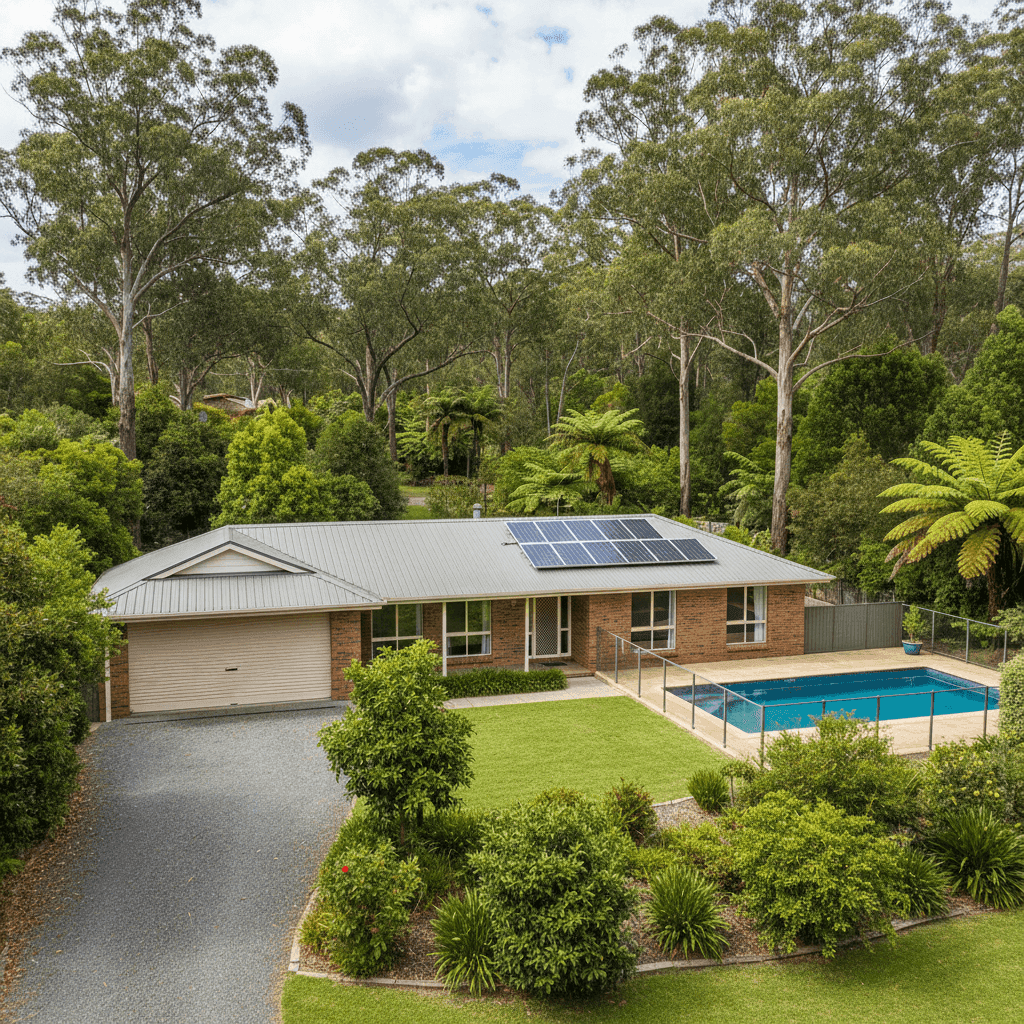
Nestled in the Dandenong Ranges foothills about 60 kilometres east of Melbourne, Cockatoo is a leafy, semi-rural suburb that attracts families and tree-changers alike. Properties here tend to be well-established, generously sized, and set on larger blocks — all characteristics that shape what homeowners pay for insurance. This article breaks down a recent building insurance quote for a four-bedroom free standing home in Cockatoo (postcode 3781), examines how the premium stacks up against local, state, and national benchmarks, and offers practical guidance for getting the best value on your cover.
---
Is This Quote Fair?
The quote in question comes in at $3,982 per year (or $411 per month) for building-only cover, with a building sum insured of $867,000 and a $4,000 excess. Our price rating for this quote is FAIR — Around Average.
That verdict holds up when you look at the numbers in context. The suburb average for Cockatoo sits at $4,818 per year, with a median of $4,660. This quote falls comfortably below both figures — roughly $836 less than the average and $678 less than the median. That's a meaningful saving, not a marginal one.
At the same time, "fair" doesn't mean "the cheapest available." The 25th percentile for Cockatoo is $3,710 per year, which means roughly a quarter of comparable quotes in the area come in even lower. So while this premium is better than most, there may still be room to shop around and find a more competitive rate — particularly if you're willing to adjust your excess, review your sum insured, or explore different insurers.
The $4,000 building excess is on the higher side, which typically helps reduce the annual premium. Homeowners should weigh whether that trade-off suits their financial situation — a higher excess means lower ongoing costs but a bigger out-of-pocket expense if you do need to make a claim.
---
How Cockatoo Compares
One of the more striking takeaways from this data is just how much more expensive Cockatoo is compared to the broader Victorian and national landscapes.
| Benchmark | Average Premium |
|---|---|
| Cockatoo (suburb average) | $4,818/yr |
| Cockatoo (suburb median) | $4,660/yr |
| Victoria (state average) | $3,000/yr |
| Victoria (state median) | $2,718/yr |
| Cardinia LGA average | $3,089/yr |
| National average | $5,347/yr |
| National median | $2,764/yr |
Compared to the Victorian state average of $3,000 per year, Cockatoo's suburb average is more than 60% higher. Even against the Cardinia LGA average of $3,089, Cockatoo premiums run significantly above the local government area norm. This reflects the elevated risk profile of the Dandenong Ranges — primarily bushfire exposure — which pushes premiums well above typical Victorian figures.
Interestingly, Cockatoo's suburb average ($4,818) is actually below the national average of $5,347, though the national figure is heavily influenced by high-risk regions in Queensland and Western Australia. The national median of $2,764 tells a different story — most Australian homeowners pay considerably less, which underscores just how much the bushfire risk factor elevates premiums in areas like Cockatoo.
The quote of $3,982 sits below the suburb average and median, which is a positive sign. But it's still well above what most Victorian homeowners pay, a reality that comes with the territory in the Ranges.
---
Property Features That Affect Your Premium
Several characteristics of this property have a direct bearing on the premium calculated.
Brick Veneer Walls & Colorbond Roof Brick veneer construction is generally viewed favourably by insurers — it's durable, relatively fire-resistant compared to weatherboard, and less prone to structural movement than full brick. The steel Colorbond roof is similarly well-regarded: it's resilient, non-combustible, and low-maintenance. Together, these materials can help moderate the premium compared to properties with timber cladding or tiled roofs in high-risk areas.
Slab Foundation & Tile Flooring A concrete slab foundation is a stable base that reduces the risk of subsidence or pest-related structural damage. Tiled flooring is durable and easy to replace, which can keep building reinstatement costs predictable.
Swimming Pool The presence of a pool adds to the insured value of the property and introduces additional liability considerations. Pools require fencing and safety compliance under Victorian law, and insurers factor in the cost of pool-related structures when calculating the sum insured.
Solar Panels Solar panels are increasingly common in Victoria, but they do add to rebuilding costs. A standard rooftop solar system can cost $8,000–$20,000 to replace, and this should be factored into your sum insured to avoid being underinsured in the event of a total loss.
Ducted Climate Control Ducted heating and cooling systems are a significant fixed asset within the building. They're expensive to replace (often $10,000–$25,000 for a full ducted system) and are typically included in building cover — another reason the sum insured of $867,000 is appropriate for a well-appointed 214 sqm home.
Building Size: 214 sqm At 214 square metres, this is a substantial family home. Larger floor areas mean higher rebuilding costs, which directly influences the sum insured and, in turn, the annual premium.
---
Tips for Homeowners in Cockatoo
1. Review your sum insured regularly Construction costs have risen sharply in recent years. The $867,000 sum insured on this property reflects the true cost of rebuilding a 214 sqm home with quality fittings, a pool, and solar panels — but this figure should be revisited annually. Underinsurance is one of the most common and costly mistakes homeowners make.
2. Understand your bushfire risk and policy inclusions Cockatoo sits in a bushfire-prone area. Make sure your policy explicitly covers bushfire damage and check whether any exclusions or special conditions apply. Some insurers impose higher excesses or sub-limits for fire damage in high-risk postcodes — read the Product Disclosure Statement carefully.
3. Consider your excess strategically This quote carries a $4,000 building excess. A higher excess generally lowers your premium, but only makes sense if you can comfortably cover that amount out of pocket after a significant event. If $4,000 would be a financial strain, it's worth comparing quotes with a lower excess to find the right balance.
4. Compare quotes before renewing With a suburb premium range stretching from $3,710 (25th percentile) to $6,051 (75th percentile), there's considerable variation in what insurers charge for similar properties in Cockatoo. Never simply auto-renew — shopping around at renewal time could save you hundreds of dollars each year.
---
Compare Your Home Insurance Options
Whether you're reviewing an existing policy or buying cover for the first time, comparing quotes is the single most effective way to ensure you're not overpaying. CoverClub makes it easy to see what multiple insurers would charge for your specific property — so you can make an informed decision with confidence.
Get a home insurance quote for your Cockatoo property →
You can also explore detailed premium data for your area on the Cockatoo suburb stats page or browse Victoria-wide insurance trends to understand how your premium fits into the broader picture.