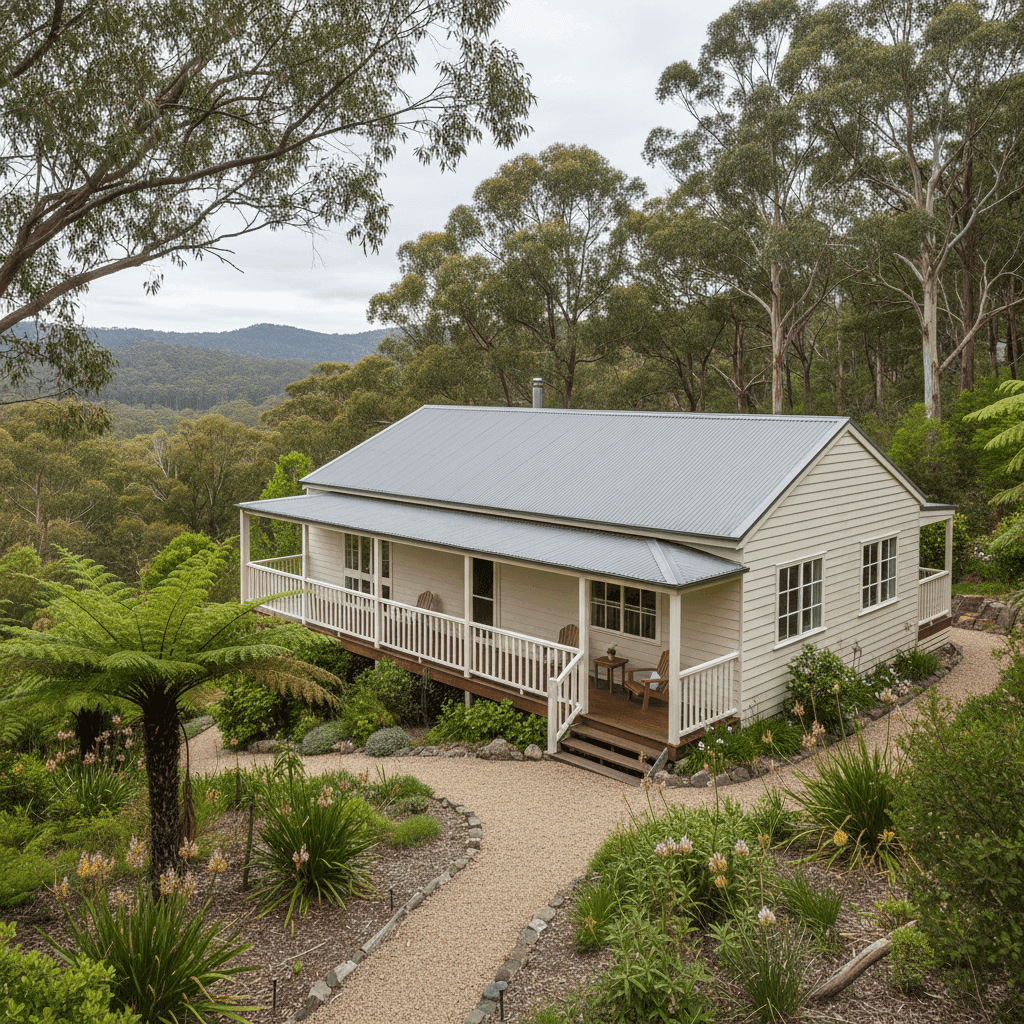
Nestled in the Dandenong Ranges foothills about 60 kilometres south-east of Melbourne, Cockatoo is a leafy township that blends semi-rural charm with a strong sense of community. It's also the kind of place where home insurance deserves careful thought — bushland surroundings, older housing stock, and varying construction styles all play a role in how insurers price your policy. This article breaks down a real home and contents insurance quote for a three-bedroom free standing home in Cockatoo (postcode 3781), and puts that figure into context against local, state, and national benchmarks.
---
Is This Quote Fair?
The annual premium on this quote comes in at $2,682 per year (or $267 per month), covering a building sum insured of $500,000 and contents valued at $50,000. The building excess is $3,000, with a separate $1,000 excess applying to contents claims.
Based on CoverClub's pricing data, this quote is rated CHEAP — below the suburb average. That's genuinely good news for the homeowner. With Cockatoo's suburb average sitting at $4,818 per year and a median of $4,660, this quote lands well beneath what most locals are paying. Even compared to the 25th percentile of $3,710 — meaning only one in four quotes in the area are cheaper — this figure still comes in lower, suggesting it represents strong value in the local market.
It's worth noting that the higher excess on the building ($3,000) does contribute to the lower premium. Agreeing to cover more of the initial cost of a claim is one of the most effective levers for reducing what you pay upfront. Provided the homeowner has that amount accessible in an emergency, this is a reasonable trade-off.
---
How Cockatoo Compares
Understanding where Cockatoo sits relative to broader benchmarks helps frame just how competitive this quote really is. Here's a snapshot:
| Benchmark | Annual Premium |
|---|---|
| This Quote | $2,682 |
| Cockatoo Suburb Average | $4,818 |
| Cockatoo Suburb Median | $4,660 |
| Cockatoo 25th Percentile | $3,710 |
| Cockatoo 75th Percentile | $6,051 |
| VIC State Average | $3,000 |
| VIC State Median | $2,718 |
| Cardinia LGA Average | $3,089 |
| National Average | $5,347 |
| National Median | $2,764 |
(Based on 17 quotes sampled for the Cockatoo suburb area.)
A few things stand out here. First, the suburb average of $4,818 is notably higher than both the Victorian state average of $3,000 and the national median of $2,764. This tells us that insuring a home in Cockatoo tends to cost more than in many other parts of Australia — likely driven by the area's bushfire exposure and the prevalence of older timber construction. Second, the quote analysed here actually sits below the Victorian state median, which is a remarkable outcome for a property in an elevated-risk suburb.
You can explore the full pricing landscape for Cockatoo and surrounding areas on the Cockatoo suburb stats page.
---
Property Features That Affect Your Premium
Every property has a unique combination of characteristics that insurers weigh when calculating risk. Here's how this home's features likely influence its premium:
Weatherboard timber walls Timber weatherboard is one of the most common external wall types in older Victorian homes, and it's a material insurers treat with some caution. Wood is more susceptible to fire and moisture damage than brick veneer or full brick, which can push premiums higher. It's a factor worth being aware of when comparing quotes across different wall types.
Steel/Colorbond roof On the positive side, a Colorbond steel roof is generally viewed favourably by insurers. It's durable, low-maintenance, and performs well in both fire and storm conditions compared to older materials like terracotta tiles or asbestos sheeting. This likely helps offset some of the risk associated with the timber walls.
Stump foundation Homes built on stumps (also known as pier foundations) are common in hilly or semi-rural Victorian areas like Cockatoo. While they allow for good airflow and can accommodate sloped terrain, they can be more vulnerable to certain types of structural movement and pest damage. Insurers may factor this in when assessing building risk.
Construction year: 1985 At roughly 40 years old, this home predates many modern building codes. Older homes can carry higher replacement costs due to the need to bring structures up to current standards during a rebuild — something that's already factored into the $500,000 sum insured.
Ducted climate control The presence of a ducted climate control system adds to the overall replacement value of the home and is a relevant factor in contents and building coverage. It's the kind of fixed installation that should be explicitly accounted for in your sum insured.
No pool, no solar panels The absence of a pool eliminates liability risks associated with water features, while no solar panels means there's no need to factor in panel replacement or inverter coverage — both of which can complicate claims.
---
Tips for Homeowners in Cockatoo
1. Review your sum insured regularly Building costs in regional Victoria have risen significantly in recent years. A $500,000 sum insured may be appropriate today, but it's worth checking against a building cost calculator annually to ensure you're not underinsured — especially with a weatherboard home that may require specialist tradespeople to restore authentically.
2. Understand your bushfire exposure Cockatoo falls within a bushfire-prone zone. Make sure your policy explicitly covers bushfire damage, and check whether any exclusions or sub-limits apply. Some insurers apply different conditions in high-risk postcodes, so reading the Product Disclosure Statement (PDS) carefully is essential.
3. Consider whether your excess is workable The $3,000 building excess on this policy is on the higher end. While it reduces the annual premium, it means you'd need to cover the first $3,000 of any building claim yourself. If that feels uncomfortable, it may be worth requesting a quote with a lower excess to see the premium difference.
4. Don't set and forget your contents value $50,000 in contents cover is a reasonable starting point, but it's easy to underestimate how much your belongings are actually worth. Do a room-by-room audit every year — particularly after major purchases — to make sure your contents sum insured keeps pace with reality.
---
Compare Your Own Quote
Whether you're a long-time Cockatoo local or new to the area, it pays to shop around. Insurance premiums can vary dramatically between providers for the same property, and what's cheap for one homeowner may not be the best fit for another's needs. Get a home insurance quote through CoverClub to see how your current policy stacks up — it only takes a few minutes and could save you hundreds of dollars a year.