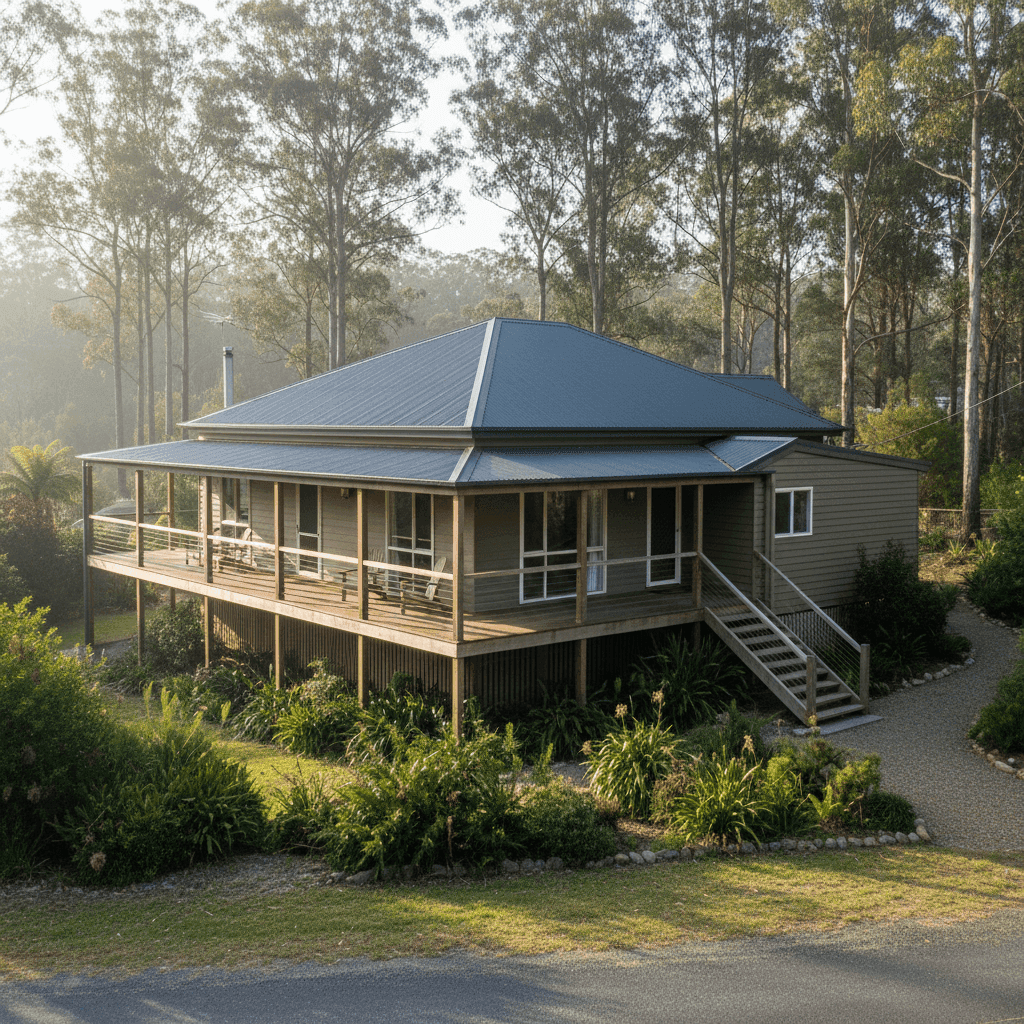
If you own a free standing home in Cockatoo, VIC 3781, you're probably well aware that insuring a property in the Dandenong Ranges comes with its own unique set of considerations. Nestled in the Cardinia LGA roughly 60 kilometres south-east of Melbourne's CBD, Cockatoo is a leafy, semi-rural community that blends lifestyle appeal with some genuine environmental risk factors. This article breaks down a recent home and contents insurance quote for a 3-bedroom weatherboard home in the area, benchmarks it against local, state and national data, and offers practical guidance for homeowners looking to get the best value on their cover.
---
Is This Quote Fair?
The quote in question comes in at $5,411 per year (or $529 per month) for combined home and contents insurance, covering a building sum insured of $706,000 and contents valued at $200,000, each with a $1,000 excess.
Our independent price rating for this quote is FAIR — Around Average.
That assessment holds up well under scrutiny. Within Cockatoo itself, the suburb average sits at $4,818 per year and the median at $4,660 per year, meaning this quote lands above the midpoint of the local market. However, the suburb's 75th percentile is $6,051 per year, so there's a meaningful chunk of Cockatoo homeowners paying considerably more. At $5,411, this quote is comfortably within the middle band of what locals are actually paying — not the cheapest option available, but far from the top of the range either.
It's worth noting that the sum insured here — $706,000 for the building — is on the higher end for a 130 sqm home, which will naturally push the premium upward. If that figure accurately reflects your rebuild cost (and in today's construction environment, it very well might), then the premium is a reasonable reflection of the cover being provided.
---
How Cockatoo Compares
To put this quote in proper context, it helps to look at the broader picture. You can explore the full data on the Cockatoo suburb stats page, the Victoria state overview, or the national insurance statistics.
| Benchmark | Average Premium | Median Premium |
|---|---|---|
| Cockatoo (suburb) | $4,818/yr | $4,660/yr |
| Cardinia LGA | $3,089/yr | — |
| Victoria (state) | $3,000/yr | $2,718/yr |
| National | $5,347/yr | $2,764/yr |
A few things stand out here. First, Cockatoo premiums are significantly higher than the Victorian state average — nearly 60% above the state mean. This is not unusual for properties in the Dandenong Ranges, where bushfire risk, elevated terrain, and the age of the housing stock all contribute to higher insurer risk assessments.
Second, Cockatoo actually tracks close to the national average of $5,347 per year. The wide gap between national average and national median ($2,764) tells an important story: premiums across Australia are heavily skewed by high-risk postcodes, and Cockatoo is one of them. Homeowners here are paying what many Australians in comparable risk zones pay.
The Cardinia LGA average of $3,089 per year is notably lower than the Cockatoo suburb figure, suggesting that other parts of the LGA — likely lower-lying, less bushfire-exposed areas — bring that average down considerably. Cockatoo sits in a higher-risk pocket within a broader, more varied local government area.
---
Property Features That Affect Your Premium
Several characteristics of this particular property have a direct bearing on what insurers charge.
Weatherboard timber construction is one of the most significant factors. Timber-framed, weatherboard homes are more susceptible to fire damage than brick veneer or full brick homes, and insurers price this risk accordingly. In a bushfire-prone area like Cockatoo, this combination is particularly influential.
The 1985 build year places the home in a cohort that insurers view with some caution. Homes of this era may have older electrical wiring, plumbing systems, and structural components that increase the likelihood of a claim. That said, a well-maintained 1985 home is far from a red flag — it simply means insurers factor in the possibility of ageing infrastructure.
Stump foundations (also known as stumps or pier footings) are common in older Victorian homes, particularly in hilly or uneven terrain like Cockatoo. While this foundation style is entirely appropriate for the area, insurers note that homes on stumps can be more vulnerable to movement, moisture ingress, and in some cases, greater structural exposure during storm events.
Steel/Colorbond roofing is actually a positive from an insurance perspective. It's durable, fire-resistant relative to older materials, and performs well in high-wind conditions. This likely offsets some of the premium pressure from the timber walls.
Ducted climate control adds to the contents and building value, which is reflected in the sum insured and contributes modestly to the overall premium.
Elevation under 1 metre means the property doesn't attract the kind of flood or inundation loading that more significantly elevated or low-lying homes might, though it also doesn't provide the storm resilience benefit of a more substantially raised structure.
---
Tips for Homeowners in Cockatoo
1. Review your building sum insured annually. Construction costs in regional Victoria have risen sharply in recent years. A sum insured of $706,000 for a 130 sqm home may be appropriate today, but it's worth using an independent building cost calculator each year to ensure you're neither underinsured nor paying premiums on an inflated figure.
2. Ask about bushfire mitigation discounts. Some insurers offer reduced premiums for homes where active steps have been taken to reduce bushfire risk — things like ember guards on vents, metal flyscreens, cleared gutters, and maintained asset protection zones. Given Cockatoo's bushfire exposure, it's worth asking every insurer you approach whether these measures are recognised in their pricing.
3. Compare at least three quotes before renewing. With only 17 quotes in our Cockatoo sample, the local market data has a relatively small base — but the spread between the 25th percentile ($3,710) and 75th percentile ($6,051) is enormous. That $2,341 gap means shopping around can make a very real difference to what you pay. Don't auto-renew without checking.
4. Consider your excess strategically. Both the building and contents excess on this quote are set at $1,000. Increasing your excess — say, to $2,000 or $2,500 — can reduce your annual premium meaningfully. If you have the financial buffer to absorb a higher out-of-pocket cost in a claim, this is often a smart trade-off for lower-risk homeowners.
---
Compare Your Options with CoverClub
Whether you're reviewing an existing policy or shopping for cover for the first time, CoverClub makes it easy to see how your quote stacks up. Get a home insurance quote today and compare real premiums from multiple insurers — so you can make a confident, informed decision about protecting one of your most valuable assets.